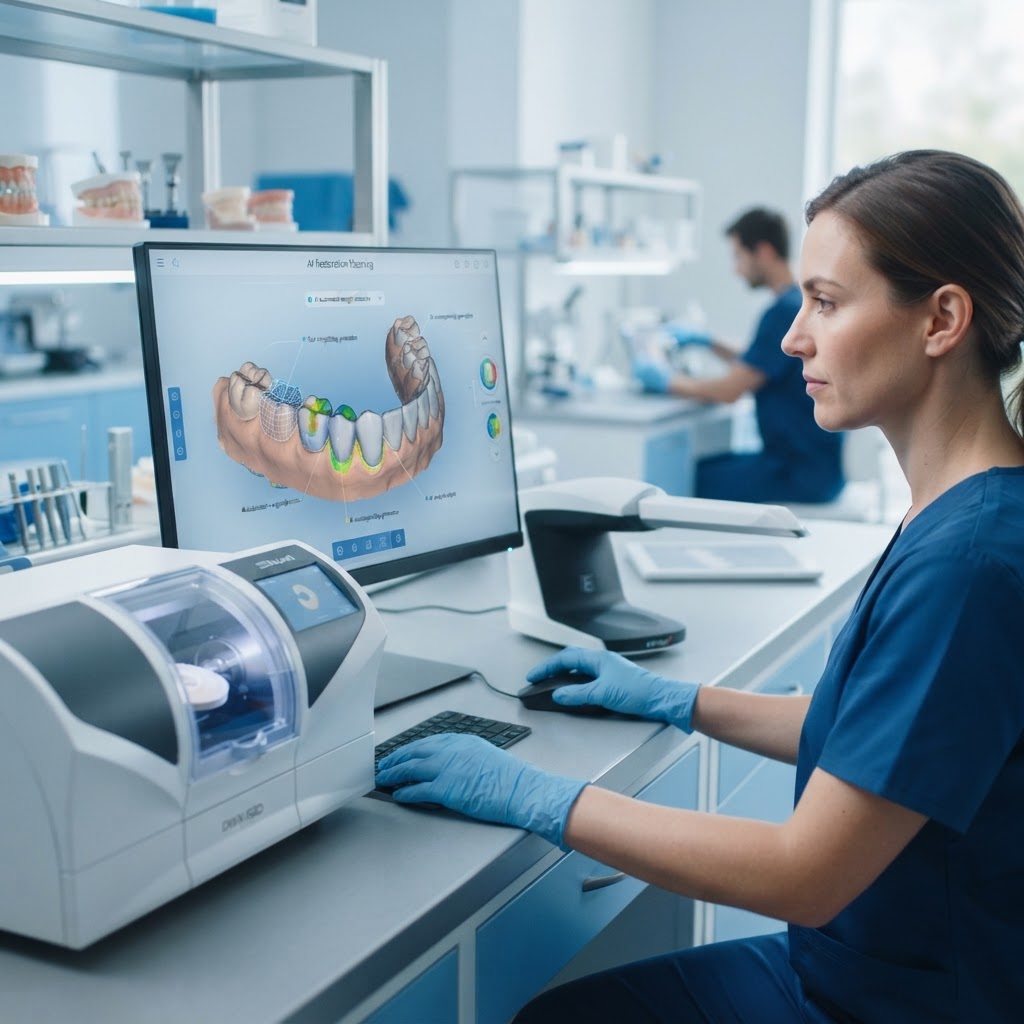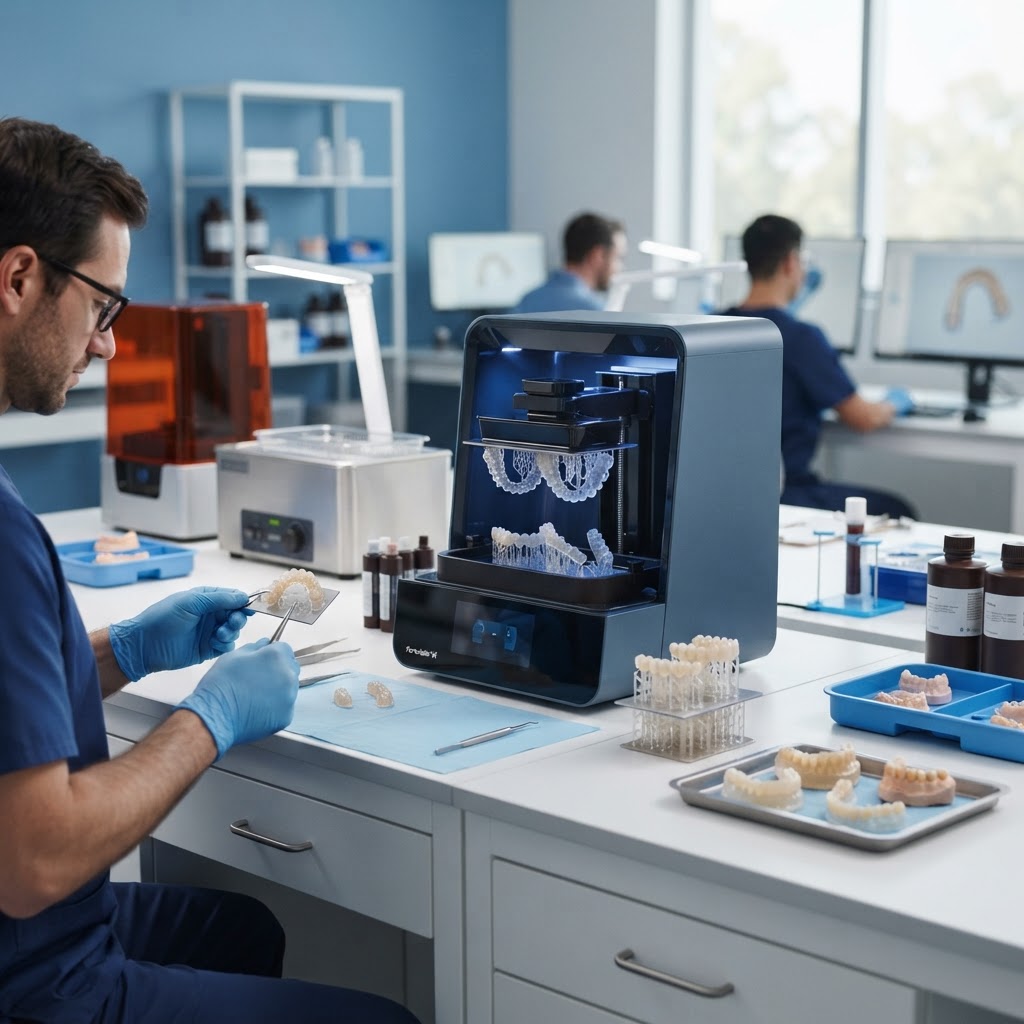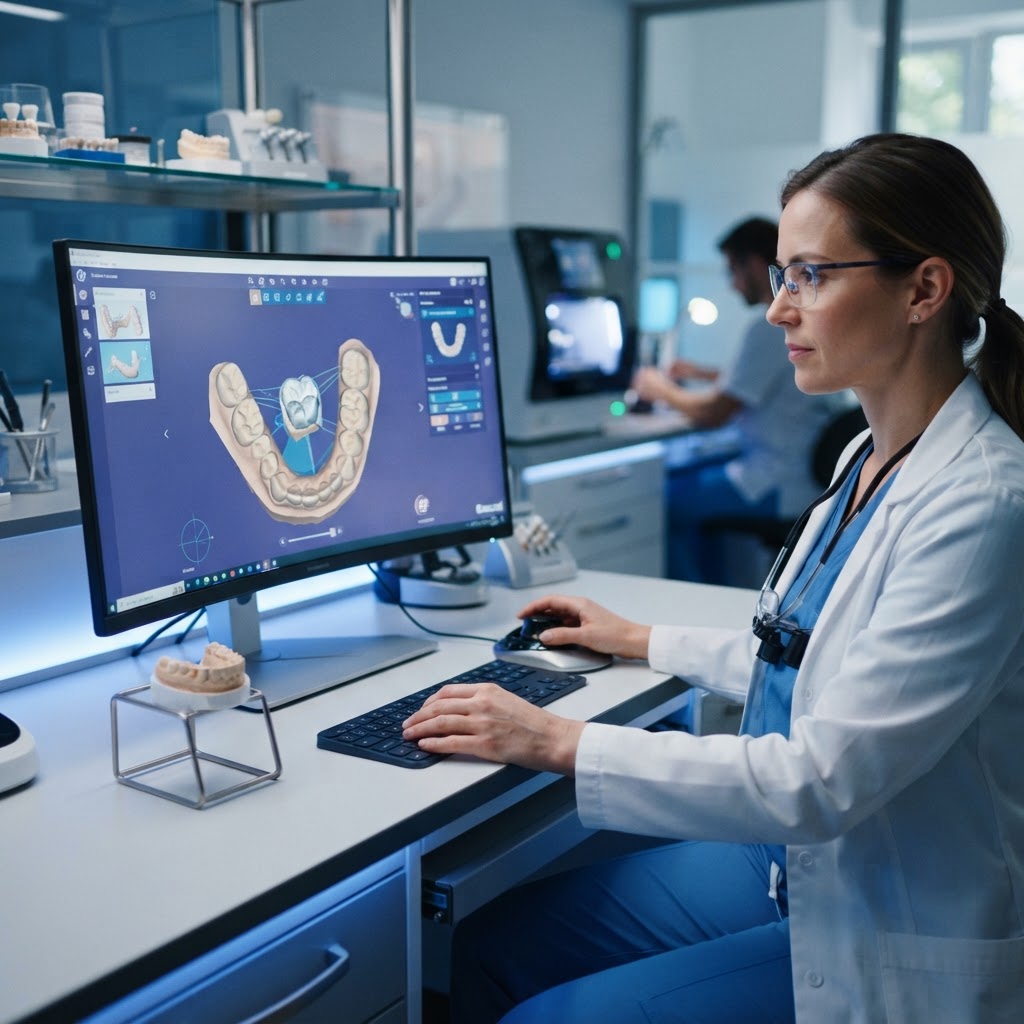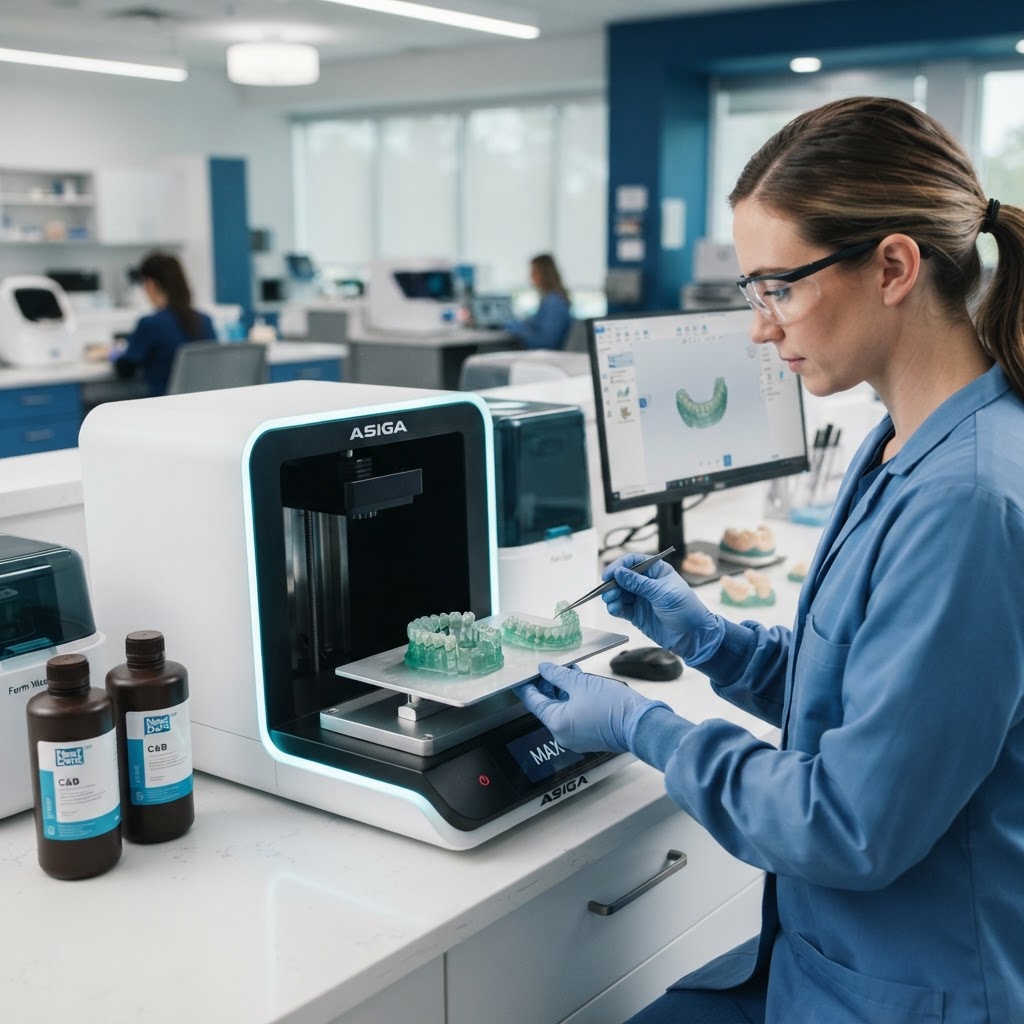
The Paradigm Shift: From Subtractive Milling to Additive Precision
For more than two decades, subtractive CAD/CAM milling served as the undisputed gold standard for digital restorative dentistry. While 5-axis mills remain vital for monolith zirconia and complex titanium structures, they carry structural liabilities: tool wear, significant material waste, and physical geometric limitations governed by milling bur diameters. As noted by industry analyses on additive manufacturing (Phrozen Dental Guide), 3D printing creates parts layer by layer without the extensive material loss typical of milling.
Today, additive manufacturing (AM) is reshaping the dental technology landscape. The transition from diagnostic models, custom trays, and provisional restorations to definitive crowns, permanent hybrid inlays, and multi-unit fixed prosthetics is accelerating. Thanks to breakthroughs in high-filler photopolymers, Digital Press Stereolithography (DPS), direct light projection (DLP), and machine-learning orchestration, 3D printing offers speed, structural accuracy, and unit economics that redefine restorative dentistry.
Breakthroughs in Definitive Restorative Resins
The primary hurdle historically confining 3D printing to temporary or diagnostic applications was material chemistry. Early photopolymer resins exhibited insufficient flexural strength, high degradation in the oral cavity, and low filler loading. Recent innovations have dismantled these barriers:
- High-Percentage Ceramic Hybrid Resins: Formulations featuring over 50% to 70% silanized ceramic micro-fillers now offer flexural strengths surpassing 130–150 MPa, low water sorption, and wear rates comparable to natural enamel. These resins allow laboratories to print definitive single crowns, onlays, and veneers with predictable longevity.
- Digital Press Stereolithography (DPS): Technologies such as SprintRay’s DPS (SprintRay Midas) utilize hydrodynamic pressure to manipulate highly viscous, dense resin formulations, allowing technicians to print definitive crowns in minutes without sacrificing marginal integrity or mechanical filler volume.
- Direct 3D-Printed Resins for Long-Term Dentures: Multi-material printing and dedicated cross-linked Class II biocompatible polymers have streamlined digital denture workflows, producing monolithic, fracture-resistant bases and lifelike gingival-to-tooth transitions.
Optimizing the End-to-End Additive Workflow for Labs
Deploying additive manufacturing into a commercial laboratory environment requires more than an isolated 3D printer; it demands an integrated, closed-loop production pipeline.
1. Intelligent CAD Nesting and Orientation
Orientation directly influences peel-force distribution, z-axis dimensional accuracy, and support placement relative to critical margins. AI-driven build preparation platforms (3D Systems Oqton) automatically segment margins, orient restorative files at optimal peel angles (typically 30° to 45° for crowns), and generate minimal support contacts away from intaglio surfaces and contact points.
2. High-Resolution Printing Engines
While standard stereolithography (SLA) laid the groundwork, industrial high-resolution DLP (Digital Light Processing) and micro-LCD engines deliver micron-level XY pixel resolutions (down to 22–35 microns). Coupled with dynamic LED light uniformity across the build plate, modern dental printers guarantee consistent marginal gap dimensions within clinical tolerances of under 40 microns.
3. Automated Washing and Curing Systems
Consistent, repeatable physical properties depend on validated post-processing. Submersion in high-purity isopropyl alcohol (IPA) or glycol-based solvents must be strictly timed; under-washing leaves uncured monomer residues, while over-washing degrades physical characteristics. Secondary curing under calibrated UV wavelengths, elevated temperatures, and inert nitrogen or vacuum environments ensures maximal monomer-to-polymer conversion, maximizing biocompatibility and wear resistance.
4. Aesthetic Post-Processing and Surface Glazing
Additive restorations achieve aesthetic excellence through dedicated light-curing stains and glazes. Technicians apply micro-hybrid characterization tints to replicate cervical saturation, mamelons, and incisal translucency, followed by final UV polymerization to seal the restoration against plaque accumulation.
Strategic Advantages for Dental Practices and Laboratories
- Drastic Material Savings: Subtractive milling can discard up to 80% to 90% of raw block material. Additive manufacturing consumes only the resin required for the restoration and support structures, lowering cost per unit.
- Unmatched Throughput: A dental DLP printer can produce 15 to 30 custom definitive restorations across a single build plate simultaneously, scaling lab productivity beyond traditional single-unit milling spindles.
- Faster Clinical Turnaround: Same-day chairside printing and overnight high-volume lab batches reduce lead times from weeks to hours, empowering restorative dentists to deliver prompt clinical solutions.
Implementing Additive Workflows: Actionable Best Practices
For laboratory owners and digital specialists aiming to optimize their additive restorative line:
- Standardize Calibration Protocols: Perform resin-specific shrinkage factor adjustments and light-intensity calibrations weekly to maintain micron-level fit along restorative margins.
- Enforce Stringent Biocompatibility Standards: Maintain dedicated wash stations for Class IIa/IIb biocompatible restorative resins to prevent cross-contamination with non-biocompatible model materials.
- Invest in Continuous Digital Training: Train CAD/CAM technicians on layer thickness optimization, intaglio offset parameters, and specialized characterization protocols.
Conclusion: Elevate Your Digital Restorative Standard
Additive manufacturing is no longer restricted to diagnostic mockups and splints; it is now a validated, high-performance medium for definitive restorative dentistry. By integrating modern ceramic hybrid polymers, automated nesting software, and standardized post-processing protocols, modern laboratories can achieve exceptional accuracy, reduce operational overhead, and deliver superior aesthetics.
Ready to elevate your dental practice with industry-leading digital dental solutions? Partner with the restorative specialists at Cosmetic Smile Studio to experience precision CAD/CAM craftsmanship and cutting-edge digital lab services.