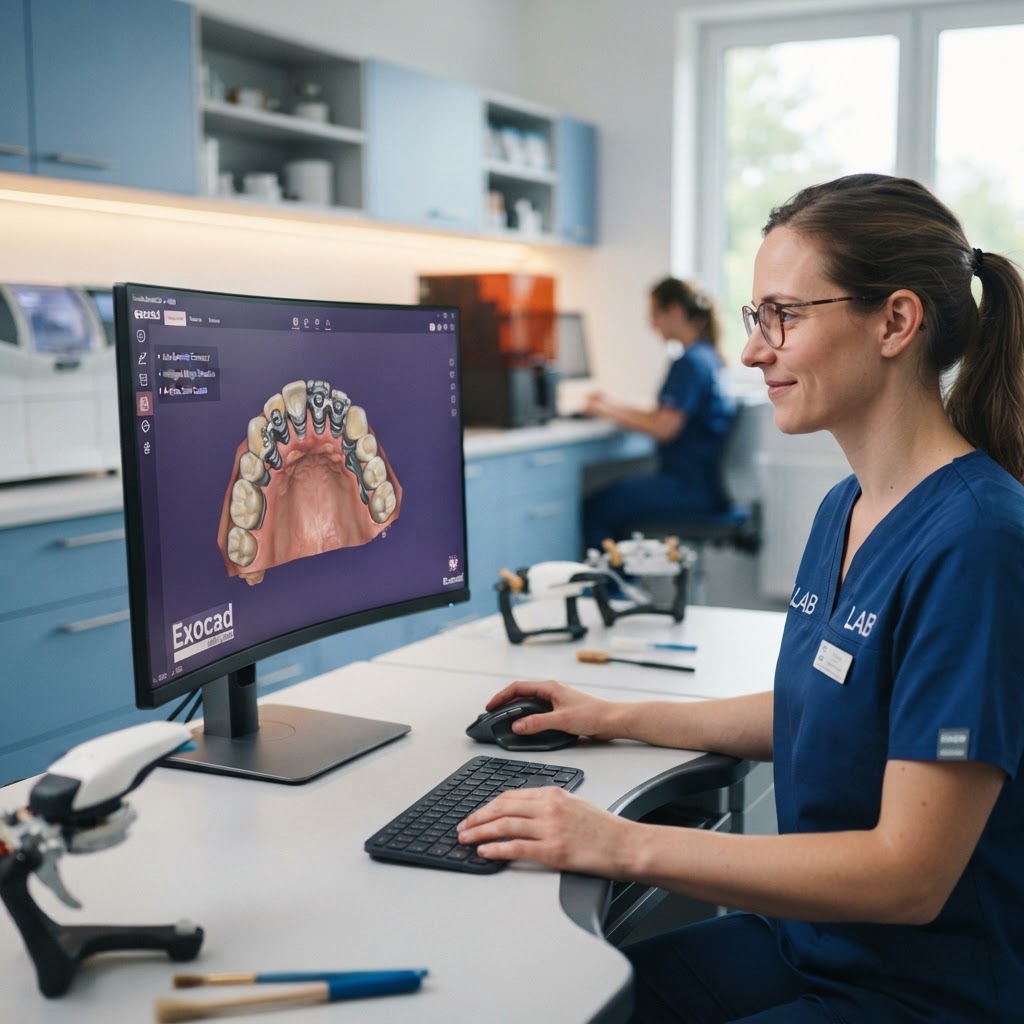
The 2026 Paradigm Shift in Dental CAD/CAM
As we navigate through 2026, the dental laboratory industry has moved past the initial excitement of digital adoption into a phase of mature, hyper-efficient integration. The theme of this year is 'Intelligence at the Source.' We are no longer just using software to digitize manual tasks; we are utilizing advanced algorithmic engines to predict clinical outcomes before the first bur touches a zirconia puck. For dental technicians in the USA, staying competitive now requires a deep dive into the latest CAD/CAM software updates, specifically the leaps made in design automation and the expansive new feature sets of industry leaders like Exocad.
Exocad 2026: The Eleusis Release and Beyond
The latest iteration of Exocad, internally known as the 'Eleusis' update, represents the most significant architectural change in the software's history. This version moves away from static libraries toward a generative morphology engine. Instead of selecting a tooth from a library and adjusting it to fit the space, the new AI-Morph tool analyzes the patient's existing dentition, the wear patterns on the opposing arch, and the functional movements recorded via digital jaw tracking to 'grow' a restoration that is functionally perfect from the start.
Key Features of the 2026 Exocad Update:
- Dynamic Occlusion AI: This feature utilizes real-time kinematic data to simulate chewing cycles. It automatically adjusts the heights of cusps and the depth of fossae to prevent interferences, reducing the need for post-milling adjustments by nearly 90%.
- Auto-Margin Detection 2.0: Leveraging deep learning models trained on millions of clinical cases, the software now identifies margins on subgingival preparations with unprecedented accuracy, even in cases with minor cord interference or moisture contamination in the scan.
- Instant Cloud Sync: The new 'Live Lab' bridge allows for real-time collaboration. As a technician adjusts a design in the lab, the clinician can view the changes on a tablet or workstation in the clinic, providing instant feedback and reducing remake rates.
The Rise of Design Automation for Dental Technicians
Automation in 2026 is not about replacing the technician; it is about elevating their role to that of a 'Creative Director' of dental prosthetics. Design automation now handles the repetitive, labor-intensive aspects of the workflow. For example, the latest updates in 3Shape and Exocad now include 'Batch Design' protocols for single-unit posterior crowns. The software identifies the restoration type, chooses the optimal material based on the laboratory's inventory, and presents a 'best-fit' design for approval within seconds.
This shift allows technicians to focus their expertise on high-value, complex aesthetic cases—such as multi-unit anterior veneers or full-arch implant rehabilitations—where the 'human touch' and artistic nuance remain irreplaceable. Automated nesting is another area where efficiency has peaked. Modern CAM software now optimizes material usage by utilizing 'Partial Nesting' algorithms that can fit smaller restorations into the remnants of previously used discs with zero risk of collision.
Integrating Photogrammetry and Face Scans
One of the most impactful trends in 2026 is the seamless integration of multi-source data into the CAD environment. High-end software now natively supports direct imports from facial scanners and photogrammetry rigs without the need for manual alignment. The 'Virtual Patient' is no longer a marketing buzzword; it is a functional 3D avatar that includes the patient's skeletal structure (via CBCT integration), soft tissue dynamics (via face scans), and high-fidelity dental data. This holistic view ensures that every restoration designed in the software is in perfect harmony with the patient's facial midline, lip line, and overall aesthetics.
Practical Insights for Implementing 2026 Technology
For laboratories looking to capitalize on these advancements, the transition requires more than just a software license update. It requires a strategic approach to hardware and training.
- Upgrade Your Hardware: The generative AI engines in the 2026 software releases are GPU-intensive. Labs should ensure their workstations are equipped with the latest dedicated AI-processing chips to handle real-time rendering and complex simulations.
- Standardize Your Inputs: Automation is only as good as the data it receives. Establishing strict protocols for intraoral scanning in the clinics you serve will ensure the AI-driven margin detection and morphology engines perform at their peak.
- Focus on Specialized Training: As basic design becomes automated, the value of the technician shifts toward understanding complex occlusion and material science. Invest in advanced courses that focus on 'Design Oversight' rather than 'Design Execution.'
The Future of Open Systems vs. Closed Ecosystems
In 2026, the debate between open and closed systems has evolved into a discussion about 'Connectivity.' The most successful laboratories are utilizing 'Open-Managed' workflows. They use open software like Exocad for its flexibility but choose integrated ecosystems for their milling and printing hardware to ensure the highest degree of predictability. This hybrid approach allows for the use of specialized 3D printing resins and high-performance zirconia while maintaining a unified software interface that streamlines the entire production chain.
Conclusion: Embracing the Future of Digital Fabrication
The advancements in CAD/CAM software in 2026, particularly within the Exocad ecosystem, have fundamentally changed the speed and precision at which dental laboratories operate. By embracing design automation and AI-driven workflows, technicians are empowered to produce superior restorations with fewer manual errors. The key to success in this new era is the willingness to adapt and the vision to see technology as a partner in the pursuit of clinical excellence. Are you ready to elevate your laboratory’s workflow? Contact Cosmetic Smile Studio today to learn how our advanced digital solutions can transform your production efficiency and clinical outcomes.