The Digital Evolution: AI as the New Standard in Dental Labs
The dental industry is undergoing a profound technological shift. For dental laboratories and clinics with in-house milling capabilities, the transition from manual to digital is no longer a future goal—it is a present-day imperative. At the heart of this transformation is the integration of artificial intelligence (AI) into CAD/CAM workflows, which is redefining how we approach restoration design and production.
How AI is Redefining CAD/CAM Workflows
Traditional lab workflows rely heavily on the manual expertise of skilled technicians. While human judgment remains irreplaceable, AI acts as a highly capable assistant that processes vast amounts of data to support, rather than replace, that expertise. By automating repetitive tasks, AI allows technicians to focus on complex case planning and quality control.
Key Areas of AI Impact:
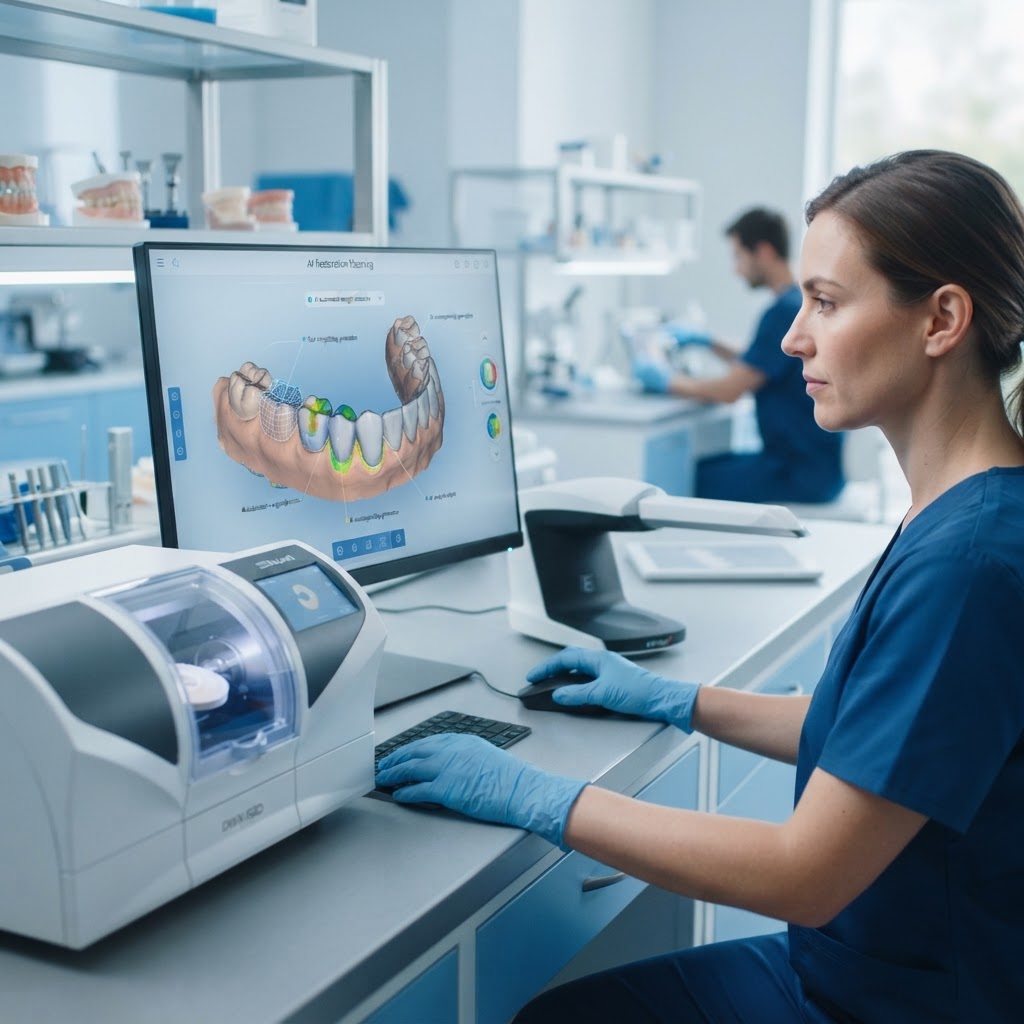
- Automated Scan Processing: AI tools can now automatically section scans and identify margins with high accuracy, eliminating tedious manual steps.
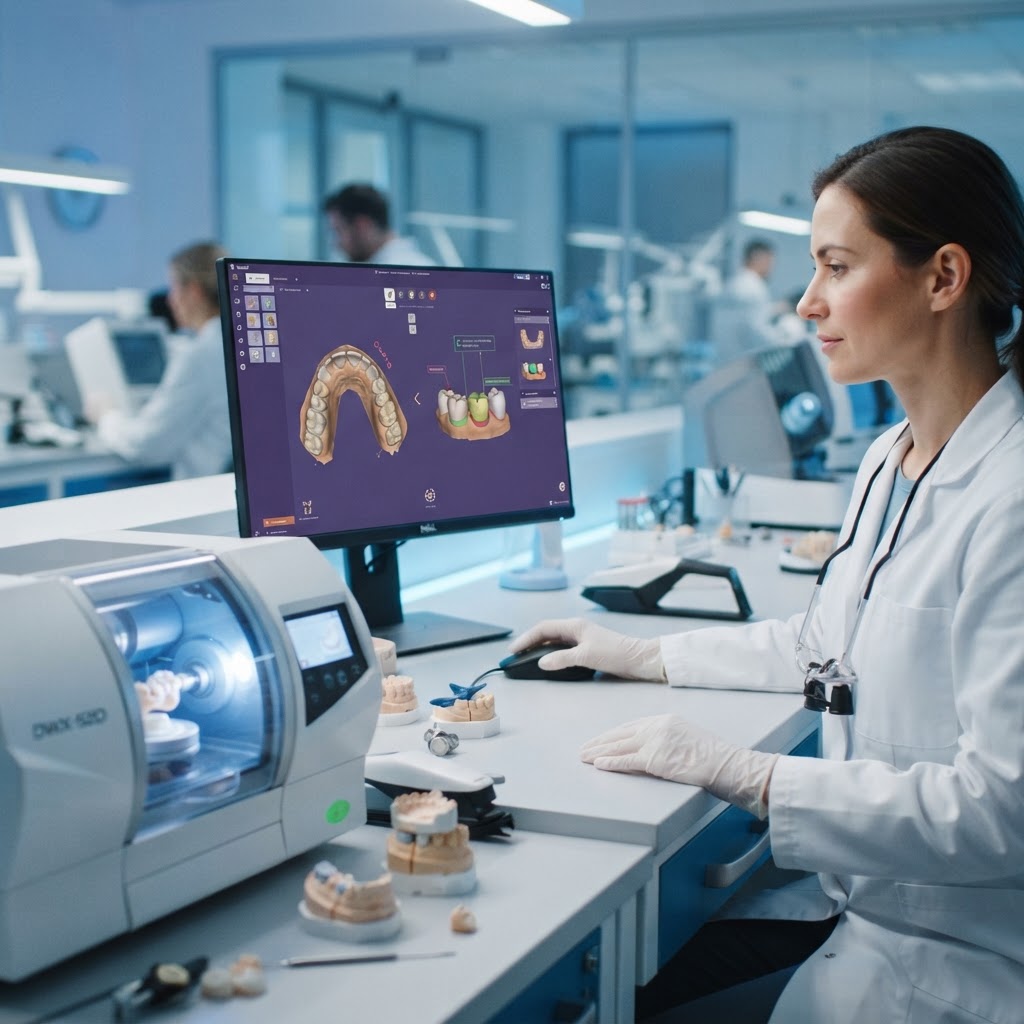
- Restoration Design: Machine learning algorithms analyze patient anatomy to propose crown and bridge designs that are both functional and aesthetically optimized.
- Quality Control: AI flags potential anomalies in digital impressions, reducing the risk of remakes and ensuring a better marginal fit.
- Implant Planning: AI-assisted tools map anatomy and bone density from CBCT data, suggesting optimal implant positioning for more predictable surgical outcomes.
Practical Insights for Modern Labs
To remain competitive, labs must leverage AI to maximize throughput and precision. The goal is to move from reactive, manual processes to proactive, data-driven operations. By integrating AI-powered design software, labs can achieve a significant reduction in case planning time while simultaneously improving the consistency of their output.
Actionable Steps for Implementation:
- Adopt AI-Integrated Software: Utilize platforms that offer AI proposal tools to speed up the design of crowns, splints, and nightguards.
- Optimize Digital Workflows: Use AI to automate the initial stages of design, allowing your team to dedicate more time to high-value, complex cases.
- Focus on Data-Driven Precision: Leverage AI to analyze digital impressions, which minimizes marginal gap errors and reduces costly shipping and chair-time delays.
- Invest in Staff Training: Ensure your technicians understand how to interpret and refine AI-generated proposals to maintain the highest standards of patient care.
The Future of the AI-Powered Lab
As we look toward the future, AI agents are evolving from simple automation tools into sophisticated virtual team members. We are seeing a shift where practice management systems and lab software are becoming active operating layers, capable of handling multistep workflows autonomously. For the modern dental lab, embracing these technologies is the key to delivering faster, more accurate, and more predictable results for clinicians and patients alike.
Conclusion: Elevate Your Lab’s Potential
The integration of AI into dental lab design is not just about speed; it is about enhancing the precision and predictability of every restoration. By adopting these advanced digital tools, your lab can streamline operations, reduce overhead, and provide superior service to your dental partners. Start exploring AI-integrated CAD/CAM solutions today to ensure your lab remains at the forefront of dental technology.