The Dawn of the Intelligent Dental Laboratory
For decades, the transition from manual waxing to computer-aided design (CAD) represented the pinnacle of technological advancement in the dental laboratory. However, we are currently witnessing a second, more profound revolution. Artificial Intelligence (AI) is no longer a futuristic concept or a buzzword found only in tech journals; it has become an essential component of the modern restorative workflow. At Cosmetic Smile Studio, we recognize that the integration of AI into CAD/CAM processes is not merely about speed—it is about achieving a level of consistency and predictive accuracy that was previously unattainable.
Traditional digital workflows required significant manual input from highly skilled technicians to define margins, select tooth shapes, and adjust occlusion. While effective, these steps were prone to human variability and time constraints. AI-driven systems, powered by deep learning and massive datasets of anatomical scans, are now capable of performing these tasks with superhuman speed and remarkable precision, allowing technicians to transition from 'manual designers' to 'clinical editors.'
Automating the Monotonous: AI in CAD Design
The most immediate impact of AI in the dental lab is seen in the automation of repetitive, high-stakes design tasks. Artificial intelligence excels at pattern recognition, which is the foundation of successful dental restoration planning.
1. Automated Margin Line Detection
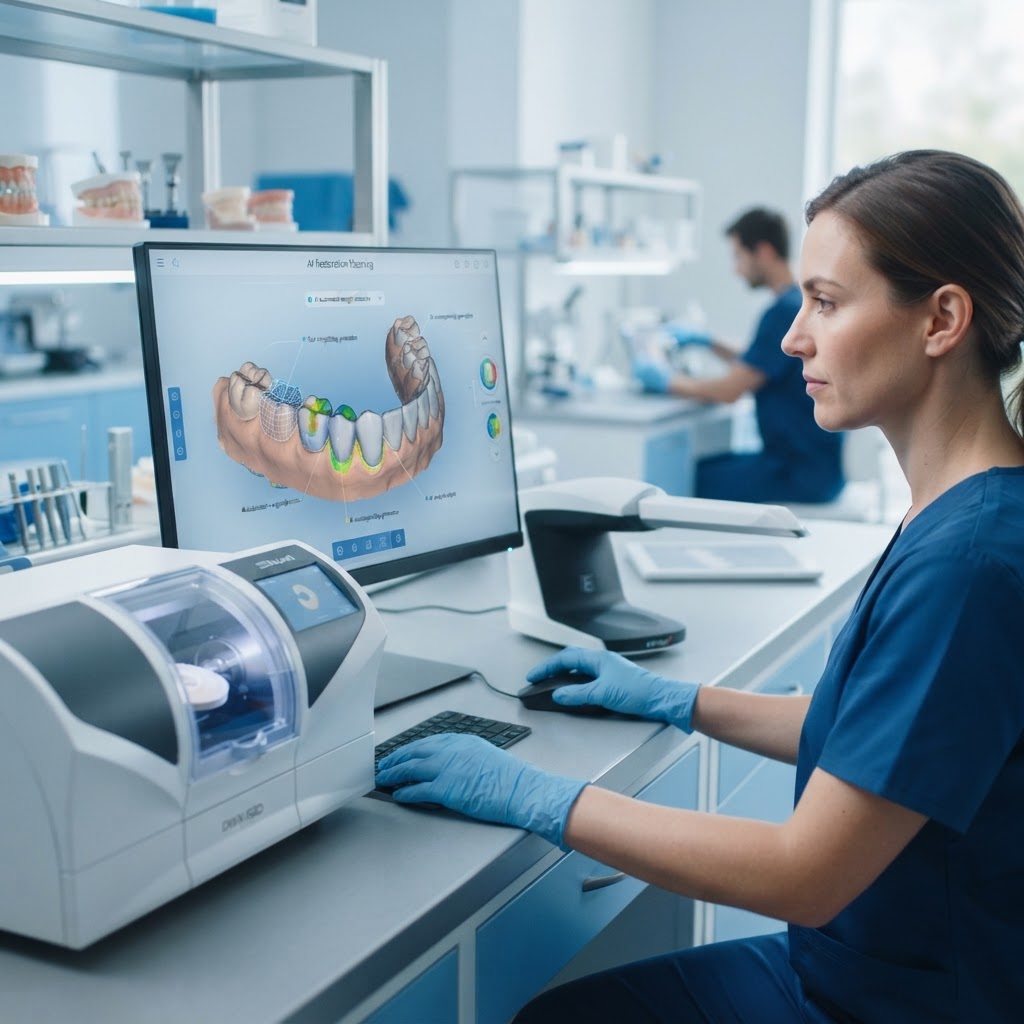
One of the most time-consuming aspects of design is the precise identification of the preparation margin. AI algorithms, trained on millions of clinical cases, can now identify margin lines with a degree of accuracy that rivals experienced technicians. By automatically detecting the transition between tooth structure and gingiva, AI reduces the cognitive load on the technician and ensures a perfect marginal fit, which is critical for long-term restorative success and periodontal health.
2. Intelligent Anatomy Generation
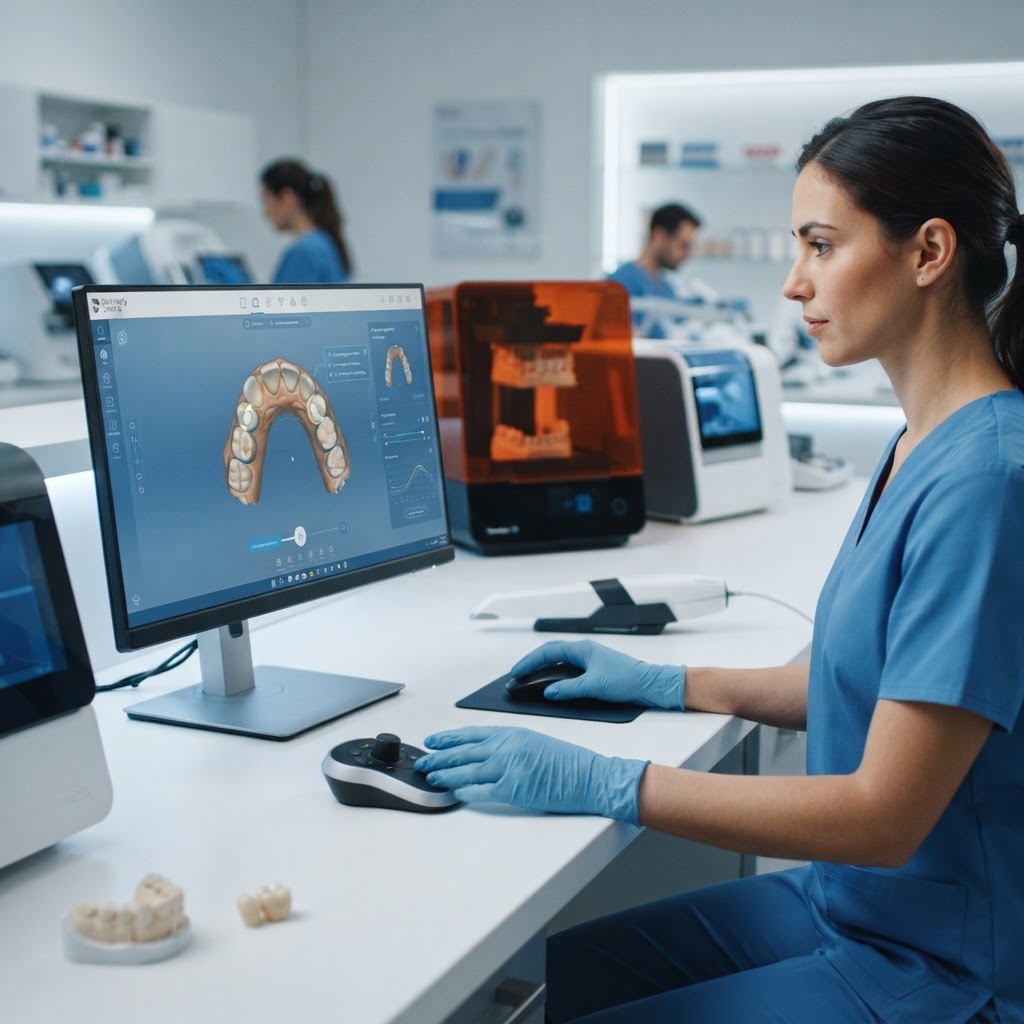
Rather than scrolling through static tooth libraries, AI-powered CAD software can now suggest anatomical shapes based on the patient's existing dentition, opposing arch, and functional requirements. These algorithms analyze the surrounding teeth to propose a restoration that blends seamlessly into the patient's natural 'morphological DNA.' This 'biogeneric' approach ensures that the crown or bridge is not just esthetically pleasing, but functionally integrated into the patient's unique occlusal scheme.
- Reduced design time for single-unit crowns by up to 70%.
- Consistent anatomical results regardless of technician experience levels.
- Better integration with adjacent teeth for improved food shedding and hygiene.
Predictive Restoration Planning and Big Data
Beyond simple design, AI is transforming how we plan complex cases. By leveraging 'Big Data,' software can now predict potential failure points in a design before it ever reaches the milling machine. Predictive modeling analyzes stress distribution and material thickness, alerting the designer if a particular restoration is at risk of fracture based on the patient's bite force and material selection.
Furthermore, AI is bridging the gap between the lab and the clinic. Through advanced facial recognition and 3D face scanning, AI can assist in 'Smile Design' by predicting how a specific tooth arrangement will interact with the patient's lip dynamics and facial symmetry. This level of predictive planning allows for a truly personalized approach, moving away from 'one-size-fits-all' restorations toward bespoke dental art.
Optimizing the Digital Workflow for Efficiency
The 'CAM' side of the CAD/CAM equation is also benefiting from machine intelligence. AI is optimizing the manufacturing process in ways that significantly impact a laboratory's bottom line and sustainability.
Nesting and Material Management
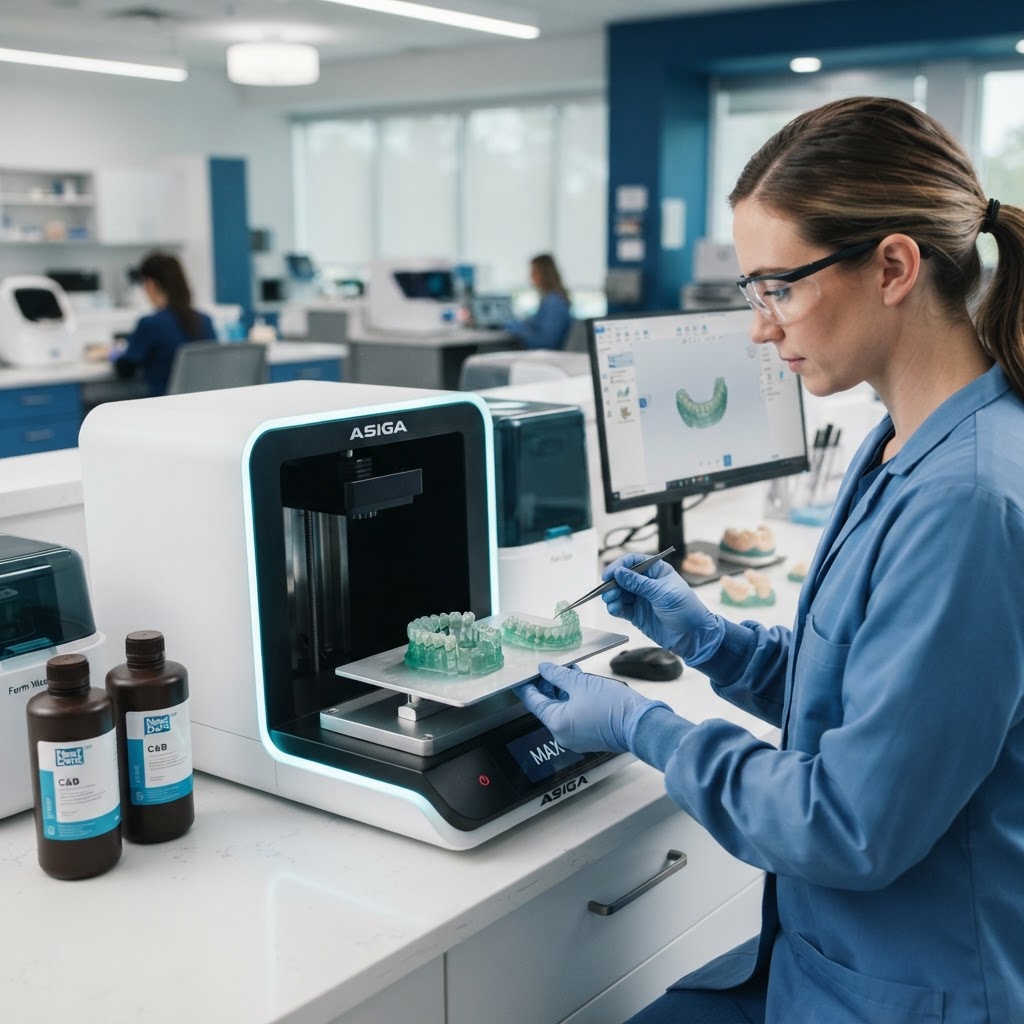
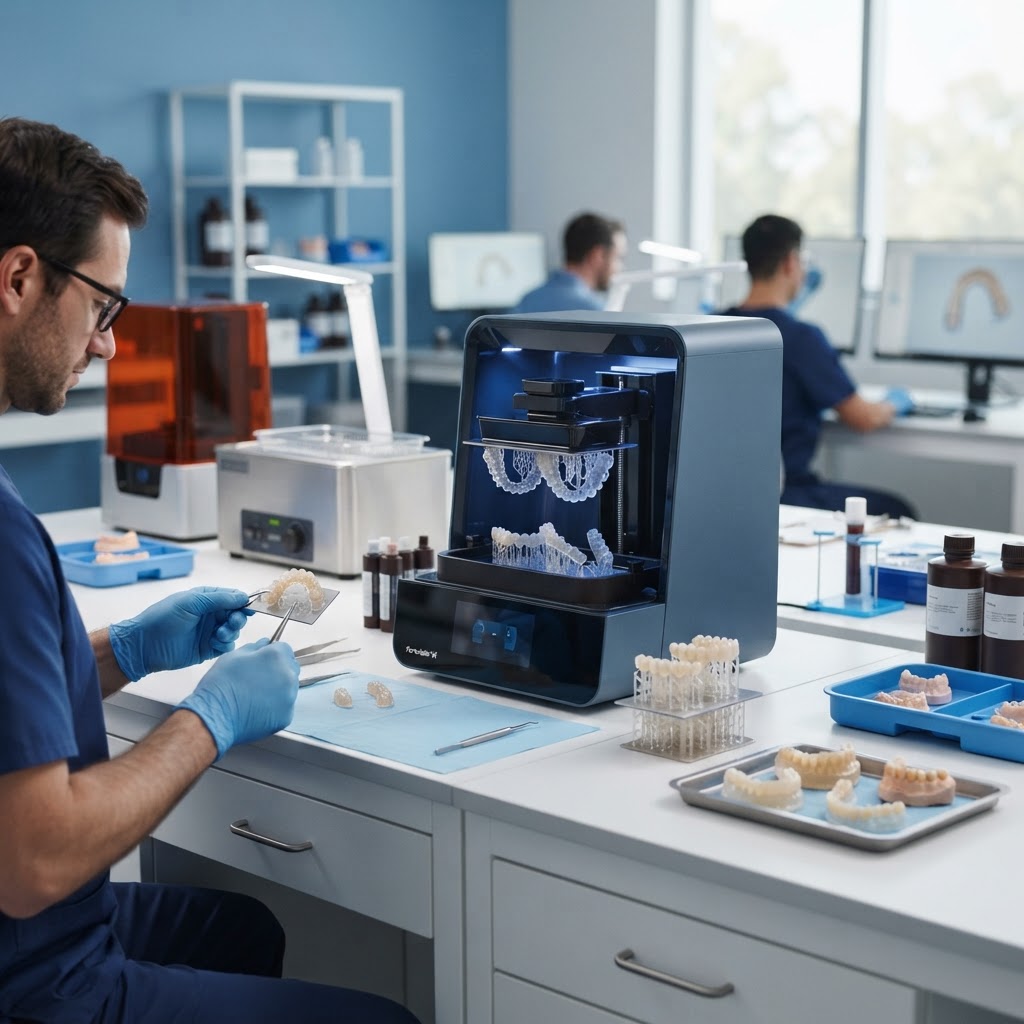
Nesting—the process of arranging multiple restorations within a material disc—used to be a manual puzzle. AI algorithms now optimize nesting patterns to minimize material waste and maximize the number of units per disc. This not only reduces the cost of production but also minimizes the environmental footprint of the laboratory.
Predictive Maintenance for Milling Units
AI sensors integrated into modern 5-axis milling machines can monitor vibration patterns, spindle temperature, and tool wear in real-time. By analyzing this data, the system can predict when a tool is likely to fail or when the machine requires calibration. This 'predictive maintenance' prevents costly downtime and ensures that every restoration is milled with the same high level of precision from the first unit to the last.
The Human-AI Partnership: A New Era of Craftsmanship
A common concern among dental professionals is that AI will replace the artistry of the technician. However, the reality is quite the opposite. AI handles the mundane, data-heavy tasks, freeing the technician to focus on the nuances that require human judgment—such as complex shade matching, intricate characterization, and the final clinical verification of the design.
This 'augmented craftsmanship' allows laboratories to scale their production without sacrificing quality. It empowers technicians to handle more complex cases and provides dentists with a more reliable product. In the AI-enhanced lab, the technician acts as the final arbiter of quality, utilizing AI as a high-precision tool rather than a replacement for their expertise.
Actionable Insights for Modern Labs
To remain competitive in this evolving landscape, dental labs and clinics should consider the following steps:
- Invest in AI-Ready Software: Ensure your CAD software (such as exocad or 3Shape) is updated to the latest versions that include AI-assisted modules for margin detection and anatomy design.
- Data Quality Matters: The performance of AI is directly linked to the quality of the input data. Encourage clinical partners to use high-resolution intraoral scanners and ensure clear retraction for optimal margin visibility.
- Continuous Education: Train staff not just on how to use the software, but on how to critique AI-generated designs. The 'human-in-the-loop' model is the most successful approach to AI integration.
- Monitor ROI: Track the reduction in design time and remake rates after implementing AI tools to quantify the return on investment.
Conclusion: The Future is Intelligent
AI in dental lab design is shifting from a luxury to a necessity. By automating the technical minutiae, AI allows the dental community to focus on what matters most: patient outcomes and clinical excellence. As machine learning continues to advance, we can expect even deeper integration, where the boundaries between scanning, designing, and manufacturing become nearly seamless.
Are you ready to elevate your practice with AI-driven precision? Contact Cosmetic Smile Studio today to learn how our state-of-the-art digital workflow can bring the future of restorative dentistry to your patients.