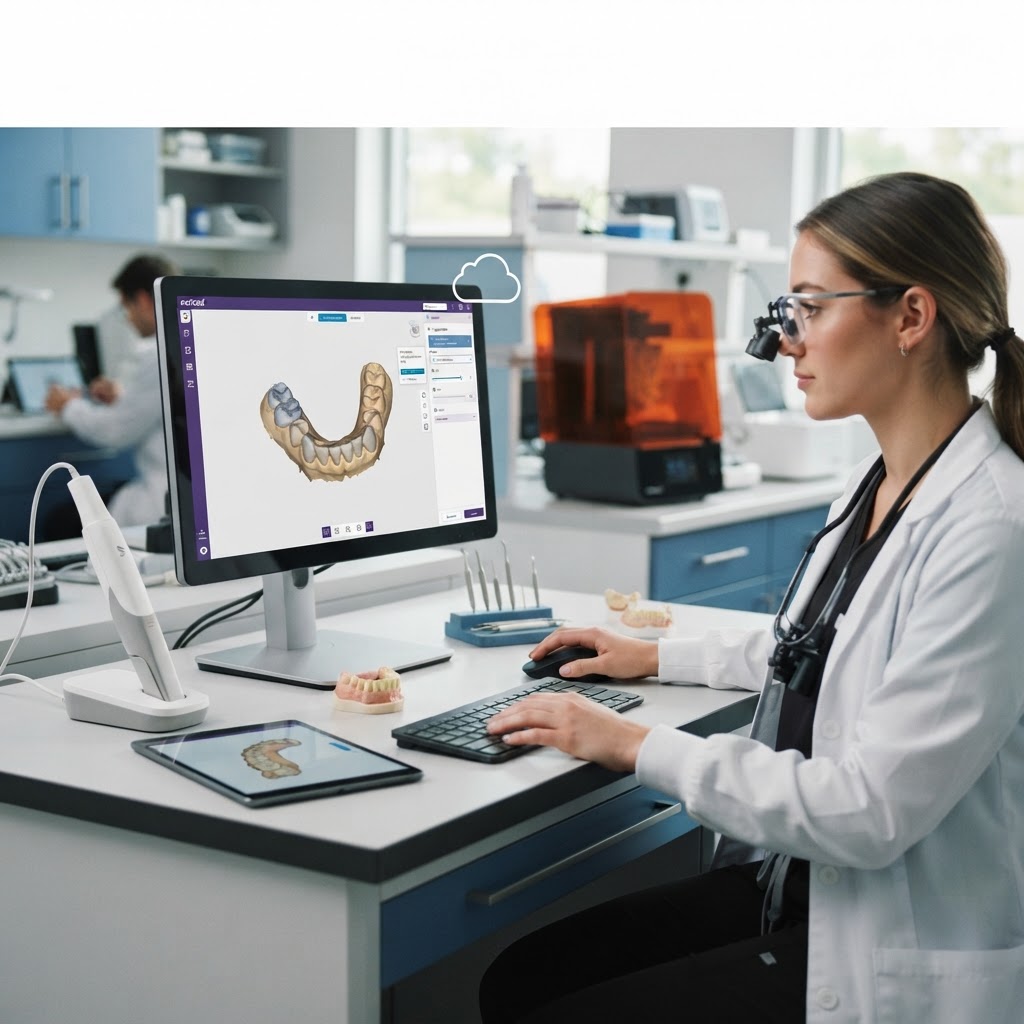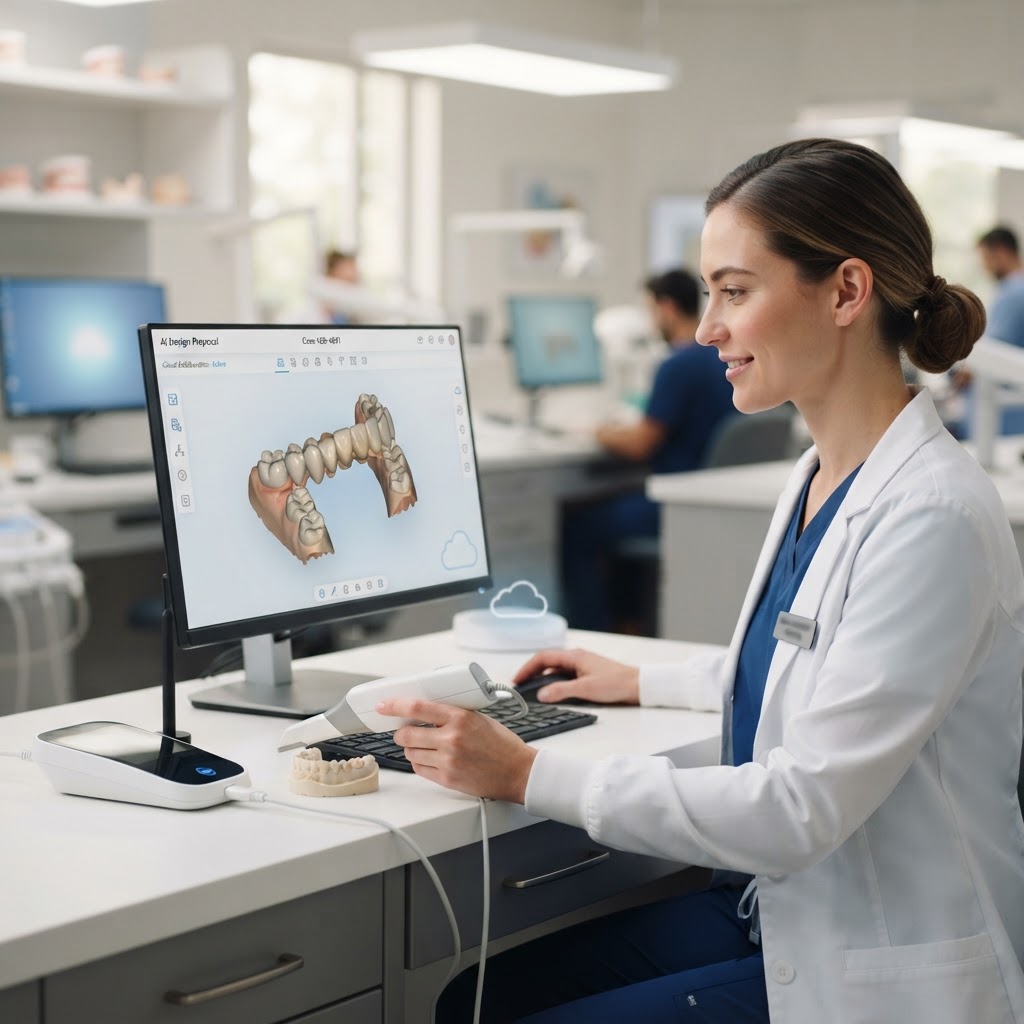
The dental profession is navigating a profound technological transition where disconnected digital islands are coalescing into a unified, high-speed ecosystem. For years, clinicians and dental laboratories operated in fragmented loops: intraoral scans were exported manually, emailed or transferred through generic portals, and technicians rebuilt margins and tooth anatomy from scratch in isolated computer-aided design (CAD) programs. Today, workflow optimization is no longer defined merely by owning an intraoral scanner or a 5-axis milling machine—it is defined by how frictionlessly data travels from the patient chair to final restoration delivery.
By harmonizing high-fidelity intraoral scanners (IOS), unified cloud-collaboration ecosystems, and artificial intelligence (AI)-assisted design engines, progressive practices and high-end laboratories like Cosmetic Smile Studio are reshaping restorative accuracy, reducing remakes, and setting new benchmarks for patient turnaround times.
The Core Engine: Next-Generation Intraoral Scanning
Digital impression-taking represents the gateway to restorative accuracy. Modern intraoral scanners do far more than replace traditional polyvinyl siloxane (PVS) or polyether trays; they establish the baseline dimensional accuracy that informs every downstream restorative step.
- Real-Time Artifact Filtration: Modern scanning software leverages integrated machine-learning algorithms to actively filter out soft-tissue artifacts, tongues, mobile cheeks, and excess moisture in real time, dramatically cutting chair time.
- Sub-Micron Margin Clarity: Photogrammetric scanning algorithms capture intricate finish lines with zero material distortion, eliminating the microscopic tears, bubbles, or expansion artifacts inherent to elastomeric impression materials.
- True Color Matching and Caries Screening: Advanced optical heads now double as diagnostic and shade-matching tools, recording high-resolution color data that guides laboratory ceramists during polychromatic layering and characterization.
Eliminating Silos: Secure Cloud Collaboration
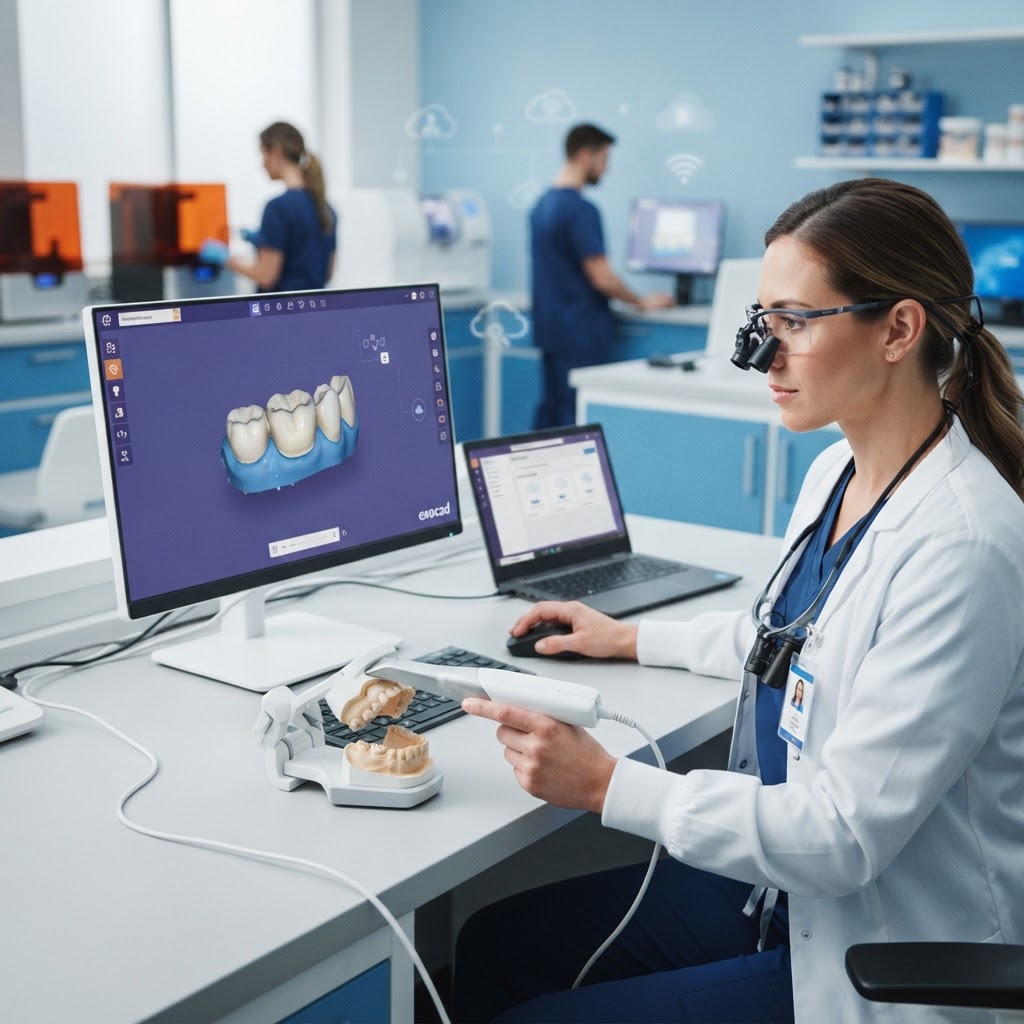
Historically, the handoff between clinic and laboratory was plagued by communication dropouts: missing clinical notes, unreadable prep photos, and mismatched scan orientations. Modern cloud platforms—such as Dentsply Sirona DS Core, 3Shape Communicate, and Medit Link—act as interactive nerve centers connecting clinician and technician.
Instead of relying on disconnected third-party file sharing, open cloud platforms allow instant transmission of intraoral datasets (STL, PLY, and native formats), 2D facial reference images, and digital bite registrations directly into the laboratory's queue.
- Real-Time Case Validation: Clinicians can initiate a live design review while the patient remains in the operatory. A laboratory technician can verify clearance, confirm preparation tapering, and validate margin legibility before anesthesia wears off.
- Centralized Diagnostic Archives: Cloud workspaces preserve a complete chronological repository of digital models, bite registrations, and design iterations, ensuring immediate access should a patient need an identical replacement or nighttime appliance down the road.
- Seamless Open-Format Interoperability: Robust cloud ecosystems eliminate proprietary format bottlenecks, feeding raw geometric data directly into high-level laboratory suites such as exocad and 3Shape Dental System.
The Intelligence Layer: AI-Assisted CAD Design
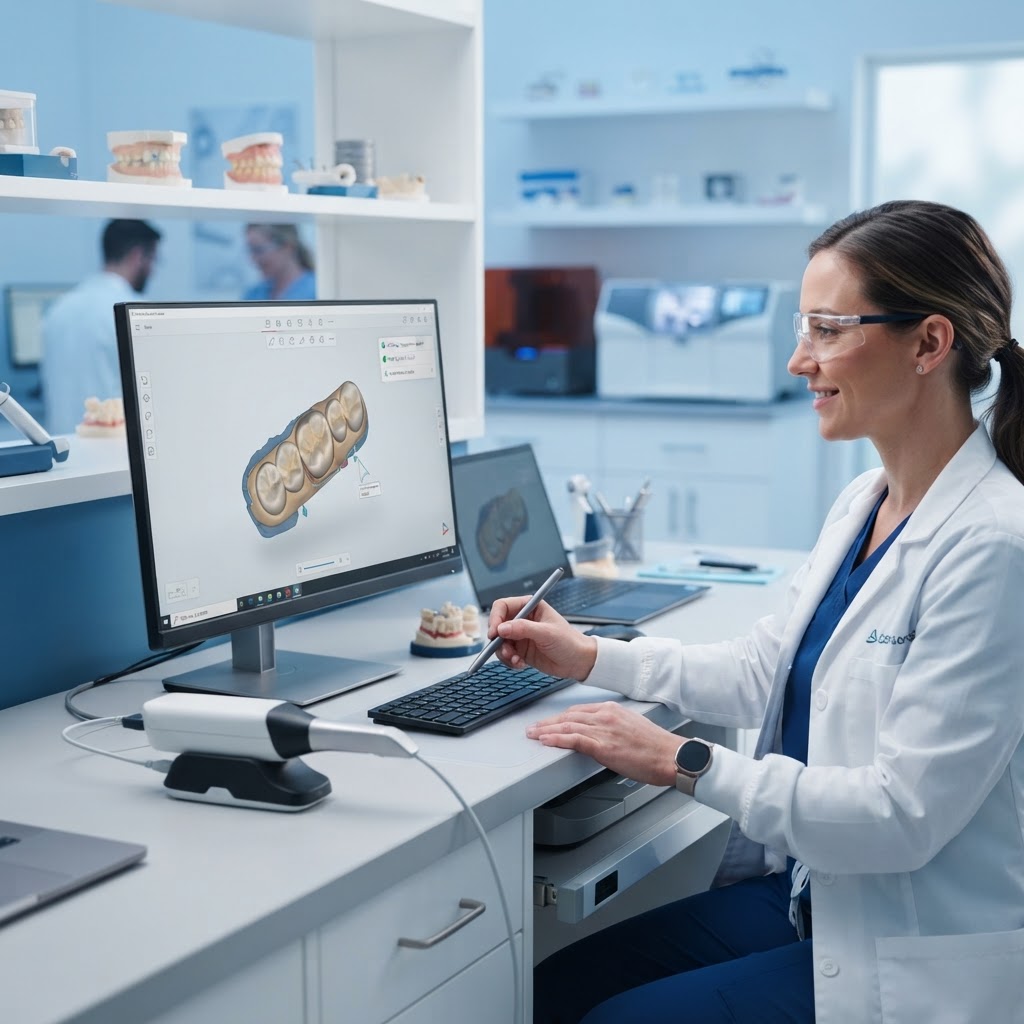
Perhaps the most disruptive frontier in workflow optimization is the integration of artificial intelligence into dental CAD. Where a seasoned dental technician previously spent fifteen to twenty minutes manually orienting insertion axes, tracing margin lines, and sculpting functional anatomy for a single posterior crown, AI-assisted tools now automate these baseline mechanics in seconds.
Automated Margin Line Detection and Tissue Segmentation
Trained on millions of verified restorative scans, AI models predict and snap to preparation margins with surgical precision, even on subgingival preparations. The software segments prep geometry from adjacent interproximal surfaces, flagging potential undercut zones and occlusal clearance deficiencies before manufacturing commences.
Biomimetic Anatomy and Biomechanical Optimization
Rather than relying on static anatomical libraries, generative AI evaluates opposing dentition, wear facets, functional excursion paths, and adjacent arch morphology to propose a tailored restoration proposal. Technicians can accept the optimal anatomical proposal instantly or apply fine aesthetic micro-adjustments, shifting their focus from repetitive digital tracing to high-level aesthetic craftsmanship.
Measurable Clinical and Laboratory Benefits
When clinics and laboratories sync their intraoral scanning protocols with cloud collaboration and AI tools, the operational gains translate immediately to the bottom line:
- Drastic Remake Reductions: Pre-manufacturing validation and accurate digital bite capture reduce clinical remakes to below 1–2%.
- Compressed Turnaround Windows: Cases can transition from clinical preparation to laboratory nesting within minutes, enabling reliable same-day hybrid workflows or rapid turnaround monolithic zirconia and lithium disilicate restorations.
- Superior Patient Experience: Patients spend less time in the chair, bypass uncomfortable impression trays, and benefit from restorations that seat with minimal occlusal or interproximal adjustments.
Conclusion: Accelerate Your Restorative Excellence
Optimizing the digital dentistry workflow is not about replacing the artistic expertise of the laboratory technician or the clinical judgment of the dentist; it is about stripping away administrative delays and manual errors. By unifying intraoral scanning, secure cloud collaboration, and AI-assisted CAD, clinics and laboratories build a frictionless restorative pipeline that elevates aesthetic predictability and profitability.
Ready to modernize your restorative practice? Partner with Cosmetic Smile Studio today. Connect your scanner to our digital design hub, streamline your case handoffs, and experience the future of precision digital restorations.