The Evolution of the Digital Dental Ecosystem
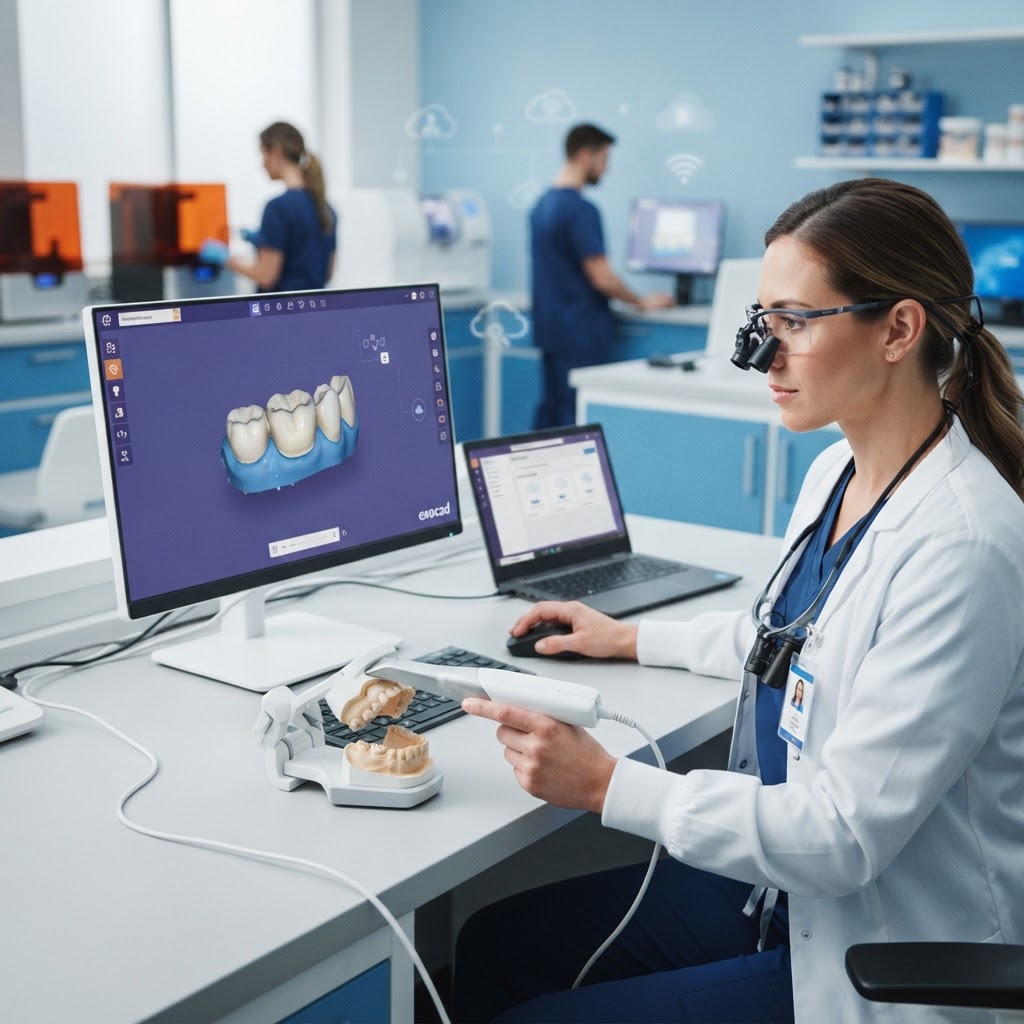
The dental industry has moved past the initial 'digital transition' phase. We are no longer simply replacing physical impressions with digital ones; we are now in an era of workflow optimization. For the modern dental laboratory and the forward-thinking clinician, success is no longer defined by the possession of digital tools, but by how seamlessly those tools communicate. In this high-stakes environment, the integration of Intraoral Scanners (IOS), cloud-based collaboration, and Artificial Intelligence (AI) is the new standard for restorative excellence.
Maximizing Intraoral Scanner Utility: Beyond the Digital Impression
While most clinicians utilize intraoral scanners to eliminate the discomfort of PVS materials, the true value of IOS lies in its role as a diagnostic and communication powerhouse. Optimization begins at the chairside with standardized scanning protocols. To ensure the laboratory receives the highest quality data, clinics must focus on:
- Tissue Management: AI-driven design cannot compensate for obscured margins. Proper retraction and moisture control remain the bedrock of a successful digital restoration.
- Scan Path Consistency: Following a manufacturer-recommended scan path reduces stitching errors and ensures the global accuracy of the arch, which is critical for complex bridge work or full-arch rehabilitations.
- Data Hygiene: Removing 'noise'—such as floating artifacts of cheeks or tongues—at the source significantly reduces the processing load for the lab technician and improves the accuracy of the virtual model.
By treating the intraoral scanner as a precision instrument rather than a mere camera, clinicians provide laboratories with the 'clean' data required for micron-level fit.
The Power of Cloud-Based Collaboration
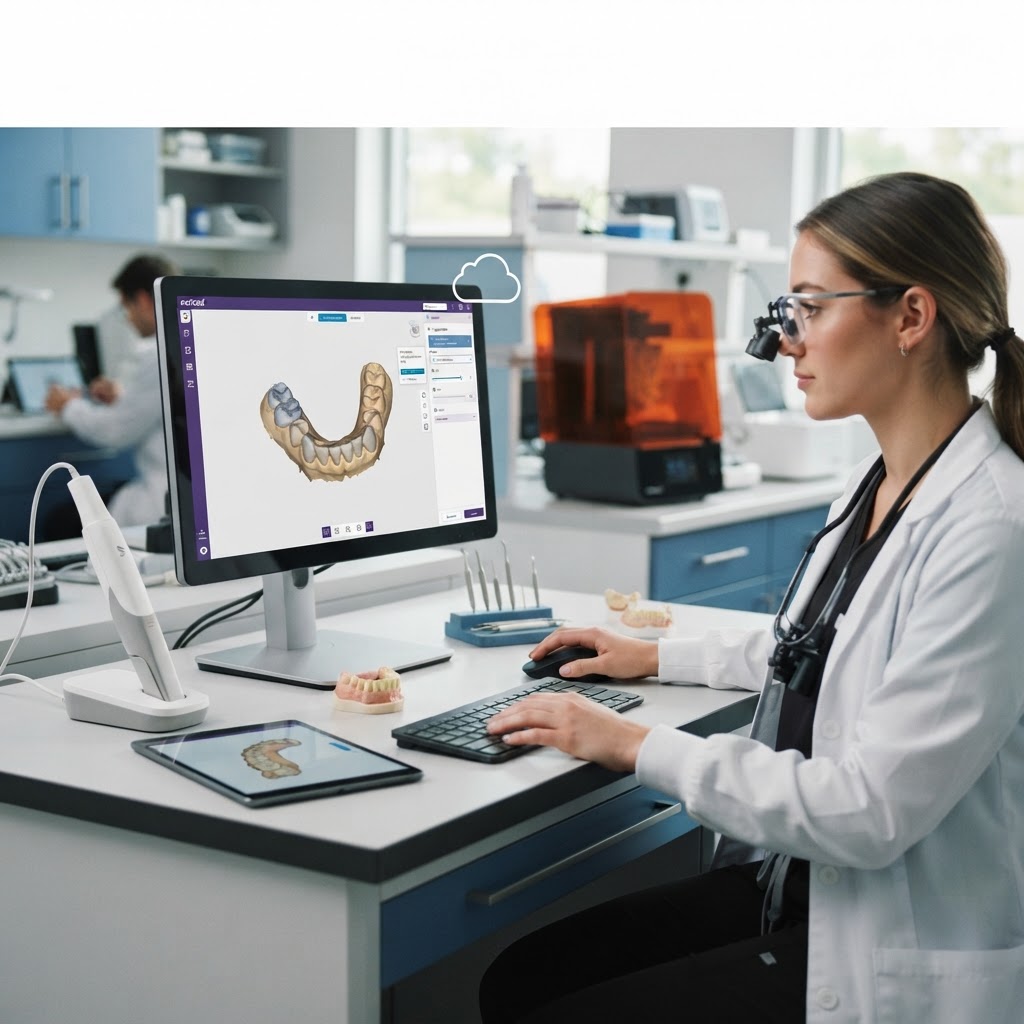
The traditional gap between the dental office and the laboratory was often a source of friction, characterized by delayed shipping, lost prescriptions, and phone-tag consultations. Cloud-based platforms such as 3Shape Communicate, Medit Link, and proprietary laboratory portals have revolutionized this dynamic. Cloud collaboration offers three distinct advantages:
1. Real-Time Feedback and Verification
Cloud integration allows the laboratory to review a scan while the patient is still in the chair. Technicians can identify prep issues, insufficient occlusal clearance, or scan voids immediately. This 'instant feedback loop' eliminates the need for patient recalls, drastically increasing clinic profitability and patient satisfaction.
2. Centralized Case Management
A cloud-centric workflow acts as a single source of truth. All files—DICOM, STL, PLY, and high-resolution clinical photographs—are housed in a secure, HIPAA-compliant environment. This accessibility ensures that every member of the restorative team, from the oral surgeon to the ceramicist, is working from the same data set.
3. Enhanced Security and Scalability
Moving away from local server storage to encrypted cloud solutions protects patient data from local hardware failures and cyber threats. Furthermore, it allows laboratories to scale their operations by outsourcing specific design tasks to global partners without the latency of manual file transfers.
AI-Assisted Design: Redefining Speed and Accuracy
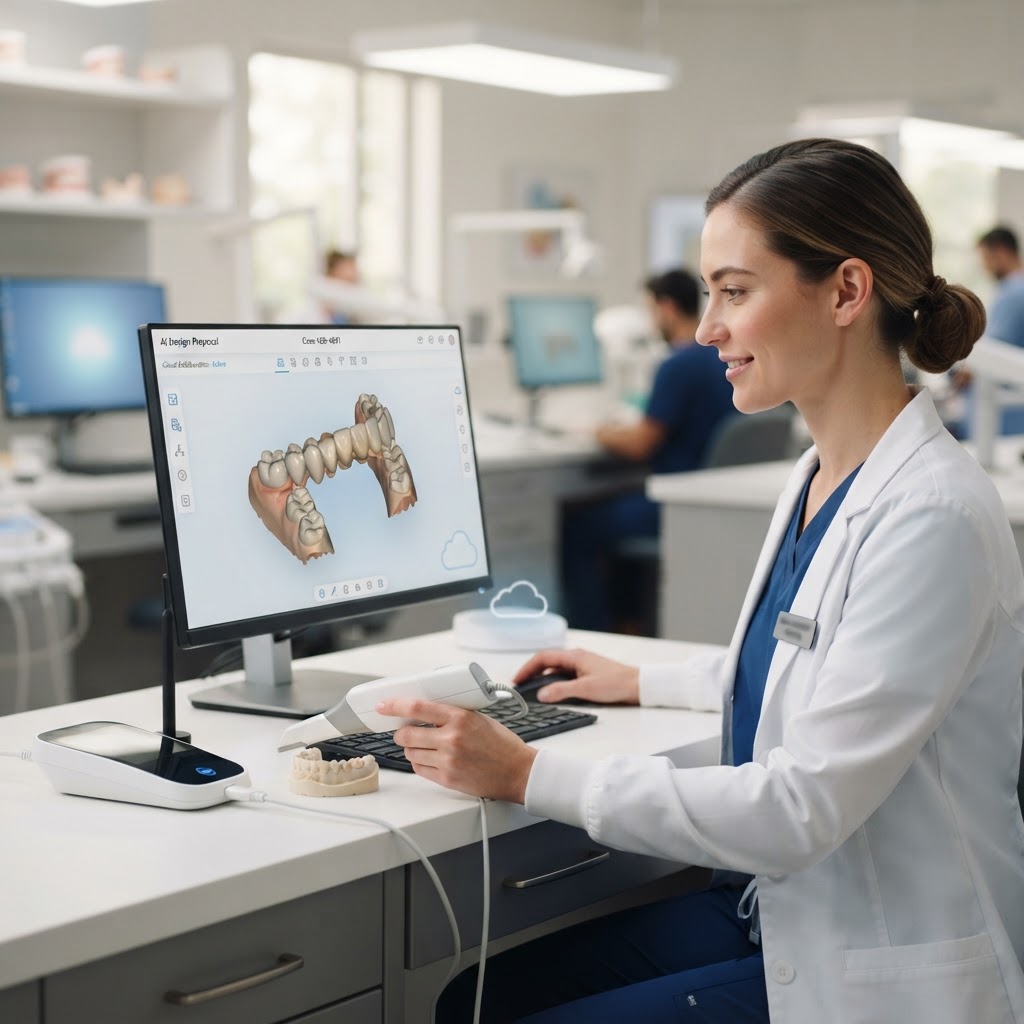
Artificial Intelligence is no longer a futuristic concept; it is currently the engine driving CAD software efficiency. In the dental lab, AI-assisted design is transforming the role of the technician from a manual designer to a high-level editor. Key applications include:
- Automated Margin Detection: AI algorithms can now identify finish lines with startling accuracy, identifying the most likely margin based on thousands of analyzed successful cases.
- Anatomical Morphing: Instead of manually adjusting a library tooth, AI analyzes the adjacent and antagonist dentition to propose a restoration that harmonizes with the patient's unique occlusal scheme and aesthetic markers.
- Quality Control Automation: AI tools can automatically flag designs that fall below minimum thickness requirements or exhibit potential occlusal interferences, acting as a tireless digital supervisor.
This does not replace the technician’s expertise; rather, it removes the 'grunt work' of basic design, allowing the technician to focus on the nuanced artistry of characterization and complex functional integration.
Actionable Strategies for Workflow Optimization
To fully realize the benefits of the digital triad, dental professionals should implement the following strategies:
For the Dental Clinic:
- Invest in Team Training: Ensure that dental assistants are fully proficient in IOS operation. The more the doctor can delegate the scanning process, the more efficient the clinic becomes.
- Standardize Photography: High-quality intraoral and extraoral photos should be uploaded to the cloud alongside every scan. AI and technicians alike perform better when they have visual context beyond the monochrome mesh.
For the Dental Laboratory:
- Adopt an Open Architecture Policy: While proprietary ecosystems have their merits, the ability to accept and process files from any scanner is a competitive necessity.
- Leverage AI Pre-Processing: Use AI tools to automatically orient models and detect margins as cases arrive, so that when a designer opens a file, the baseline work is already complete.
Conclusion: The Future is Integrated
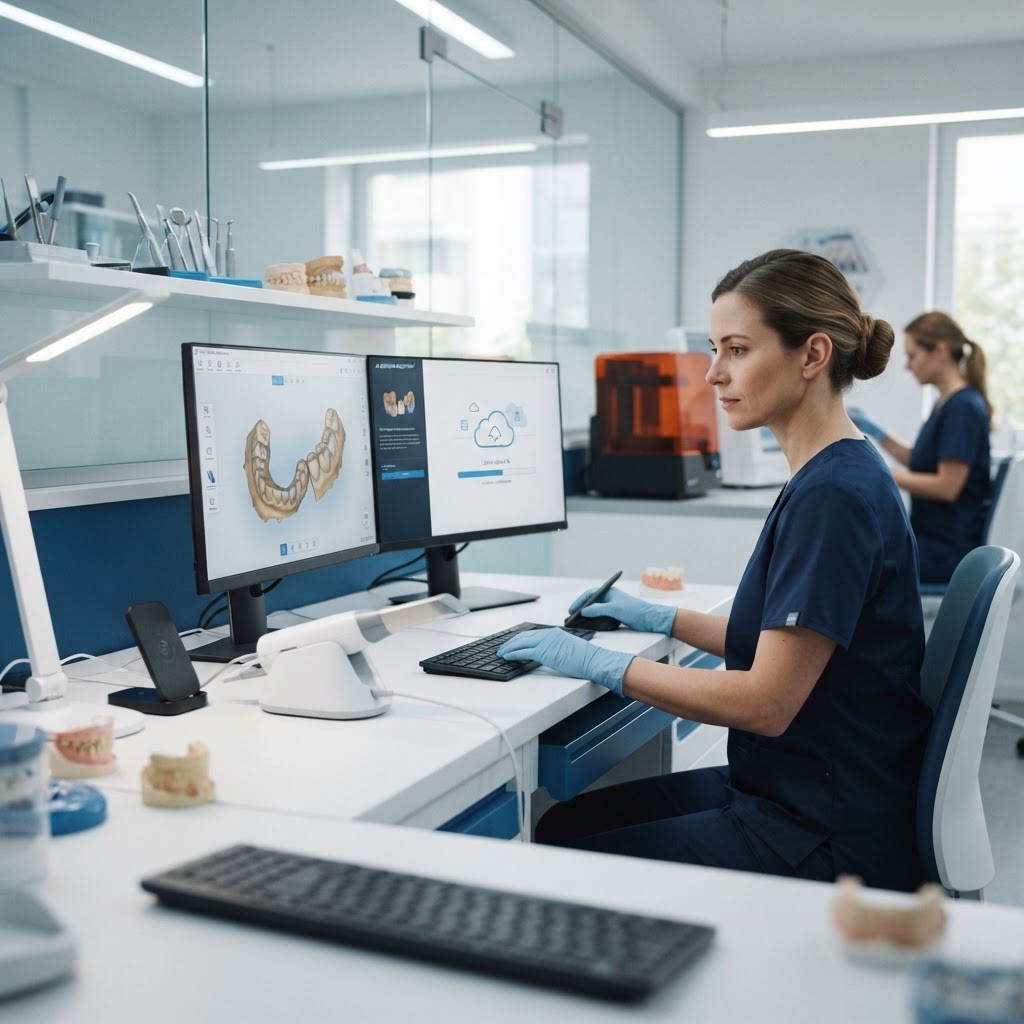
Optimization in digital dentistry is not about a single piece of hardware; it is about the synergy between the scanner, the cloud, and the design software. When these three elements are aligned, the result is a workflow that is faster, more predictable, and ultimately more profitable. At Cosmetic Smile Studio, we believe that the integration of human expertise with AI-driven precision is the key to creating the next generation of aesthetic restorations.
Ready to elevate your practice with a fully optimized digital workflow? Contact Cosmetic Smile Studio today to learn how our advanced lab integration can streamline your restorative cases and deliver unparalleled results for your patients.