The Paradigm Shift: From Subtractive to Additive Manufacturing
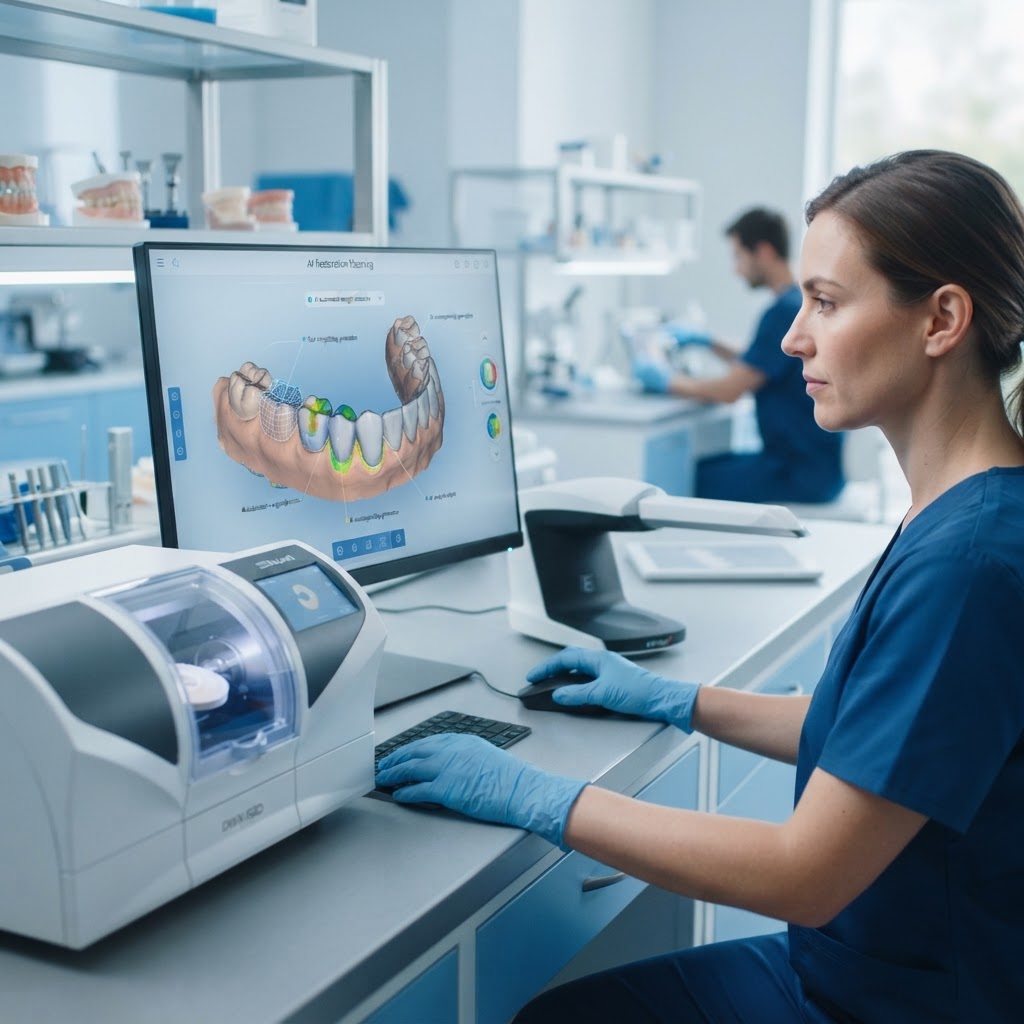
For the past decade, the dental laboratory industry has been defined by the rise of CAD/CAM milling. While subtractive manufacturing revolutionized the production of zirconia and lithium disilicate restorations, we are currently witnessing a second, more profound digital revolution: the maturation of additive manufacturing. Today, 3D printing is no longer relegated to the production of surgical guides and study models. We have entered the era of the high-performance dental lab, where 3D printing workflows are producing everything from permanent crowns to complex removable prosthetics with unprecedented speed and accuracy.
Breakthroughs in Resin Chemistry: The Rise of Permanent 3D Printed Restorations
Perhaps the most significant innovation in recent years is the development of ceramic-filled resins. These materials have bridged the gap between temporary and permanent restorations, offering mechanical properties that rival traditional milled ceramics. Advanced resins now feature high inorganic filler content, providing the necessary flexural strength and wear resistance for long-term intraoral use.
The Impact of Ceramic-Dominant Materials
- Permanent Crowns and Inlays: FDA-cleared resins, such as those used in the SprintRay and BEGO ecosystems, allow labs to print definitive restorations that exhibit excellent marginal integrity and lifelike translucency.
- Biocompatibility and Longevity: Modern resins are engineered for low water absorption and high color stability, ensuring that restorations maintain their aesthetic and functional properties over years of service.
- Enhanced Polishability: Unlike earlier generations of 3D printing materials, today’s resins can be finished with standard laboratory polishing tools to achieve a high-luster glaze that minimizes plaque accumulation.
Optimizing Laboratory Throughput with High-Speed Printing Technologies
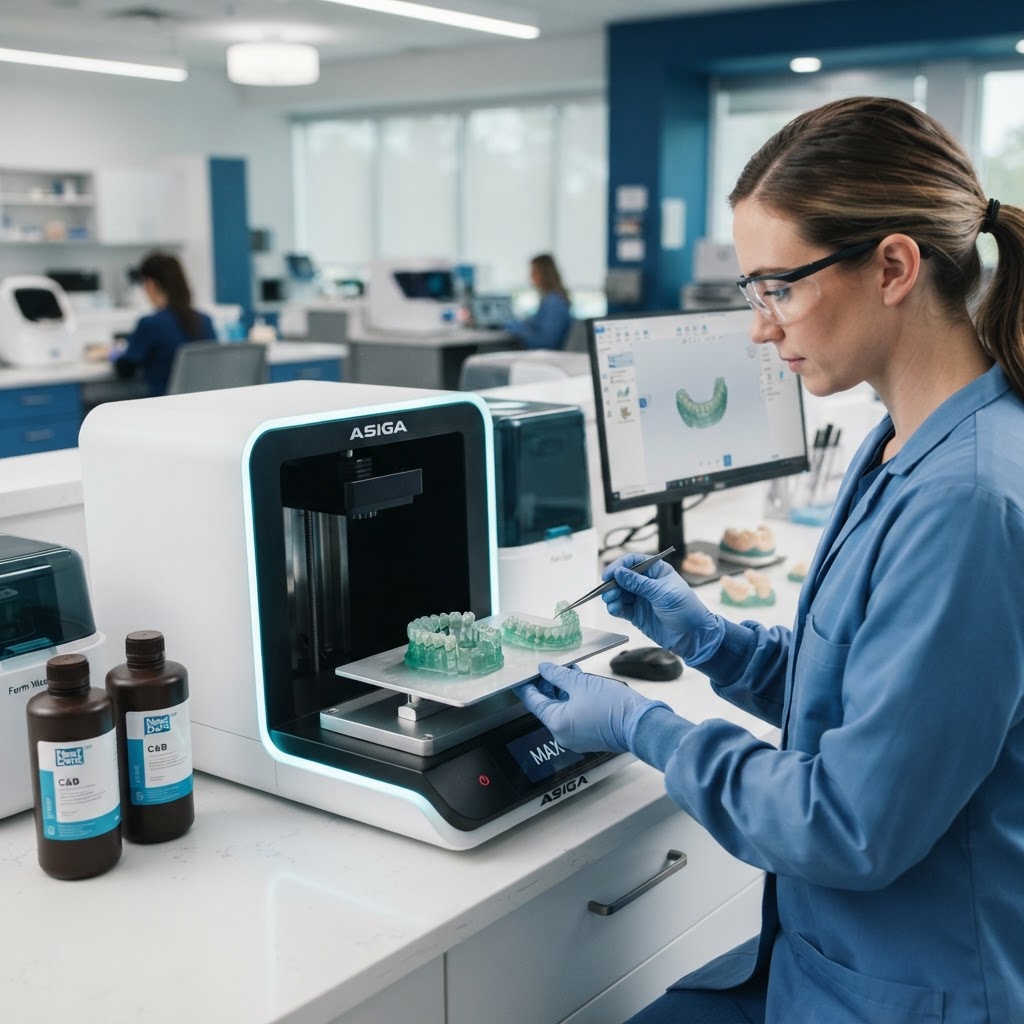
The transition from Digital Light Processing (DLP) to newer technologies like Monochrome Liquid Crystal Display (mLCD) and Digital Light Synthesis (DLS) has drastically reduced print times. For a high-volume dental lab, these speed gains translate directly to improved ROI. We are seeing a move away from 'overnight' printing toward 'real-time' production.
Key Technologies Driving Speed
- Monochrome LCD Printing: By utilizing high-intensity light sources and monochrome panels, these printers can cure layers in under two seconds, allowing for a full arch of models or a plate of crowns to be produced in less than 30 minutes.
- Continuous Liquid Interface Production (CLIP): Pioneered by Carbon, this technology eliminates the traditional layer-by-layer 'stair-stepping' effect, resulting in isotropic mechanical properties and exceptionally smooth surface finishes.
- Large-Format Platforms: New industrial-grade 3D printers allow labs to nest dozens of cases on a single build plate, maximizing the efficiency of every print cycle.
The Automated Workflow: Integrating Post-Processing for Quality Control
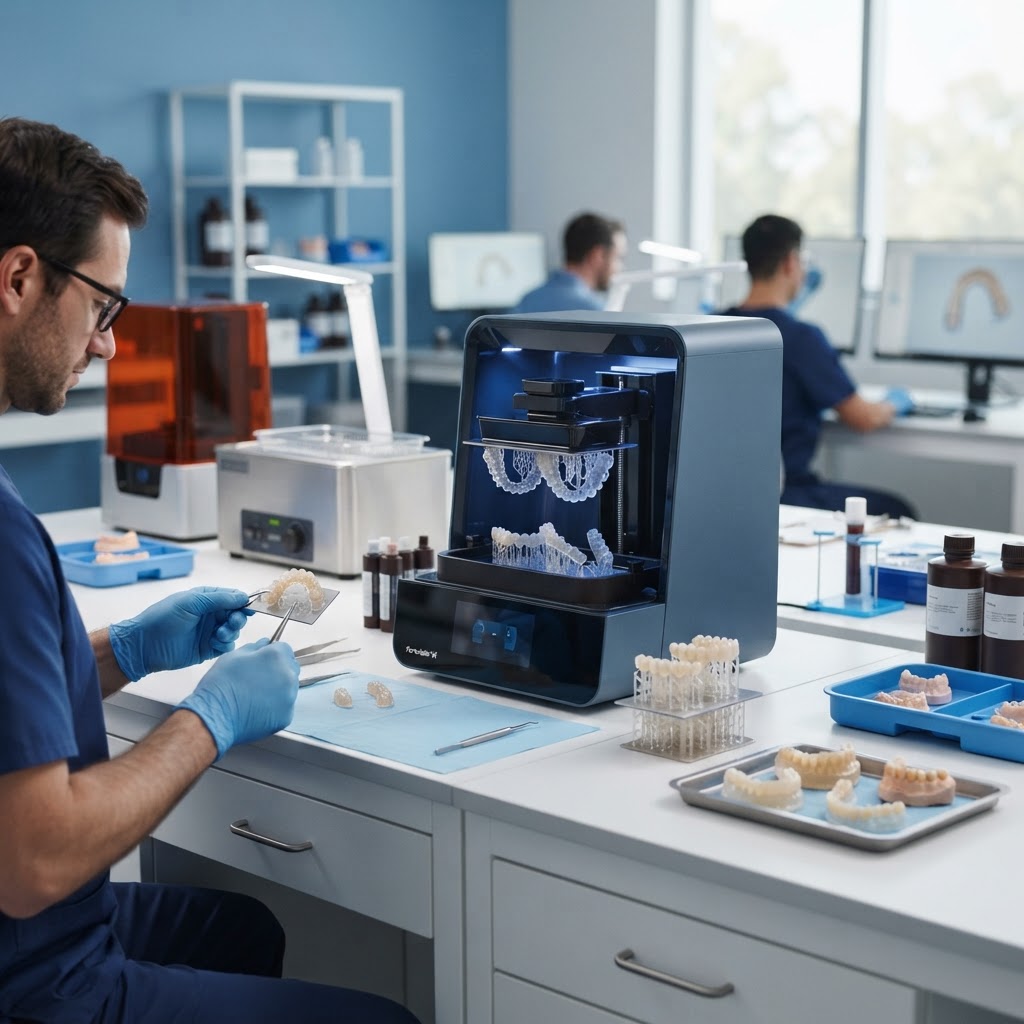
A common bottleneck in dental 3D printing has historically been the manual labor involved in post-processing. However, the latest innovations focus on the 'end-to-end' workflow, ensuring that the final restoration is as precise as the digital design. Automated wash and cure stations are now standard equipment in modern labs, reducing human error and ensuring that every restoration meets the required polymerization standards.
Standardizing the Post-Print Protocol
Consistency is the hallmark of professional dental technology. Automated systems now utilize pre-calibrated profiles for specific resins, managing the exact temperature, light intensity, and duration of the curing process. This precision is vital for ensuring that restorations achieve their full mechanical potential and remain biocompatible. Furthermore, integrated centrifuges and ultrasonic cleaners remove residual resin from intricate areas, such as the intaglio surfaces of crowns and the internal channels of surgical guides.
The Evolution of Removable Prosthetics: 3D Printed Dentures
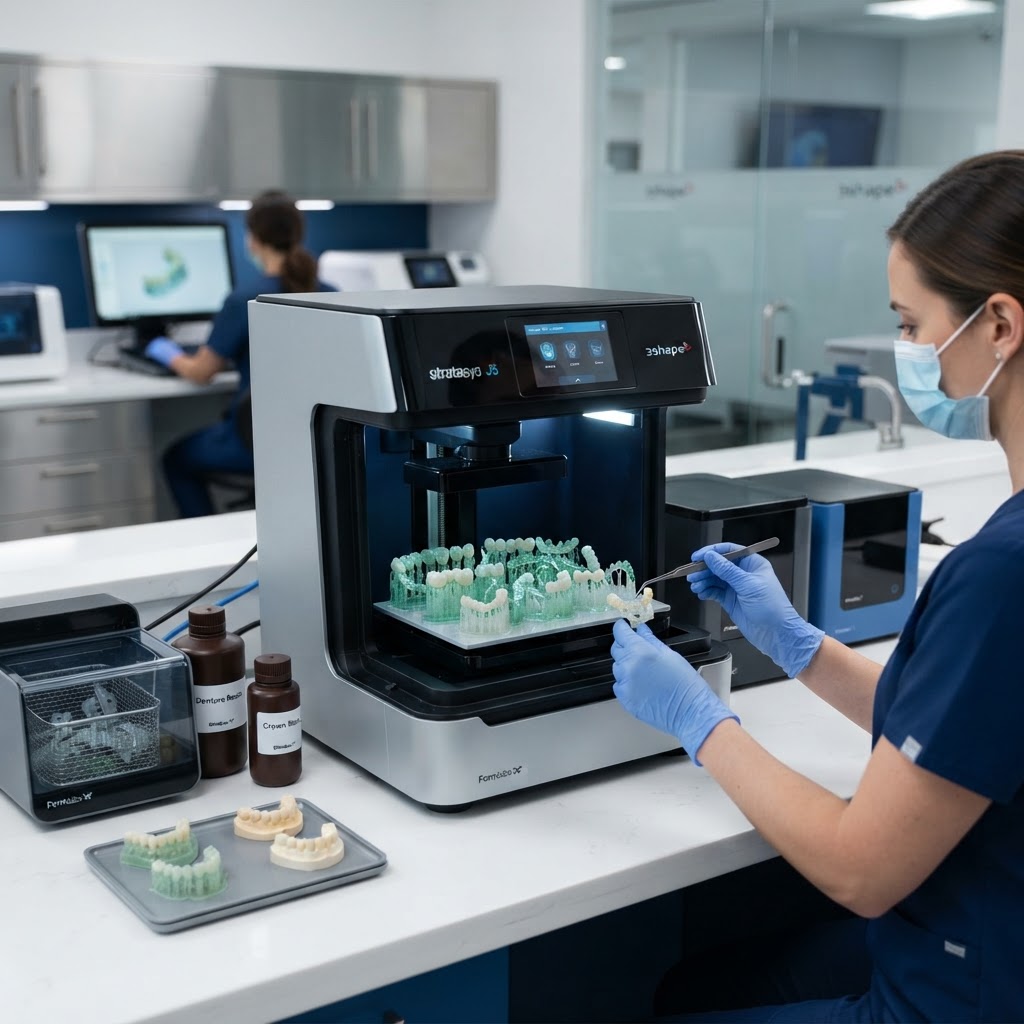
While fixed restorations often garner the most attention, the impact of 3D printing on the removable market is equally transformative. The traditional process of fabricating a complete denture is labor-intensive and prone to dimensional inaccuracies during the curing of acrylic. Digital dentures produced via additive manufacturing offer a more predictable and streamlined alternative.
Monolithic vs. Bonded Approaches
- Bonded Dentures: This workflow involves printing the denture base and the teeth separately using specialized resins, then bonding them together. This allows for superior aesthetics by using different shades and translucencies for the gingiva and the dentition.
- Monolithic Dentures: Some labs are moving toward printing the entire denture in a single piece, using multi-chromatic resins or sophisticated staining techniques. This eliminates the risk of tooth de-bonding and speeds up the production process significantly.
- High-Impact Resins: New denture base resins offer impact resistance that exceeds traditional heat-cured acrylics, providing patients with more durable and comfortable prosthetics.
Conclusion: Embracing the Future of Dental Technology
The integration of 3D printing into the dental laboratory is no longer an optional upgrade; it is a fundamental requirement for labs that wish to remain competitive in a digital-first market. By leveraging the latest innovations in resin chemistry, high-speed printing technologies, and automated workflows, labs can offer faster turnaround times, lower costs, and superior clinical outcomes. The future of dental restorations is additive, and the transition is happening now.
Ready to elevate your laboratory's capabilities? Contact Cosmetic Smile Studio today to learn more about our state-of-the-art additive manufacturing services and how we can support your practice in delivering the next generation of patient care.