The Dawn of Intelligent Dental Design
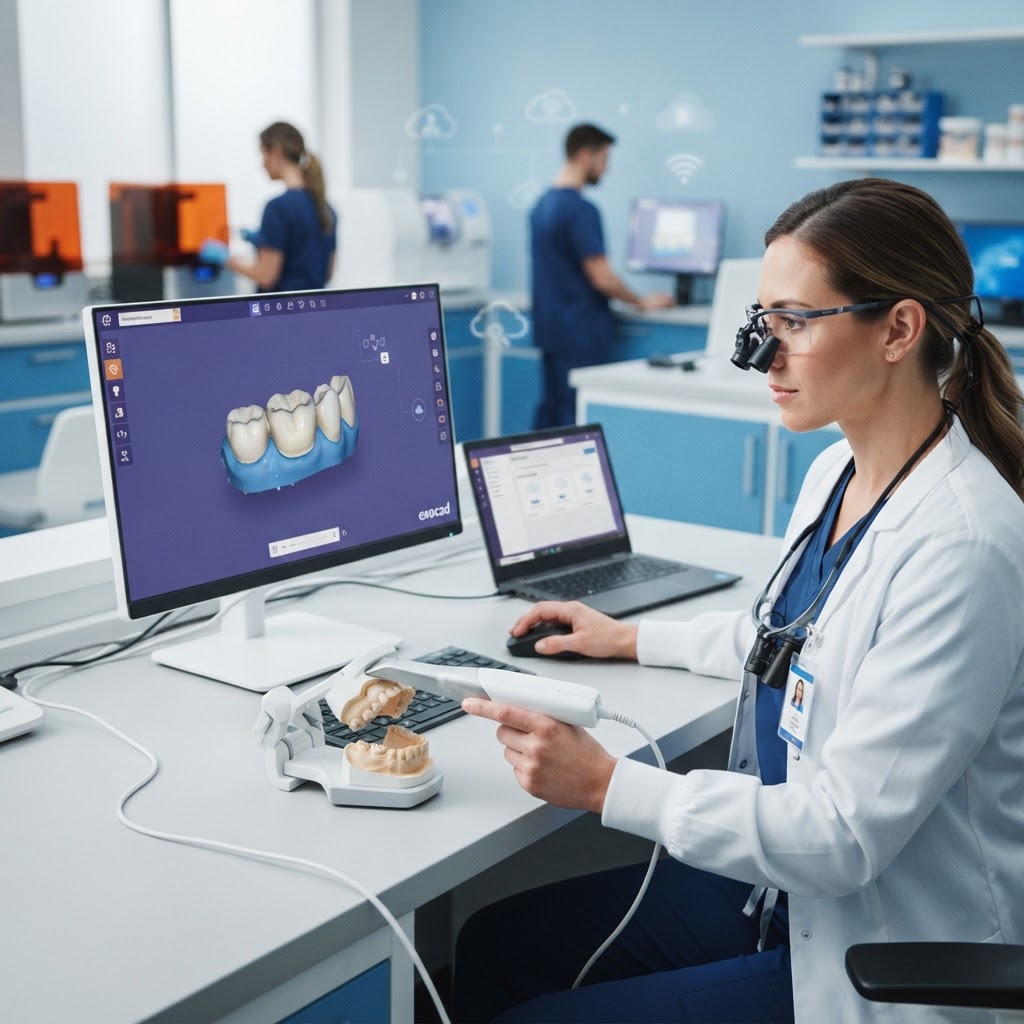
The dental laboratory industry is currently undergoing its most significant transformation since the introduction of CAD/CAM technology in the 1980s. While the initial digital revolution replaced the wax spatula with a mouse and monitor, the process remained heavily reliant on manual human input. Today, we are entering the era of the 'Cognitive Laboratory,' where artificial intelligence (AI) acts as a co-pilot, handling the complexities of anatomical design, margin detection, and material optimization with unprecedented speed and accuracy. For the modern laboratory owner, understanding this shift is not just about keeping pace with technology; it is about redefining the threshold of clinical excellence and operational efficiency.
Neural Networks: The Engines of Modern CAD
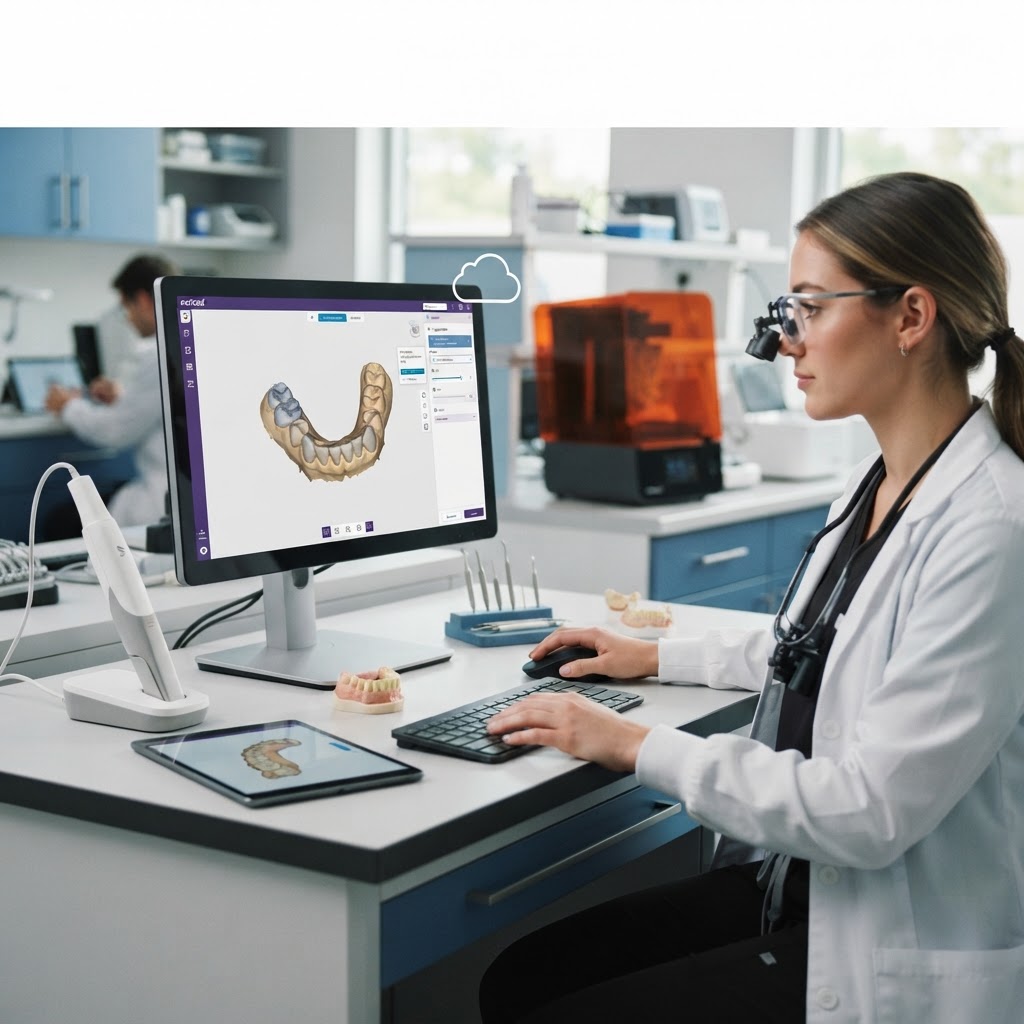
At the heart of AI-driven dental design are deep learning algorithms and neural networks. These systems are trained on millions of high-resolution intraoral scans and validated clinical cases. Unlike traditional CAD software that follows a rigid set of geometric rules, AI recognizes patterns. When a technician loads a scan into an AI-enhanced platform, the software understands the contextual relationship between the preparation, the adjacent teeth, and the opposing arch. This allows for 'Generative Design,' where the software proposes an initial restoration that requires minimal, if any, manual adjustment. This evolution from tool-based software to intelligence-based software is reducing the time required for a standard crown design from fifteen minutes to under sixty seconds.
Real-World Applications in Modern CAD/CAM Workflows
The integration of AI into the laboratory workflow manifests in several critical areas, each designed to eliminate bottlenecks and reduce human error:
- Automated Margin Line Detection: One of the most tedious and error-prone tasks in dental CAD is the identification of the preparation margin. AI algorithms can now analyze surface curvature and texture to identify margins with sub-micron precision, even in cases where the retraction was suboptimal.
- Intelligent Tooth Library Matching: Rather than forcing a generic tooth shape onto a prep, AI analyzes the patient’s existing dentition to select and morph a library tooth that matches the specific morphology, wear patterns, and functional requirements of the individual patient.
- Dynamic Occlusion and Collision Handling: AI-driven CAD can simulate mandibular movement in real-time, automatically adjusting the occlusal table to ensure proper function without the need for manual 'grinding' in the digital environment.
- Automated Tissue Segmentation: In complex implant and full-arch cases, AI quickly differentiates between hard tissue, soft tissue, and prosthetic components, allowing for more accurate surgical guide and bridge design.
Material Optimization and Intelligent Nesting
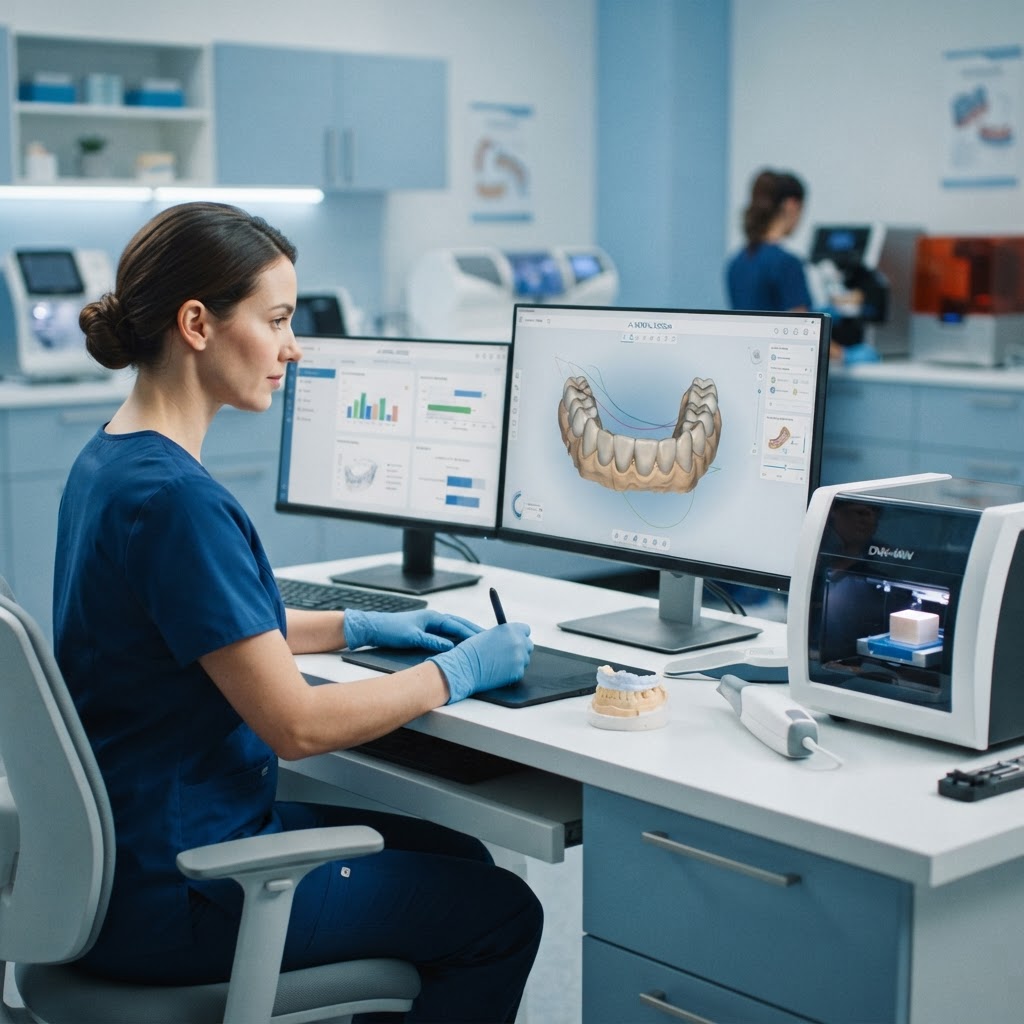
The role of AI extends beyond the design phase and into the manufacturing stage (CAM). Modern nesting software utilizes AI to maximize the use of material discs. By analyzing the geometry of multiple restorations, the AI can orient parts to minimize support structures and maximize the number of units per zirconia or PMMA disc. This not only reduces material waste but also optimizes the toolpaths for 5-axis milling machines, extending tool life and reducing the likelihood of chip-outs or fractures during the milling process.
Bridging the Gap Between Clinic and Lab
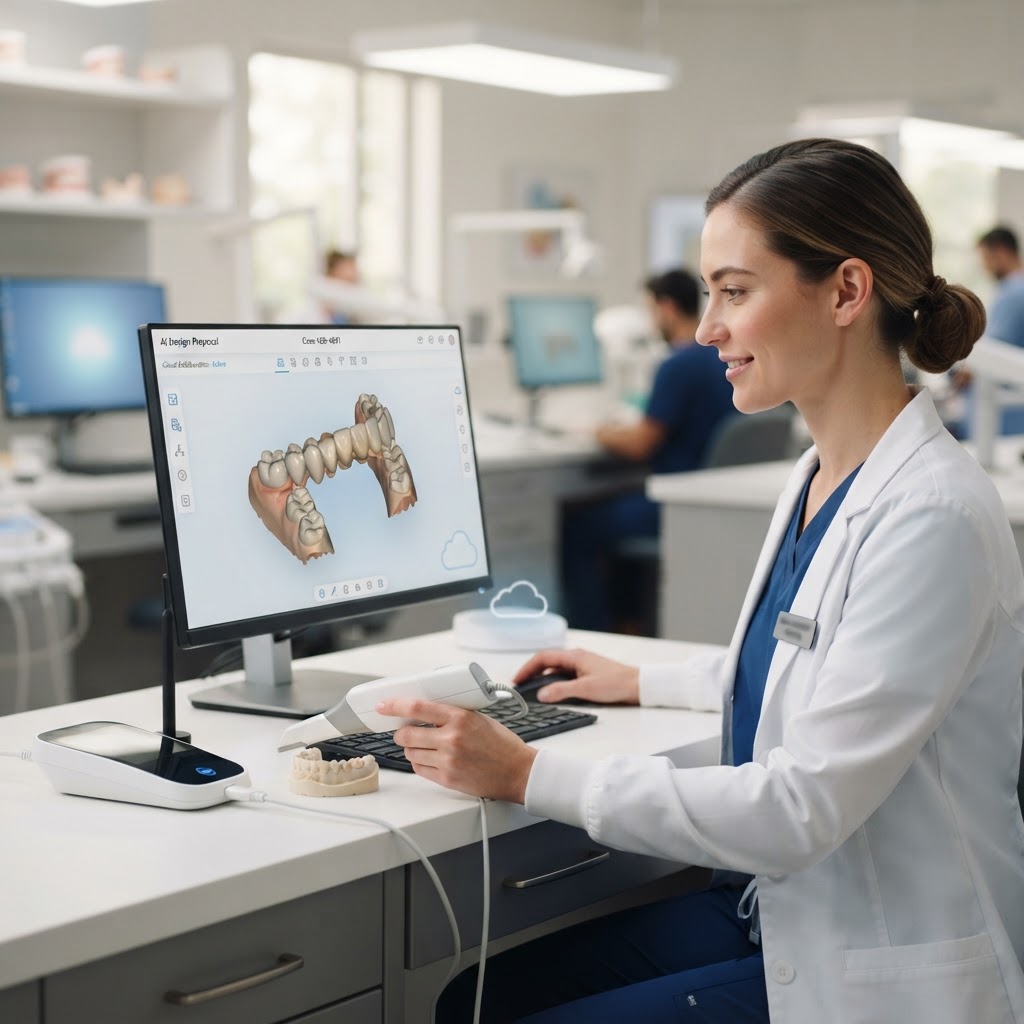
AI is also acting as a powerful communication bridge between the dentist and the laboratory technician. AI-powered diagnostic tools used in the clinic can now flag potential issues—such as insufficient occlusal clearance or undercut preparations—while the patient is still in the chair. When these scans reach the lab, the AI provides a comprehensive 'pre-flight' report. This proactive approach reduces the number of remakes and the need for stressful phone calls regarding inadequate impressions. Furthermore, AI-driven 'Smile Design' software allows for more predictable outcomes by showing patients a highly realistic preview of their final restoration, which the lab can then translate directly into the final CAD file.
The Strategic Advantage for Modern Laboratories
For laboratories in the USA, the adoption of AI is a strategic response to the dual challenges of a shrinking talent pool and rising labor costs. AI does not replace the skilled technician; instead, it elevates their role. By automating the routine 'bulk' work of design, technicians are free to focus on the high-level artistry and complex troubleshooting that require human intuition. This allows a lab to scale its production without a linear increase in staff, maintaining a competitive edge in a market that increasingly demands both high quality and fast turnaround times.
Future-Proofing Your Lab Infrastructure
Implementing AI-driven design requires a commitment to a modern digital infrastructure. This involves investing in open-architecture software that supports AI modules and ensuring that your hardware—specifically GPUs (Graphics Processing Units)—is capable of handling the heavy computational loads required by machine learning models. As we look toward 2026 and beyond, we expect to see 'Predictive CAD,' where the software can predict material failure points based on a patient's bite force data and suggest reinforced design features automatically.
Conclusion: Embracing the Digital Collaborator
AI in dental lab design is a transformative force that is setting a new standard for precision, efficiency, and clinical outcomes. By embracing these intelligent workflows, laboratories can deliver restorations that fit better, last longer, and look more natural than ever before. At Cosmetic Smile Studio, we are committed to staying at the forefront of these technological advancements, ensuring our partners have access to the most sophisticated restorative solutions available.
Are you ready to elevate your practice with the precision of AI-driven restorations? Contact Cosmetic Smile Studio today to learn how our advanced digital workflow can streamline your restorative cases and enhance patient satisfaction.