The New Standard in Restorative Excellence
The dental industry is currently navigating its most significant transformation since the advent of CAD/CAM technology. For today’s practitioners and laboratory technicians, the conversation has shifted from simply 'going digital' to 'optimizing digital.' In a competitive market, the speed and precision of a restoration are no longer just advantages—they are requirements. To achieve this, the modern dental ecosystem must rely on three core pillars: high-fidelity intraoral scanners, robust cloud collaboration platforms, and AI-assisted design software.
By integrating these technologies into a unified, frictionless workflow, clinics and laboratories can reduce remakes, slash turnaround times, and provide a level of patient care that was previously unattainable. This article explores how to optimize these touchpoints to build a high-performance restorative cycle.
The Intraoral Scanner: The Foundation of the Digital Impression
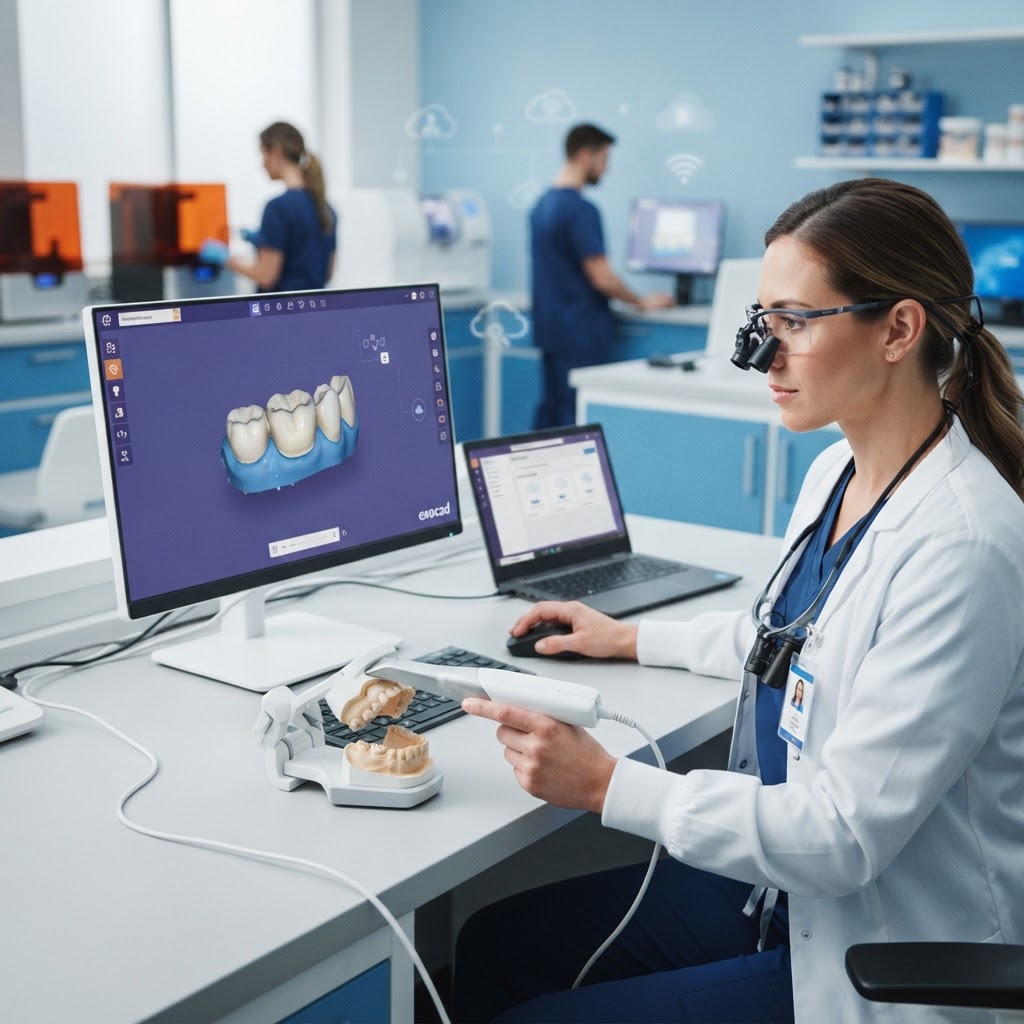
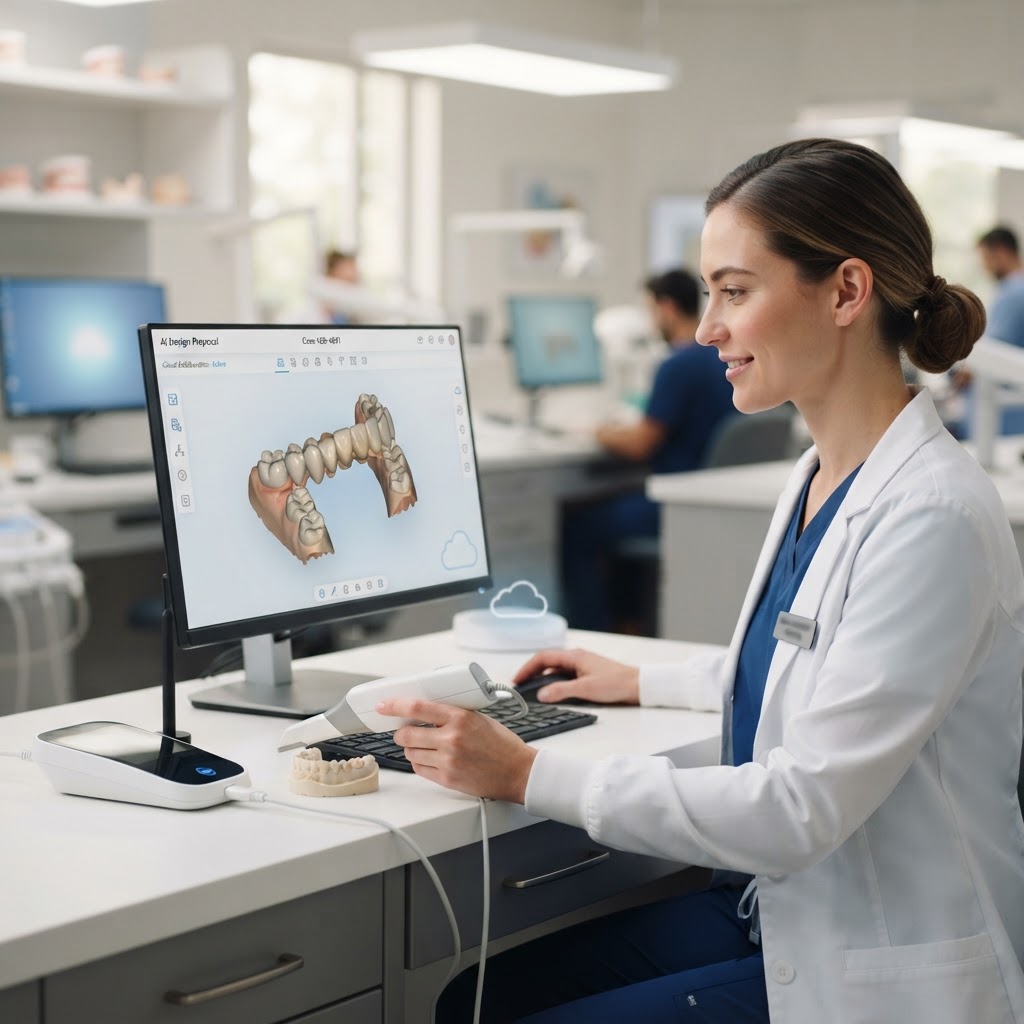
Optimization begins at the chairside. The intraoral scanner (IOS) is the gateway to the digital workflow, and its role has evolved from a basic impression replacement to a comprehensive diagnostic tool. High-performance scanners like the Medit i700, Primescan, and TRIOS 5 have redefined accuracy, capturing data in microns rather than millimeters.
Key Optimization Strategies for Scanning
- Tissue Management: Even the most advanced AI cannot see through blood or saliva. Precise retraction and moisture control remain the gold standard for high-quality data acquisition.
- Scan Path Optimization: Following manufacturer-recommended scanning patterns ensures the lowest degree of data distortion, particularly in full-arch cases where stitch errors can accumulate.
- Real-Time Validation: Utilizing built-in tools for bite clearance and undercut detection while the patient is still in the chair eliminates the need for stressful follow-up appointments.
By treating the IOS as a precision data-capture device rather than a simple camera, clinicians provide laboratories with the clean, accurate 'digital blueprints' necessary for premium restorative work.
Cloud Collaboration: Eliminating the Communication Gap
Historically, the bottleneck in the dental workflow was the physical transport of impressions and the disjointed communication between the dentist and the technician. Cloud-based platforms have dismantled these barriers, enabling a truly collaborative 'virtual workspace.'
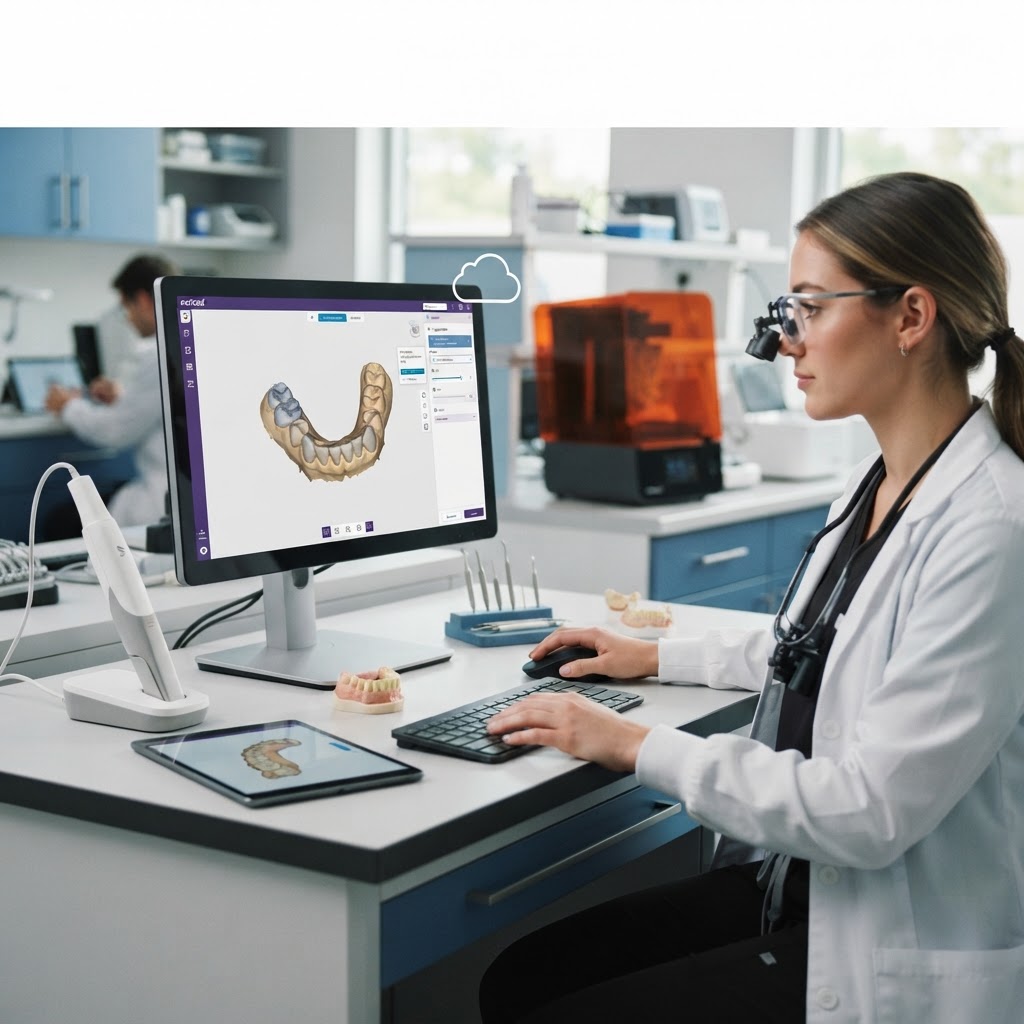
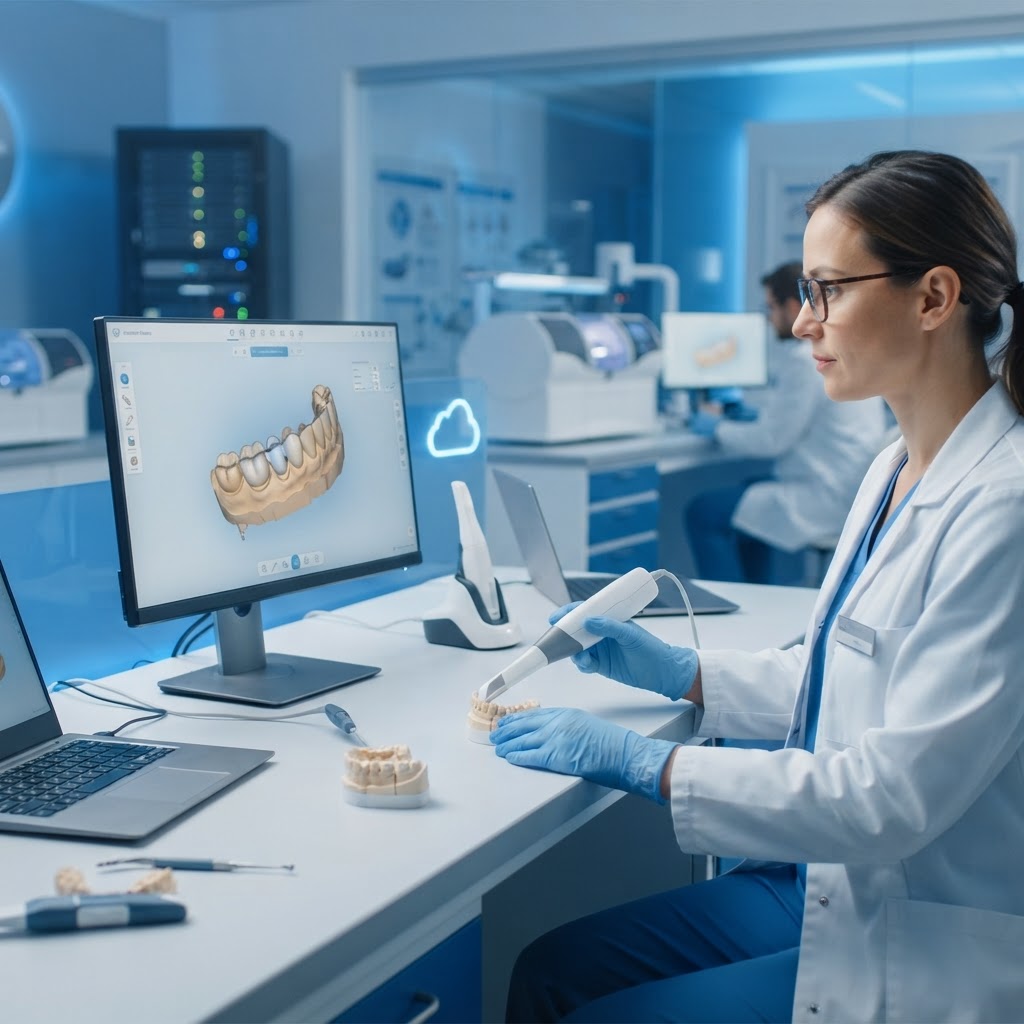
Modern cloud systems like 3Shape Communicate or exocad’s dentalshare allow for the instantaneous transfer of massive 3D files. However, true optimization goes beyond file sharing; it involves real-time consultation. When a technician can open a file and discuss margin placement or shade nuances with a dentist while the patient is still present, the margin for error drops to near zero.
The Benefits of a Cloud-First Approach
- HIPAA-Compliant Security: Transitioning away from unencrypted email attachments to secure, specialized dental clouds ensures patient data integrity and legal compliance.
- Instant Feedback Loops: Laboratory technicians can flag insufficient preparation or unclear margins within minutes of the scan being taken, allowing for immediate correction.
- Case Tracking and Transparency: Dentists can track the status of a case in real-time, improving office scheduling and patient communication.
AI-Assisted Design: Scaling Precision and Creativity
The most recent and perhaps most impactful leap in workflow optimization is the integration of Artificial Intelligence (AI) within CAD software. AI is no longer a futuristic concept; it is an active participant in the design of every crown, bridge, and implant restoration produced at top-tier labs like Cosmetic Smile Studio.
AI-assisted design (often referred to as 'Smart Design') utilizes vast libraries of natural tooth morphology and machine learning algorithms to propose initial designs. This doesn't replace the technician; it empowers them. By automating the 'heavy lifting' of design, technicians can focus their expertise on the fine aesthetic details that define a premium restoration.
How AI Enhances the Design Workflow
- Automated Margin Detection: AI algorithms can identify finish lines with incredible speed, significantly reducing the manual labor required for the initial design phase.
- Morphology Proposal: Based on the surrounding dentition, AI suggests tooth shapes that optimize both occlusion and aesthetics, ensuring the restoration 'fits' the patient's unique biological environment.
- Reduction in Human Error: By identifying potential thin spots or contact issues during the design phase, AI acts as a digital safety net, ensuring every restoration meets structural integrity standards.
Actionable Steps for Workflow Integration
To fully realize the benefits of an optimized digital workflow, clinics and laboratories must commit to a culture of continuous improvement. This begins with software interoperability. Selecting 'open' systems that allow for the seamless movement of data between different brands of scanners, design software, and milling units is crucial for long-term scalability.
Furthermore, investing in staff training is essential. The most advanced AI or scanner is only as effective as the professional operating it. Regular training sessions on new software updates and scanning techniques ensure that the entire team remains at the cutting edge of the industry.
Conclusion: Embracing the Future of Dentistry
Digital dentistry workflow optimization is not a destination; it is an ongoing process of refining the intersection between technology and human expertise. By mastering the synergy of intraoral scanning, cloud communication, and AI-assisted design, dental professionals can achieve a level of clinical excellence and operational efficiency that was once thought impossible.
At Cosmetic Smile Studio, we are dedicated to leading this digital charge. Our lab utilizes the latest in AI-driven design and cloud connectivity to ensure that every restoration we produce is a masterpiece of precision and aesthetics. Partner with us today to experience how an optimized digital workflow can transform your practice and elevate your patient outcomes.