The Paradigm Shift in Digital Restoration Design
The dental laboratory industry is currently navigating its most significant technological shift since the introduction of initial CAD/CAM systems. For decades, digital dentistry relied on 'manual' digital tools—software that required a technician to meticulously click and drag virtual wax to create crowns, bridges, and abutments. Today, we are entering the era of the 'Intelligent Lab.' Artificial Intelligence (AI) is transforming these workflows from labor-intensive manual processes into automated, predictive systems that enhance both speed and precision.
For the modern dental professional, understanding the integration of AI within CAD/CAM design is no longer optional. It is the key to maintaining a competitive edge in an environment where clinicians and patients demand faster turnaround times and superior aesthetic results. In this article, we explore how AI-driven design is reshaping the restorative landscape and provide actionable insights for laboratories looking to optimize their digital infrastructure.
The Core of AI in Dental CAD: Deep Learning and Morphology
At the heart of the AI revolution in dental design is deep learning—a subset of machine learning where neural networks are trained on vast datasets of anatomical scans. Traditional CAD software relied on static libraries of tooth shapes that often required significant manipulation to fit a specific patient's occlusion and neighboring dentition. AI-driven design tools, however, utilize 'Morphological Libraries' that have been trained on millions of high-resolution intraoral and desktop scans.
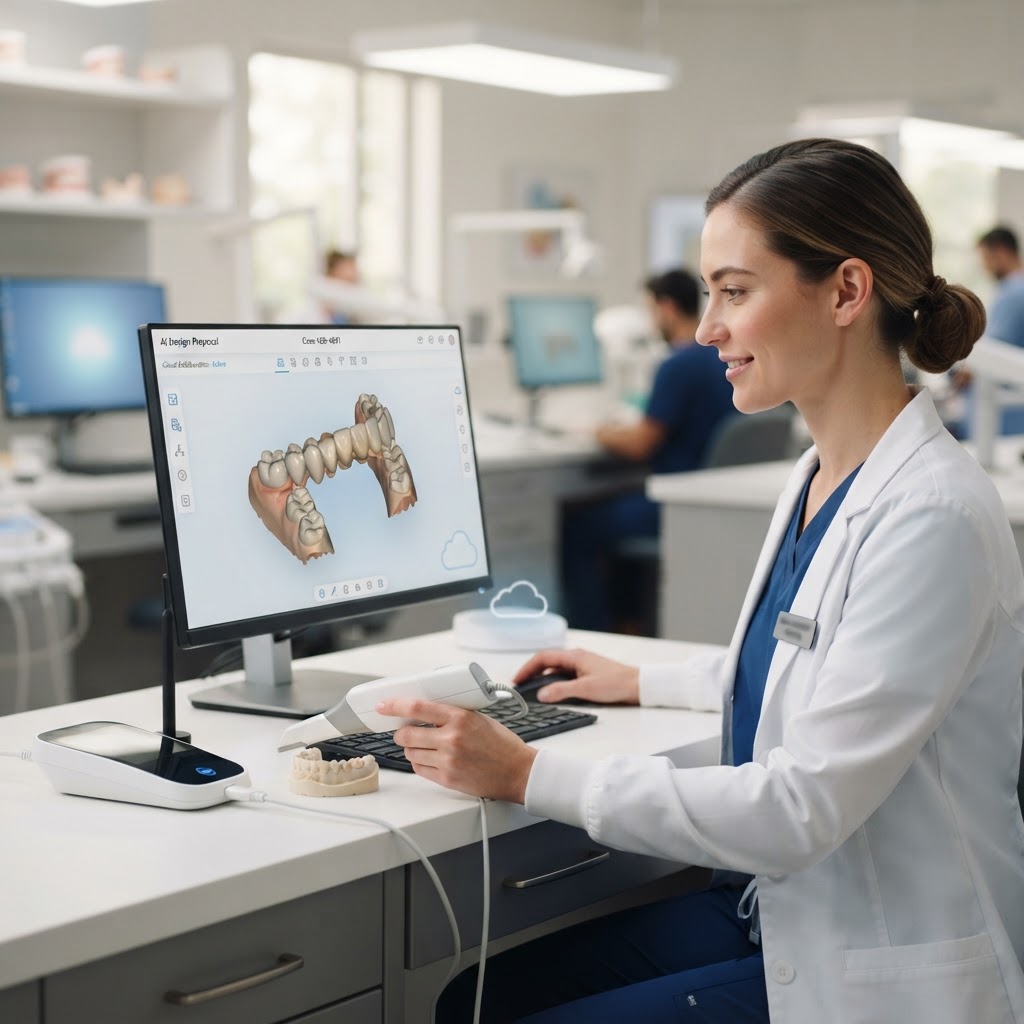
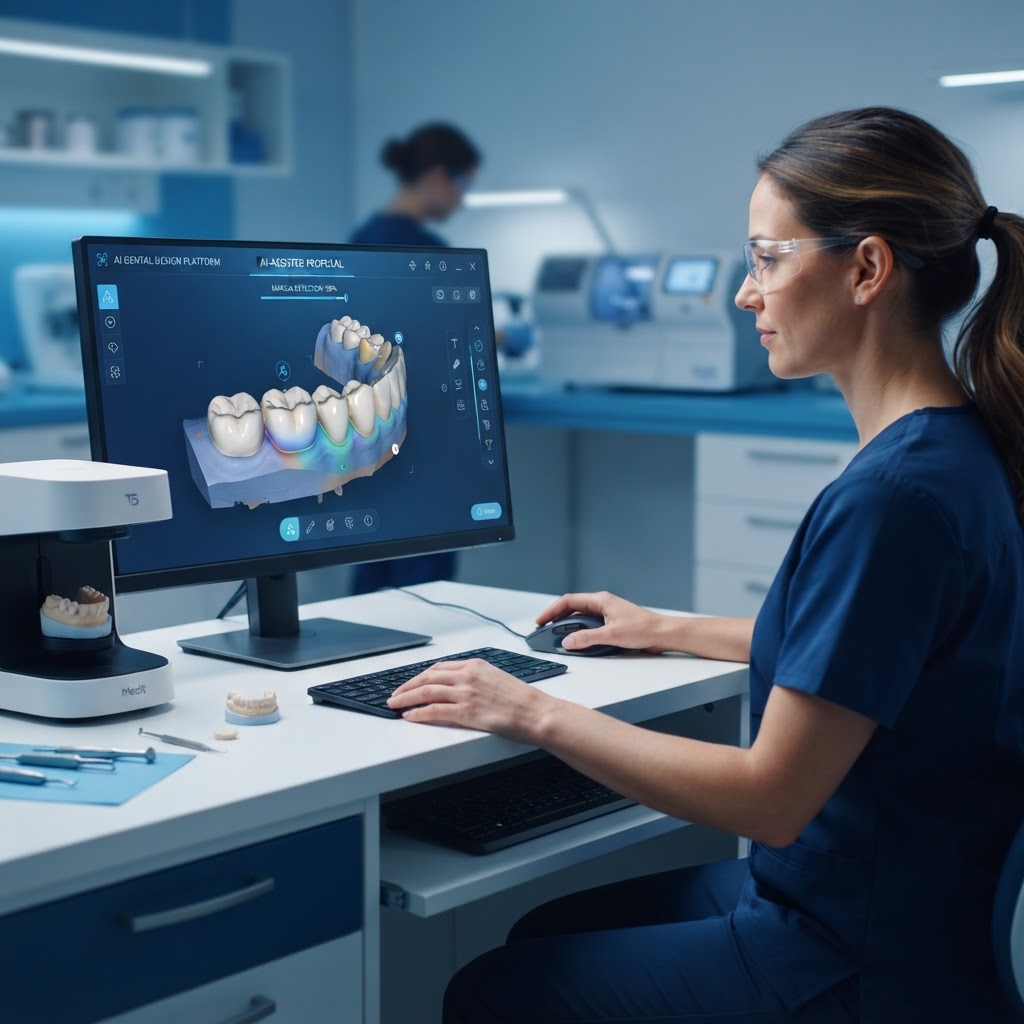
When a technician uploads a scan into an AI-augmented platform, the software doesn't just suggest a generic tooth shape. It analyzes the specific environment: the prep margins, the adjacent teeth, the opposing dentition, and the patient's unique functional movements. The AI then 'proposes' an anatomy that is statistically most likely to provide ideal occlusion and contact points. This 'automated anatomy' feature can reduce the design time for a single posterior crown from fifteen minutes to mere seconds.
Transforming the Design Workflow: Automation in Action
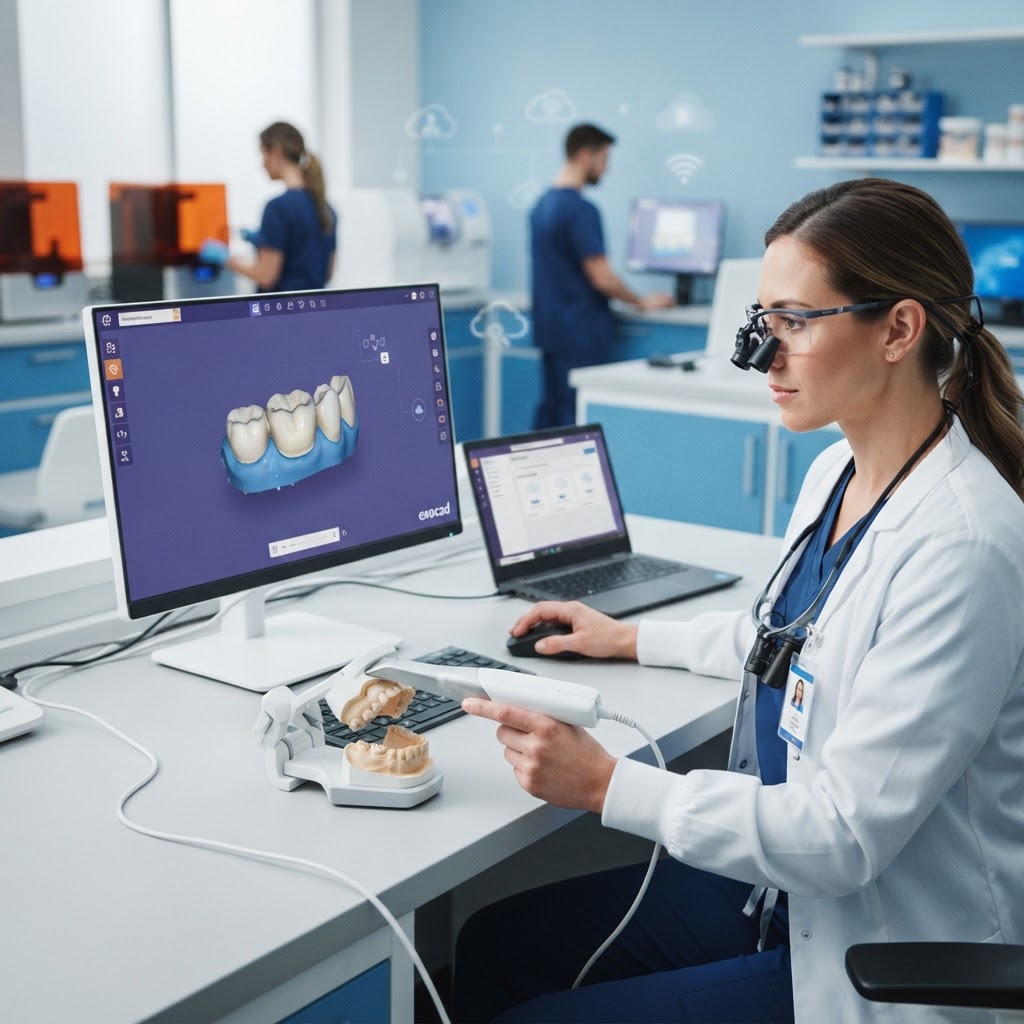
The integration of AI into CAD/CAM software like Exocad and 3Shape has introduced several critical features that are fundamentally changing the laboratory workflow:
- Automated Margin Line Detection: One of the most time-consuming aspects of CAD design is the precise identification of the preparation margin. AI algorithms now utilize sophisticated edge-detection models to suggest margin lines with incredible accuracy, even in cases where the scan data might be slightly sub-optimal. This reduces the risk of human error and ensures a superior marginal fit.
- Intelligent Occlusion Optimization: AI can predict the dynamic movement of the jaw based on the static scan data. By simulating the way a patient bites and chews, the software automatically adjusts the heights of the cusps and the depth of the fossae to minimize the need for chairside occlusal adjustments.
- Automated Nesting and Support Placement: Beyond the design phase, AI is optimizing the CAM (Computer-Aided Manufacturing) process. Intelligent nesting algorithms can arrange more restorations on a single milling puck or 3D printing build plate than a human operator, while automatically placing supports to ensure structural integrity and ease of removal.
The Rise of 'Design by Exception'
Perhaps the most profound impact of AI on dental technicians is the shift toward a 'Design by Exception' model. In this workflow, the AI performs the bulk of the initial design work. The highly skilled dental technician then takes on the role of a 'quality controller' or 'editor.' Instead of spending hours building simple restorations from scratch, the technician focuses their expertise on complex cases, aesthetic characterization, and verifying the AI's output. This model allows laboratories to scale their production volume without a linear increase in labor costs, directly addressing the ongoing shortage of experienced dental technicians in the USA.
Actionable Insights for Implementing AI in Your Lab
Transitioning to an AI-enhanced workflow requires more than just a software update. To truly leverage the benefits of artificial intelligence, laboratories and clinics should consider the following strategies:
- Prioritize Data Quality at the Source: AI is only as good as the data it receives. Ensuring that intraoral scans are captured with high resolution and that tissue management is impeccable will allow the AI to perform at its peak. Clinics should be educated on the impact of scan quality on automated design.
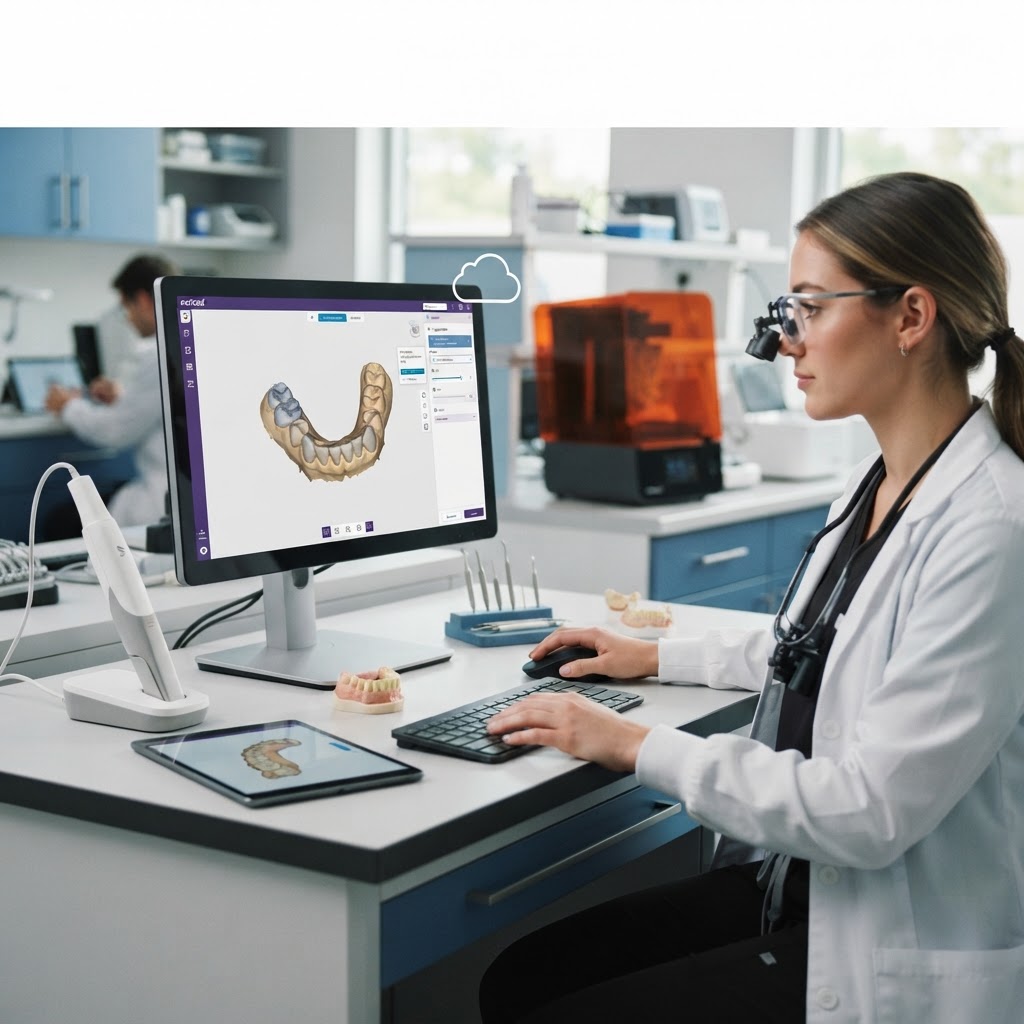
- Invest in Cloud-Ready Infrastructure: Many of the most powerful AI design tools, such as 3Shape Automate, operate in the cloud. Laboratories need robust internet connectivity and secure data management systems to facilitate the rapid upload and download of design files.
- Continuous Education: The pace of AI development is staggering. Laboratory owners should invest in ongoing training for their staff to ensure they are proficient in the latest AI modules within their chosen software ecosystem.
- Audit Your Rework Rates: Implement a system to track why restorations fail or require adjustments. Use this data to calibrate your AI settings. For instance, if you consistently find that contact points are too tight, the AI parameters can be adjusted across the entire workflow to compensate.
The Human-AI Partnership: Ethics and Accuracy
While the capabilities of AI are impressive, it is essential to remember that AI is a tool, not a replacement for clinical judgment. The nuances of patient-specific aesthetics and the complex biological realities of the oral cavity still require human oversight. The most successful laboratories in 2026 will be those that foster a symbiotic relationship between artificial intelligence and human craftsmanship. AI handles the repetitive, data-heavy tasks, while the technician provides the final artistic touch and clinical validation.
Conclusion: Embracing the Future of Restoration Design
Artificial intelligence is fundamentally redefining what is possible in the dental laboratory. By automating the most tedious aspects of CAD/CAM design and providing predictive tools for restorative planning, AI is enabling laboratories to achieve unprecedented levels of precision, speed, and scalability. As we look toward the future, the integration of AI will not only improve laboratory efficiency but will also enhance the patient experience through better-fitting restorations and reduced chair time.
Is your laboratory ready for the AI revolution? At Cosmetic Smile Studio, we are committed to leading the industry in digital innovation. Contact us today to learn how our AI-driven design workflows can elevate your restorative outcomes and streamline your practice operations.