The New Frontier of Restorative Excellence
The dental laboratory industry is currently navigating its most significant technological shift since the transition from analog wax-ups to digital scanners. While CAD/CAM technology provided the foundation for the modern laboratory, it is Artificial Intelligence (AI) that is now building the structure for unprecedented scalability and precision. For the professional dental technician and the high-end restorative clinic, AI represents more than just a convenience; it is a fundamental shift in how we approach morphology, occlusion, and marginal integrity. By integrating deep learning algorithms into the design phase, laboratories are now able to produce restorations that are not only faster to manufacture but also more anatomically accurate and clinically predictable than ever before.
From Automation to Intelligence: The CAD/CAM Evolution
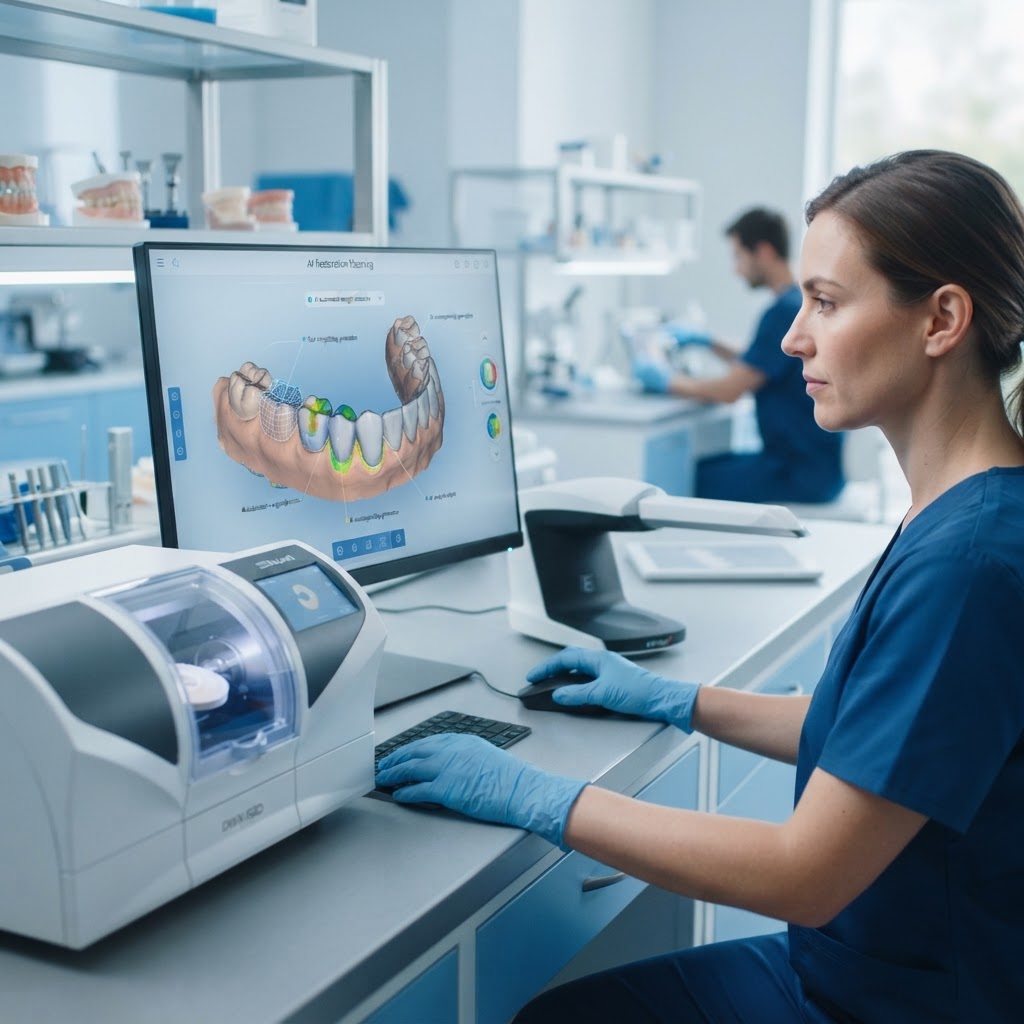
Traditional CAD software relied heavily on the manual input and geometric manipulation of a technician. While efficient, this process was still subject to human fatigue and variations in individual skill levels. AI-enhanced CAD software changes this dynamic by utilizing neural networks trained on millions of high-quality dental scans. Instead of starting with a generic tooth library, AI design engines analyze the specific patient anatomy, the adjacent dentition, and the antagonist teeth to propose a restoration that mimics natural form and function from the first click.
Neural Networks and Anatomy Recognition
At the heart of AI-driven design is the ability to recognize complex patterns. Modern AI software can identify the exact location of a preparation, distinguish between different tissue types, and automatically suggest the optimal path of insertion. This reduces the 'design time' per unit from 15-20 minutes down to less than two minutes in many cases, allowing the technician to focus on fine-tuning aesthetic details rather than the tedious basics of shape positioning.
Precision at the Margin: Eliminating Human Error
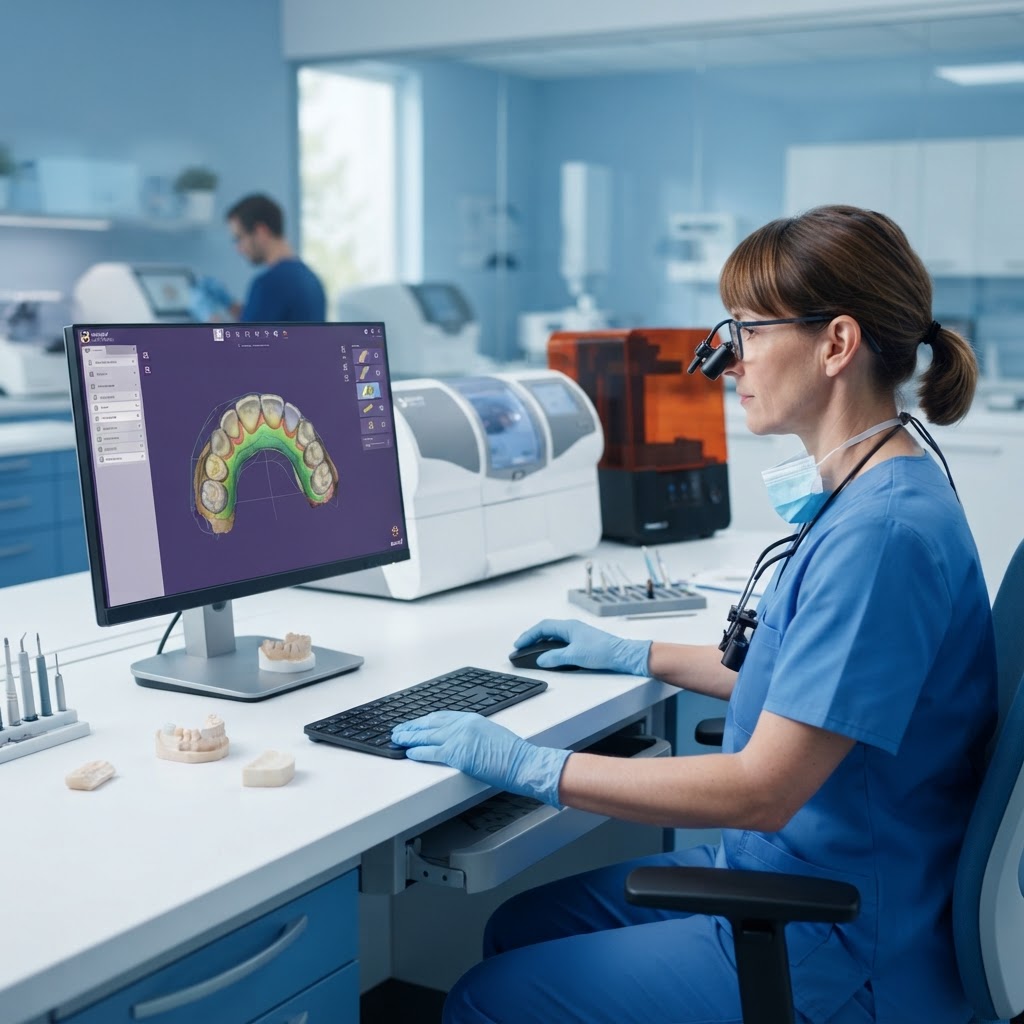
One of the most critical aspects of any dental restoration is the marginal fit. A marginal gap of even a few microns can lead to recurrent decay and restorative failure. AI algorithms are now exceptionally proficient at detecting margin lines, even in cases where the digital scan might be slightly obscured by blood or gingival tissue. By analyzing the density of the point cloud and comparing it to known preparation patterns, AI can suggest margin placement with a level of consistency that is difficult to achieve manually across an eight-hour shift. For the clinic, this translates to virtually eliminating the need for chairside adjustments and ensuring a seamless fit upon delivery.
The Operational Impact on the Modern Lab
The integration of AI into the lab workflow offers tangible business advantages that extend beyond the design screen. As the demand for high-quality restorations grows, labs must find ways to scale without exponentially increasing overhead or sacrificing quality. AI provides the following operational benefits:
- Increased Throughput: By automating the initial 80% of the design process, labs can process a significantly higher volume of cases per day.
- Consistency Across Technicians: AI acts as a digital standard, ensuring that every restoration meeting the lab's quality benchmark regardless of which technician is supervising the software.
- Reduced Remake Rates: AI predictive analytics can flag potential issues—such as thin walls or inadequate occlusal clearance—before the restoration is even milled or printed.
- Streamlined Training: Newer technicians can reach peak productivity faster by working alongside AI 'assistants' that guide them through the design steps.
Dynamic Occlusion and Functional Simulation
Traditional digital design often utilizes a static virtual articulator. AI takes this a step further by incorporating dynamic occlusal simulation. By analyzing the patient’s unique wear patterns and arch relationship, AI can predict the mandibular movement and adjust the occlusal table to minimize interferences. This results in restorations that require less 'grinding' at the chairside, preserving the integrity of the material and the patient's comfort. Whether it is a single-unit crown or a complex full-arch case, AI-driven functional simulation is setting a new standard for clinical longevity.
The Symbiosis of Human Expertise and Machine Learning
It is important to clarify that AI is not intended to replace the skilled dental technician. Rather, it is the ultimate tool for the master technician. While the AI handles the repetitive, data-heavy tasks of anatomy generation and margin detection, the technician can apply their artistic expertise to the final aesthetic characterization. This symbiosis allows Cosmetic Smile Studio and similar premium labs to offer high-end, custom restorations at a pace that keeps up with the demands of modern practice. The technician becomes an editor and an artist, rather than a data entry clerk.
Future Outlook: Predictive Aesthetics and Personalization
Looking ahead, we are moving toward 'Predictive Aesthetics,' where AI will be able to analyze a patient’s facial features from a simple photograph to suggest tooth shapes that perfectly complement their smile line and facial symmetry. We are also seeing the rise of AI in material selection, where the software recommends the optimal ceramic or resin based on the patient’s bruxism history and the translucency of their existing teeth. The laboratory of the future will be a data-driven environment where every restoration is backed by billions of data points to ensure success.
Conclusion: Embracing the AI-Powered Laboratory
The transition to AI-driven design is no longer an optional upgrade; it is a necessity for laboratories and clinics aiming to remain competitive in a digital-first world. By harnessing the power of artificial intelligence, we can achieve a level of precision, speed, and reliability that was previously unimaginable. At Cosmetic Smile Studio, we are committed to staying at the forefront of these technological advancements to provide our partners with the best possible restorative solutions. Are you ready to experience the future of digital dentistry? Contact us today to learn how our AI-enhanced workflows can elevate your practice's clinical outcomes and patient satisfaction.