The Paradigm Shift: From Subtractive to Additive Manufacturing
For the past two decades, Computer-Aided Design and Manufacturing (CAD/CAM) in dentistry was synonymous with milling. While subtractive manufacturing revolutionized the production of zirconia and lithium disilicate restorations, it brought inherent limitations: significant material waste, tool wear, and geometric constraints. Today, we are witnessing a decisive pivot toward additive manufacturing. The latest 3D printing innovations are no longer confined to diagnostic models or surgical guides; they are moving into the realm of final, long-term restorations. This shift is driven by a convergence of high-resolution hardware, AI-driven nesting software, and, most importantly, a new generation of biocompatible permanent resins.
Hardware Evolution: Speed Meets Micron-Level Precision
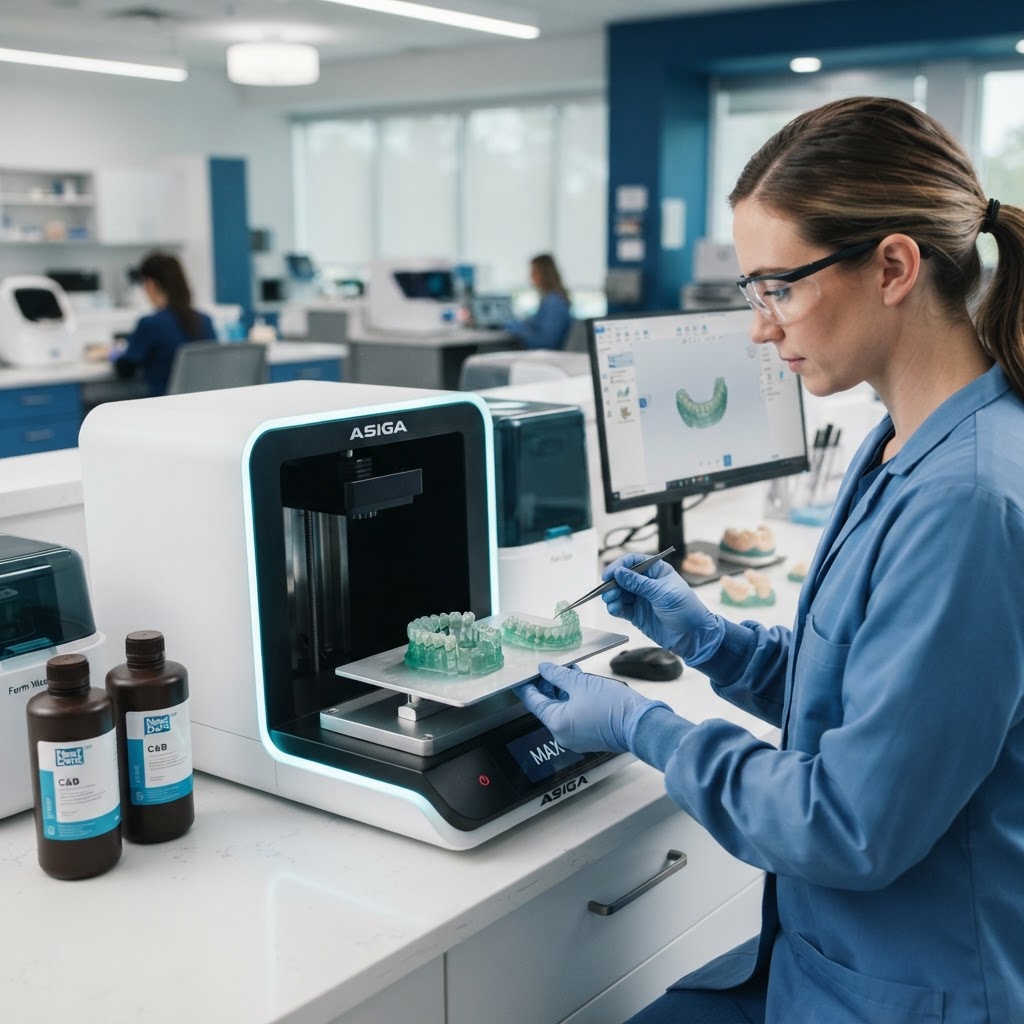
The transition to 3D printed restorations is underpinned by advancements in Digital Light Processing (DLP) and masked Stereolithography (mSLA) technologies. Modern dental 3D printers have moved beyond simple layer-by-layer adhesion to continuous liquid interface production and high-intensity light engines that drastically reduce print times. For a dental laboratory, this means the ability to print a full arch of crowns or a dozen nightguards in under 20 minutes with horizontal resolutions often exceeding 50 microns. This level of precision ensures that marginal fit and internal adaptation—once the Achilles' heel of printed restorations—now rival or even surpass traditional milling. Furthermore, the stability of these light engines ensures consistency across the entire build plate, allowing labs to maximize throughput without sacrificing the predictable outcomes required for clinical success.
The Resin Revolution: FDA-Cleared Permanent Solutions
Perhaps the most significant catalyst for change is the development of ceramic-filled hybrid resins. Historically, 3D printing was limited to 'provisional' or 'temporary' materials due to concerns over wear resistance and color stability. However, the latest class of resins features high ceramic loading (often over 50%), enabling them to be used for permanent single crowns, inlays, onlays, and veneers. These materials offer a unique modulus of elasticity that is closer to natural dentin than traditional zirconia, potentially reducing the risk of fracture in the opposing dentition. Moreover, the ability to characterize these restorations with light-cured stains allows technicians to achieve high-end esthetics that meet the demands of cosmetic dentistry while benefiting from the speed of an additive workflow.
Optimizing the Additive Workflow for the Modern Lab
Implementing a high-performance 3D printing workflow requires more than just a printer; it requires a seamless integration of digital steps. The modern additive workflow generally follows these stages:
- Intraoral Scan Acquisition: The process begins with a high-fidelity digital impression, providing the foundation for an accurate digital twin.
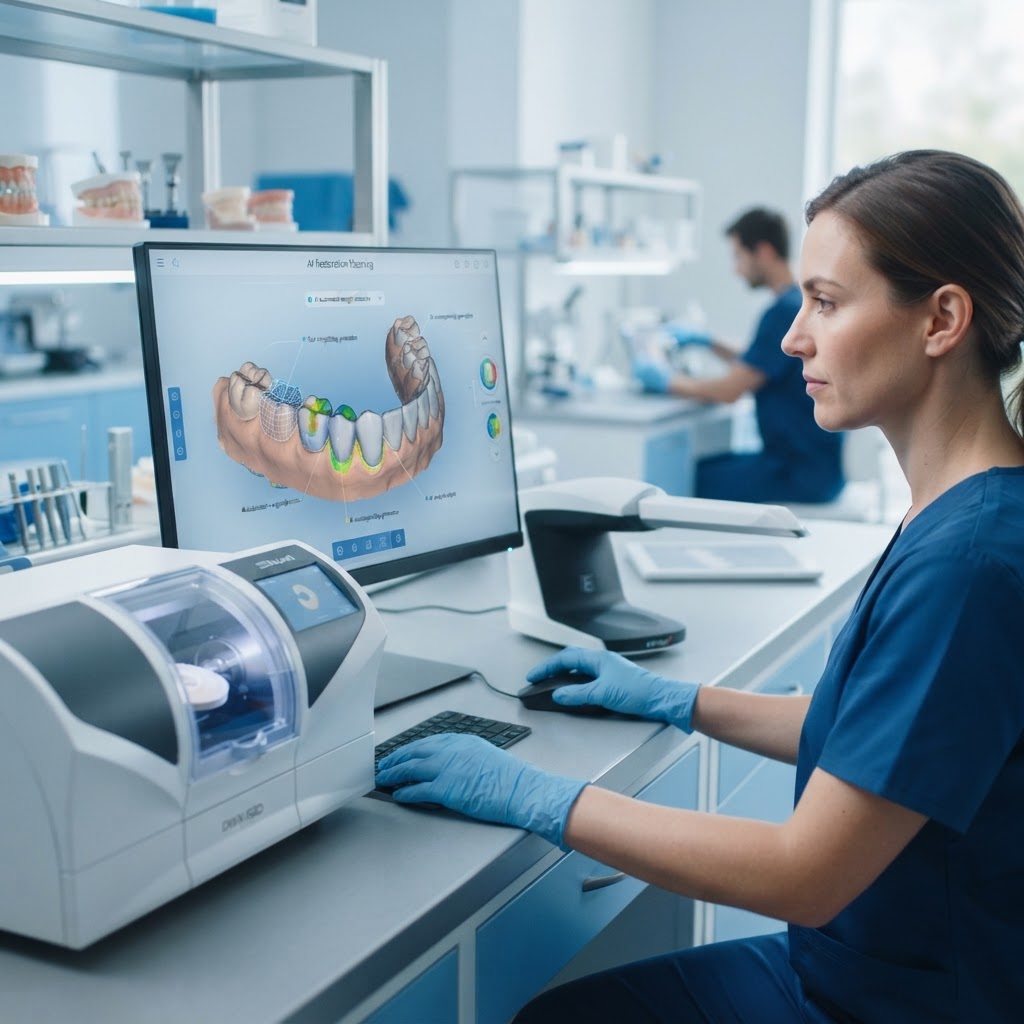
- AI-Enhanced CAD Design: Artificial intelligence is now used to automate the proposal of tooth morphologies and the identification of margin lines, significantly reducing the design time for technicians.
- Automated Nesting and Support Generation: Advanced CAM software optimizes the orientation of restorations on the build plate to minimize support scars on critical areas like margins and occlusal surfaces.
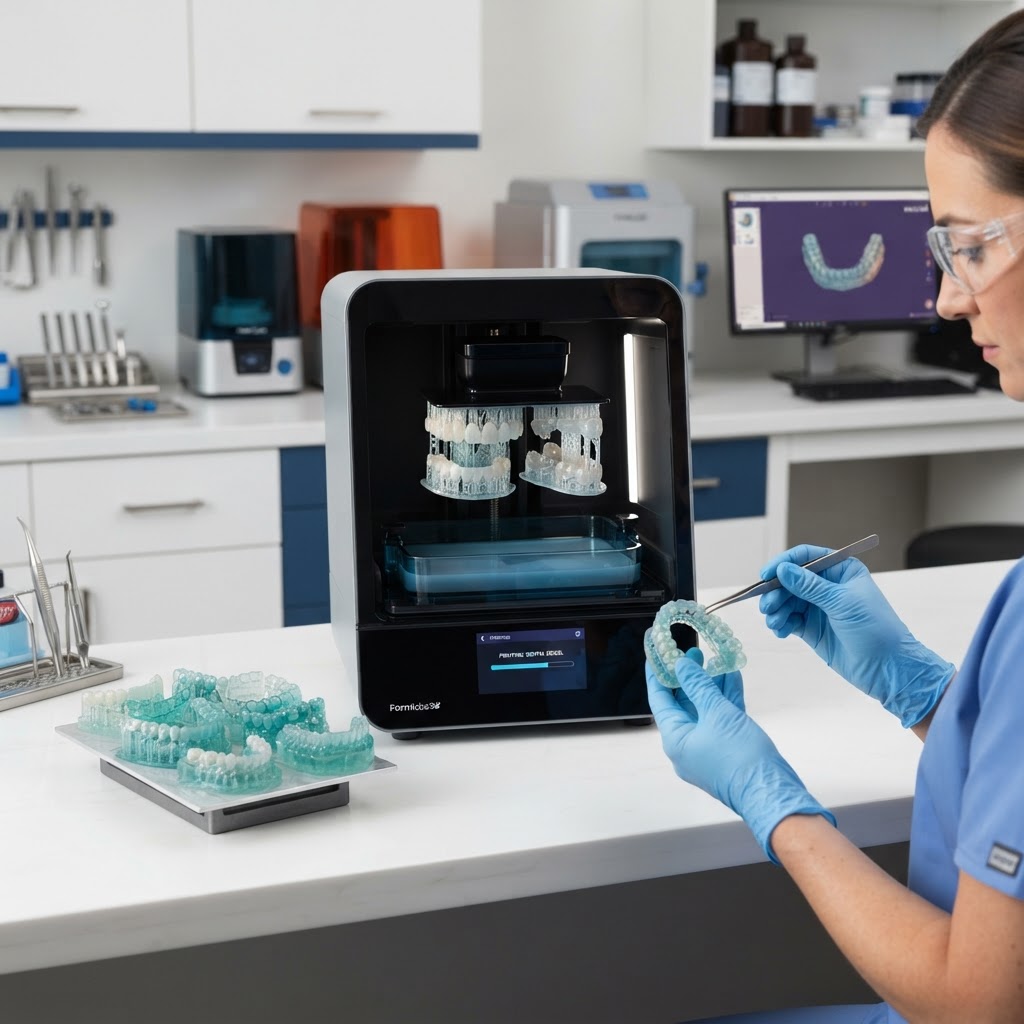
- Validated Printing: Using 'closed-loop' systems where the resin, printer, and slicer are calibrated as a single ecosystem ensures that the physical output matches the digital design exactly.
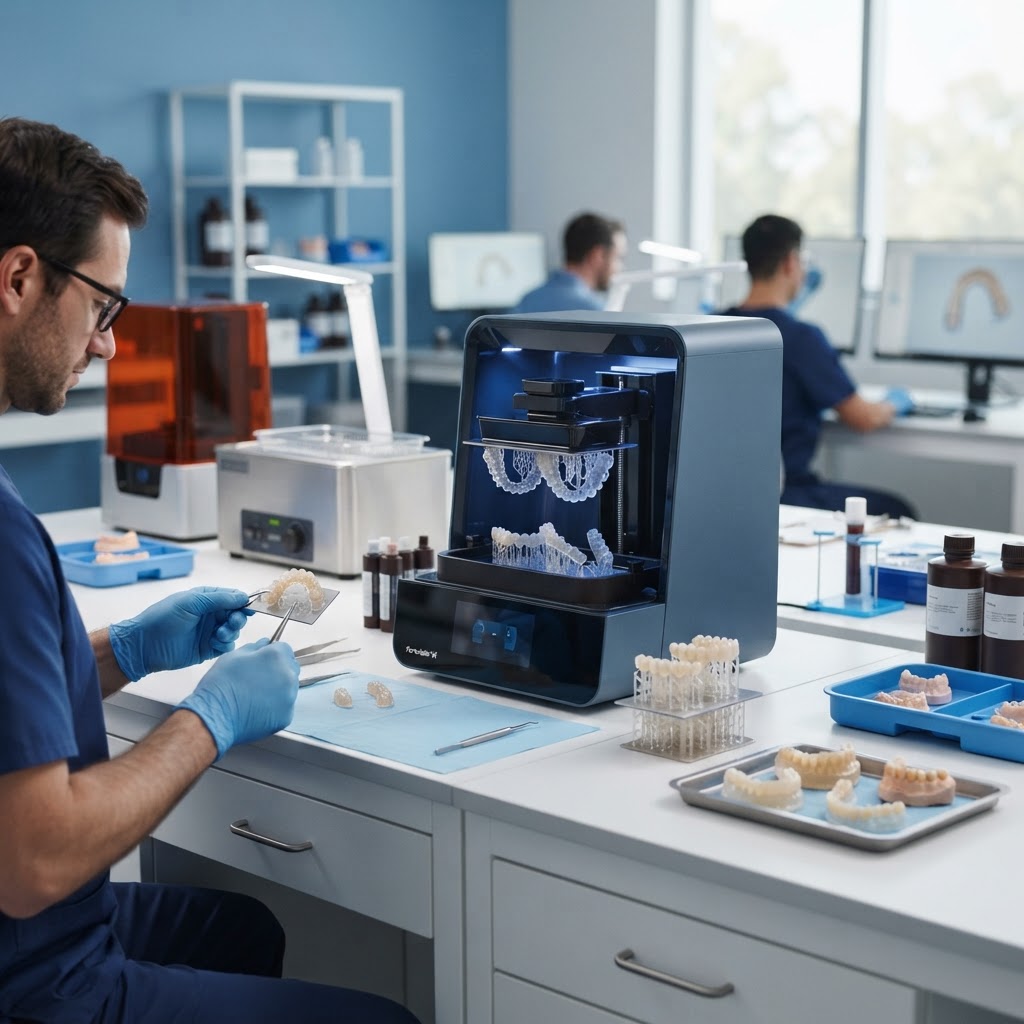
- Automated Post-Processing: This is the final frontier of the workflow. Centrifugal cleaning systems and high-intensity UV curing ovens with controlled atmospheres (such as nitrogen) are essential for achieving the full mechanical properties and biocompatibility of the resin.
Actionable Insights: Scaling Production and Quality
For dental labs looking to stay competitive, the adoption of additive manufacturing is no longer optional. To maximize ROI, labs should focus on 'nesting density'—the art of fitting as many units as possible on a single build plate. Unlike milling, where each unit adds a linear amount of time, 3D printing time is largely determined by the height of the tallest object. This allows labs to produce large volumes of restorations simultaneously. Additionally, the reduction in manual labor through automated post-processing units allows technicians to focus on the artistry of finishing rather than the mechanical tasks of cleaning and curing. By diversifying material palettes to include high-impact denture bases and flexible splint resins, labs can consolidate multiple production lines into a single, compact 3D printing center.
The Future: Multi-Material Printing and Sustainability
Looking ahead, the industry is moving toward multi-material 3D printing, which would allow a single restoration to have a high-strength core and a high-translucency aesthetic shell, printed simultaneously. We are also seeing a push toward more sustainable practices. Additive manufacturing inherently produces less waste than milling, and many manufacturers are now developing recyclable resins or bio-based monomers. These innovations not only improve the clinical outcome but also align dental labs with the broader global movement toward environmentally conscious manufacturing.
Conclusion: Embracing the Digital Transformation
The integration of advanced 3D printing into the dental laboratory is a transformative step that enhances precision, efficiency, and material versatility. As permanent resins continue to improve and workflows become more automated, the distinction between 'printed' and 'milled' quality is disappearing. For the modern dental professional, staying at the forefront of these technological shifts is essential for delivering the high-standard care that patients expect. At Cosmetic Smile Studio, we are committed to leveraging these cutting-edge additive manufacturing workflows to provide our partners with restorations that define the future of digital dentistry. Contact our technical team today to learn how our digital ecosystem can elevate your clinical outcomes and streamline your restorative chairside experience.