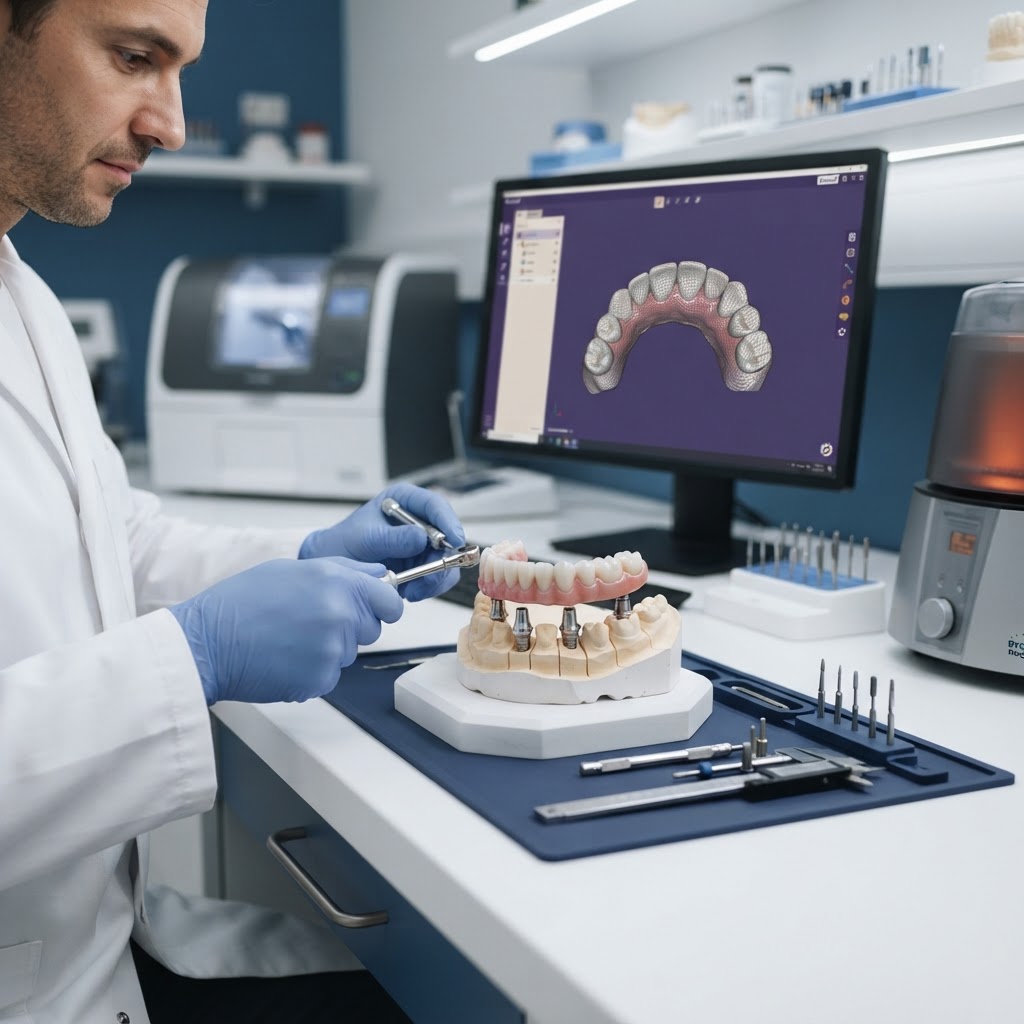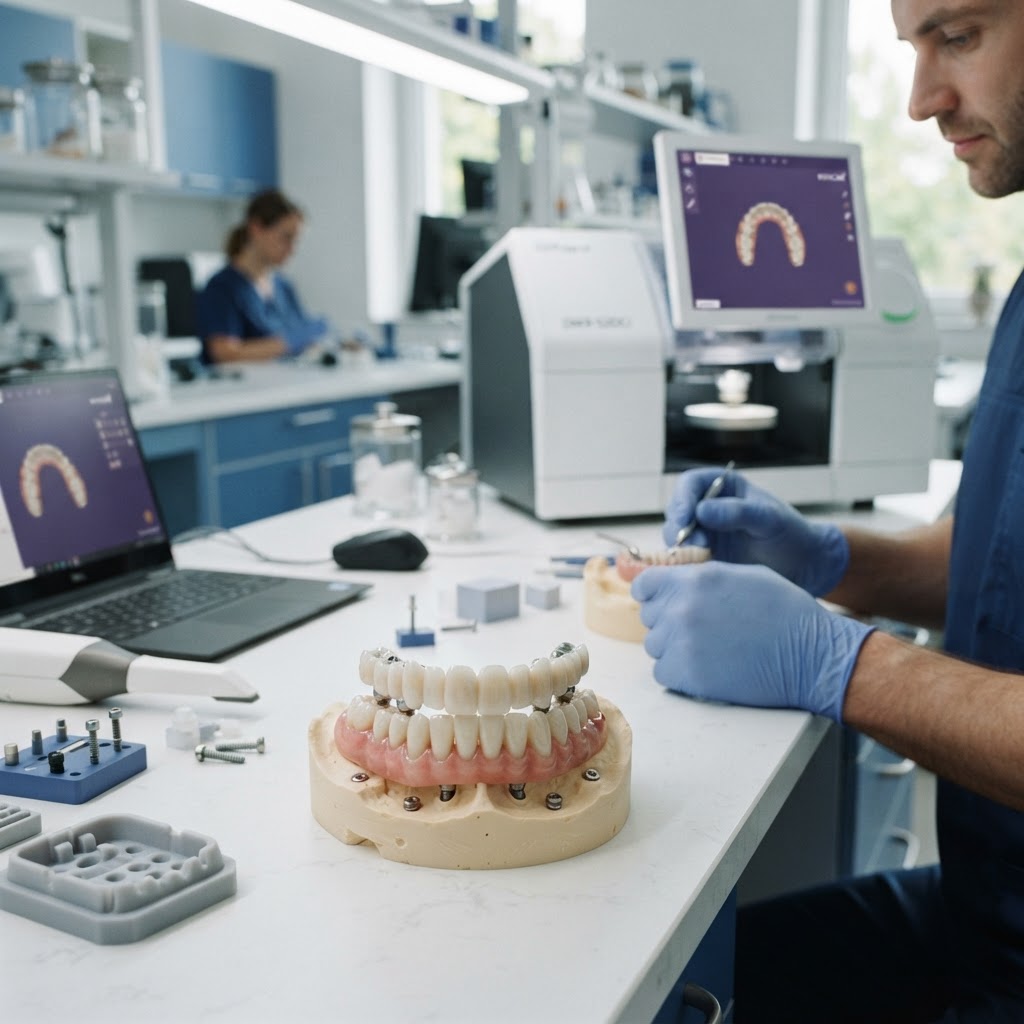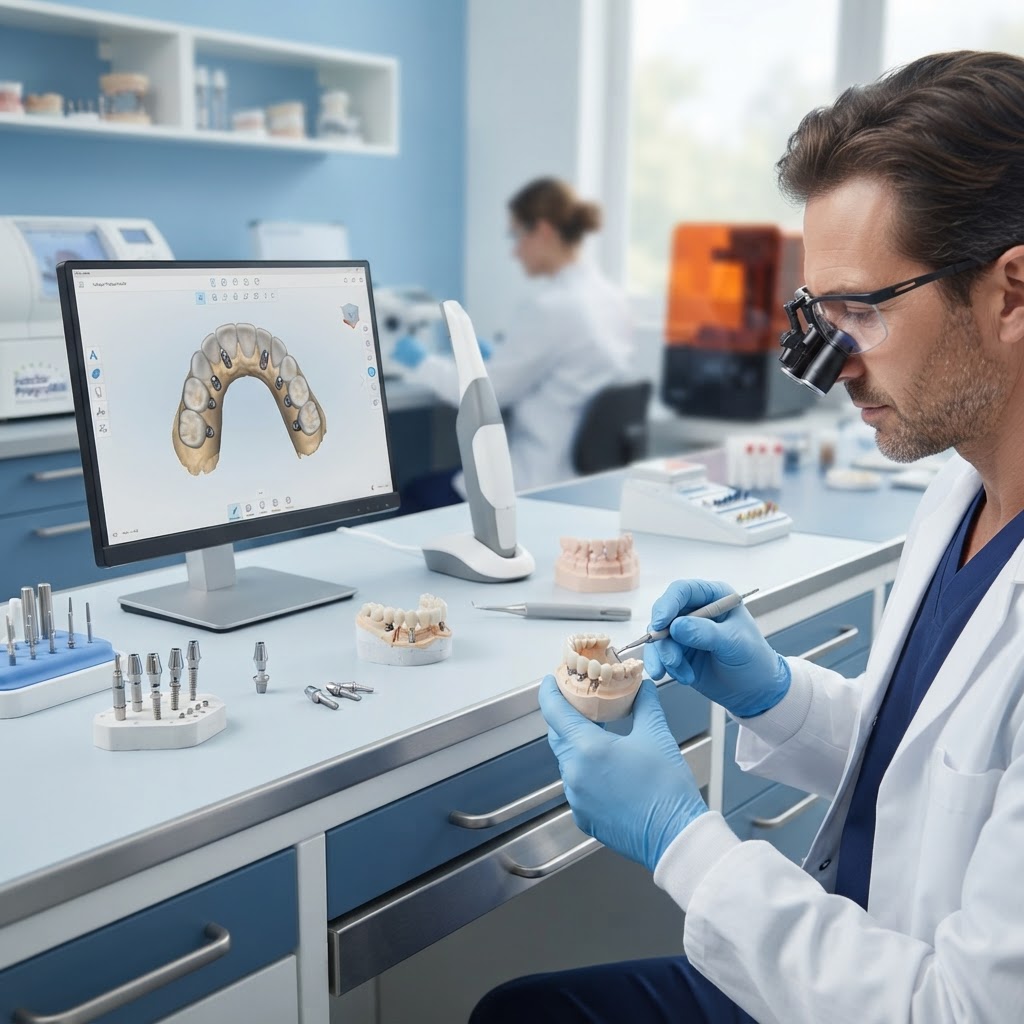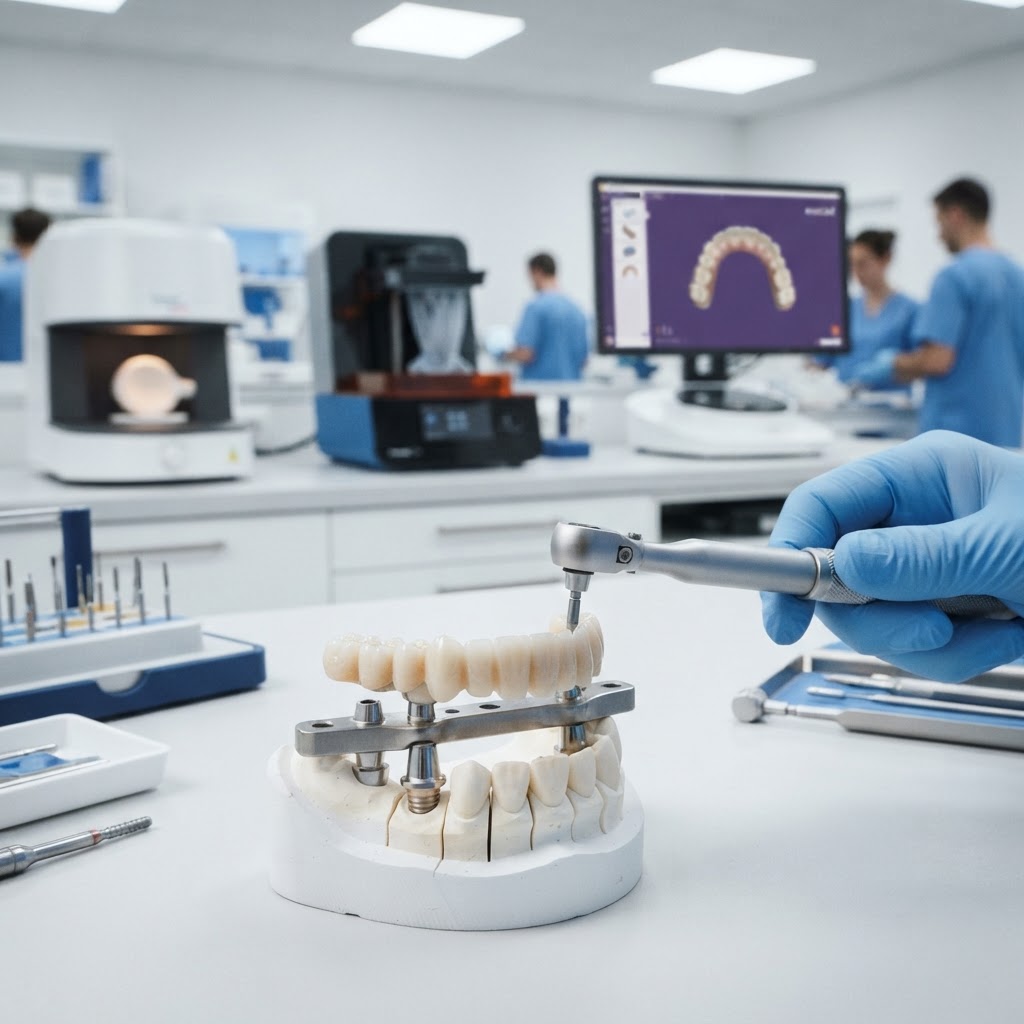
The Paradigm Shift in Full-Arch Restorations
In the rapidly evolving landscape of restorative dentistry, the full-arch implant restoration stands as the pinnacle of clinical and technical achievement. As we move further into 2026, the transition from traditional analog techniques to comprehensive digital workflows is no longer a luxury—it is a fundamental requirement for predictability, efficiency, and patient satisfaction. For the modern dental professional, staying ahead of these trends is essential for delivering the standard of care expected by an increasingly informed patient base. This article explores the intersection of material science, digital workflows, and artificial intelligence that is redefining the 'All-on-X' experience.
Material Science: The Evolution of Zirconia and Bio-Polymers
The quest for the 'perfect' full-arch material has led to a significant refinement in restorative options. While the industry once relied heavily on titanium-acrylic hybrids, the limitations of wear and fracture have pushed high-performance materials to the forefront.
Multi-layered High-Translucency Zirconia
Today's multi-layered zirconia represents a quantum leap in dental ceramics. Modern formulations offer a gradient of both color and translucency, coupled with high fracture toughness (often exceeding 1,200 MPa). This allows laboratories to produce monolithic restorations that require minimal porcelain layering, reducing the risk of delamination while maintaining lifelike aesthetics. The 'monolithic' approach, once criticized for being 'too opaque,' has been transformed by advanced shading technologies and micro-layering techniques that satisfy even the most demanding cosmetic requirements.
The Rise of High-Performance Polymers
For patients with specific occlusal challenges or those requiring a lightweight alternative, materials like PEKKTON and PEEK (Polyetheretherketone) are gaining significant traction. These bio-polymers offer a shock-absorbing quality that mimics the natural periodontal ligament's function, reducing the impact on the implants. When used as a framework material and veneered with high-impact composite or individual E.max crowns, these materials provide a repairable and highly biocompatible solution for complex cases.
Digital Workflows: From Photogrammetry to Final Seating
The most significant hurdle in full-arch dentistry has always been the 'passive fit.' Any discrepancy between the implant positions in the mouth and the final prosthesis can lead to mechanical failure or biological complications. Digital innovations are finally solving the passivity puzzle.
Photogrammetry: The New Gold Standard
While intraoral scanners (IOS) have revolutionized single-unit and short-span bridge dentistry, they often struggle with the 'stitch error' inherent in capturing an entire edentulous arch. Photogrammetry—utilizing specialized camera systems like iCam4D or PIC—captures the exact 3D spatial relationship of implant abutments with micron-level accuracy. By integrating photogrammetry data with an IOS surface scan of the soft tissue, laboratories can create a digital master model that ensures a perfect fit every time, virtually eliminating the need for traditional verification jigs and bone-level impressions.
Fully Digital Provisionals
The workflow for 'teeth-in-a-day' has been streamlined through high-speed 3D printing. Labs can now design and print highly aesthetic, long-term provisional restorations in a matter of hours. This allows the clinician to test the vertical dimension, aesthetics, and phonetics in a real-world setting, with the ability to make digital adjustments before milling the final zirconia or polymer bridge.
The Impact of AI on Full-Arch Design
Artificial Intelligence is no longer a futuristic concept; it is an active participant in the CAD/CAM process. Modern dental software now utilizes AI algorithms to automate some of the most labor-intensive aspects of full-arch design.
- Automated Tissue Adaptation: AI can predict the most natural transition between the prosthetic gingiva and the patient's natural soft tissue, reducing manual sculpting time.
- Dynamic Occlusal Design: By analyzing thousands of successful cases, AI can propose tooth arrangements that optimize force distribution across the implant sites, minimizing the risk of screw loosening or prosthetic fracture.
- Predictive Smile Design: AI-driven tools allow clinicians to overlay the proposed digital design onto a 3D facial scan or 2D photo, facilitating better communication with the patient and ensuring the final result matches the patient's facial proportions.
Strategic Implementation for Labs and Clinics
To capitalize on these trends, both dental laboratories and clinics must invest in the 'digital trifecta': high-resolution scanning, precise design software, and advanced milling or printing capabilities. For the clinician, this means mastering photogrammetry and intraoral scanning techniques. For the laboratory, it means transitioning into a 'digital architect' role, where the focus shifts from manual labor to data management and high-end finishing.
Actionable Insights for Success:
- Invest in Photogrammetry: If you are performing more than two full-arch cases a month, the reduction in chair time and remakes will pay for the system within a year.
- Standardize the Data Package: Ensure the lab receives a complete digital package: IOS scan, photogrammetry file, face-bow or digital alignment data, and pre-operative photos.
- Adopt a 'Prototype First' Mentality: Never move to final zirconia without a successful 3D-printed try-in phase. This ensures patient satisfaction and mechanical stability.
Conclusion: Partnering for Precision
The future of full-arch implant restorations is defined by a synergy between technology and artistry. By embracing photogrammetry, advanced material science, and AI-assisted design, dental professionals can deliver restorations that are not only beautiful but structurally sound and biologically integrated. At Cosmetic Smile Studio, we specialize in bridging the gap between clinical complexity and digital precision. Are you ready to elevate your full-arch cases? Contact us today to discuss how our digital workflow can transform your practice.