The Evolution of Full-Arch Implant Dentistry
The landscape of full-arch implant restoration is undergoing a seismic shift. As dental professionals, we are moving away from the limitations of conventional casting and manual wax-ups toward highly predictable, fully digital protocols. For the modern dental laboratory, staying ahead of these trends is not just about efficiency—it is about delivering the precision and aesthetics that patients demand today.
Advanced Materials: Beyond Traditional Acrylic
The industry is rapidly moving toward materials that offer superior longevity and biocompatibility. While metal-acrylic resin designs have been a staple, they are frequently associated with technical complications such as framework misfit, debonding of denture teeth, and material fracture. Current trends favor:
- Monolithic Zirconia: Renowned for its exceptional strength and aesthetic versatility, monolithic zirconia has become the gold standard for final full-arch prostheses.
- High-Performance Polymers: Modern dental polymers are increasingly used for provisional and long-term temporary restorations, offering a balance of durability and ease of adjustment.
- Hybrid Solutions: Combining milled frameworks with high-strength ceramic or composite teeth allows for a more resilient final restoration that mimics natural dentition.
Mastering the Digital Workflow
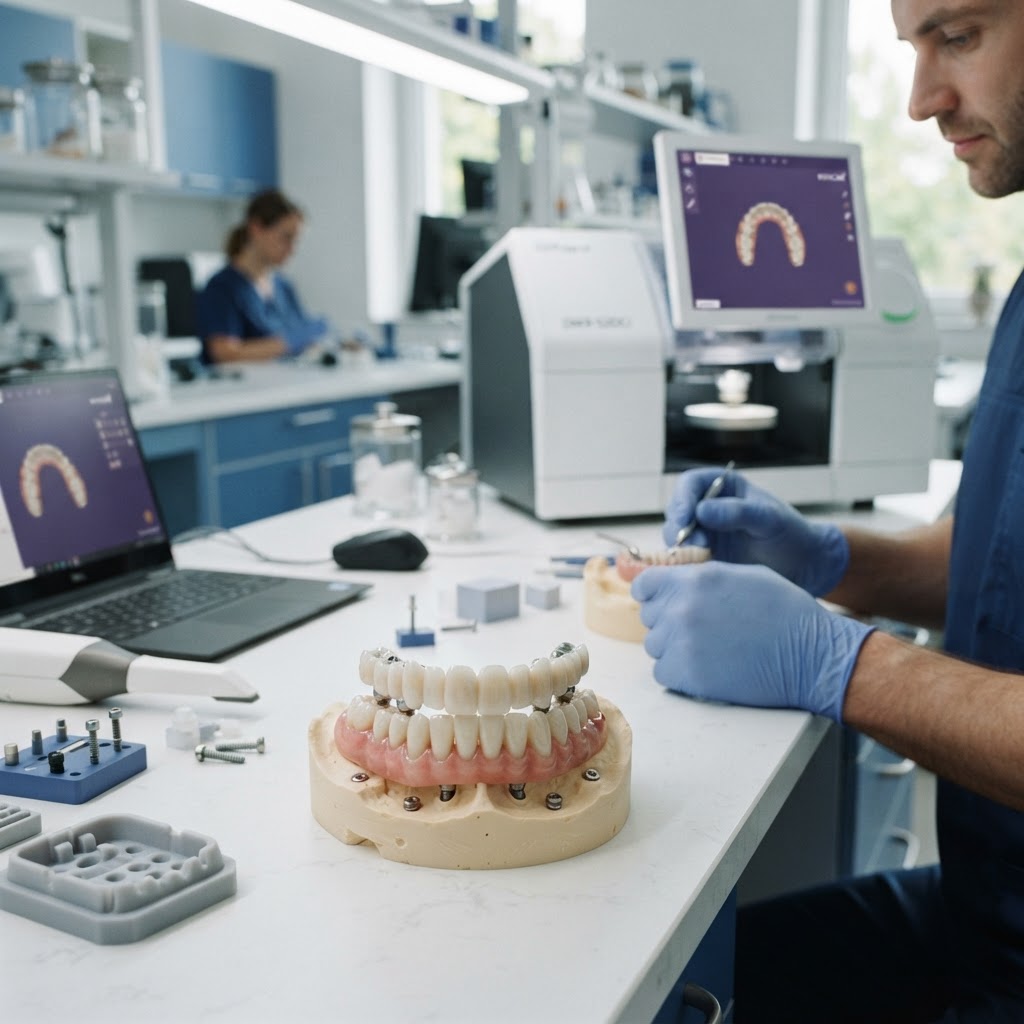
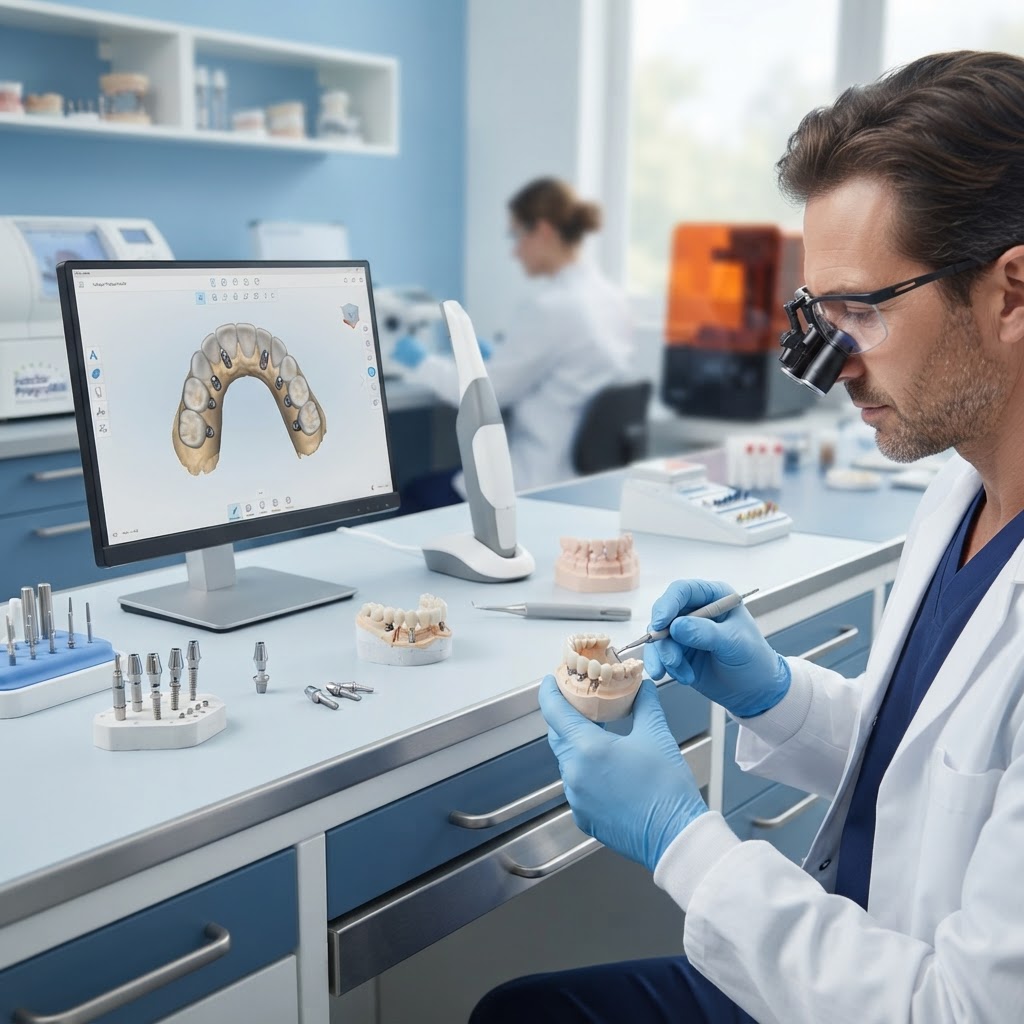
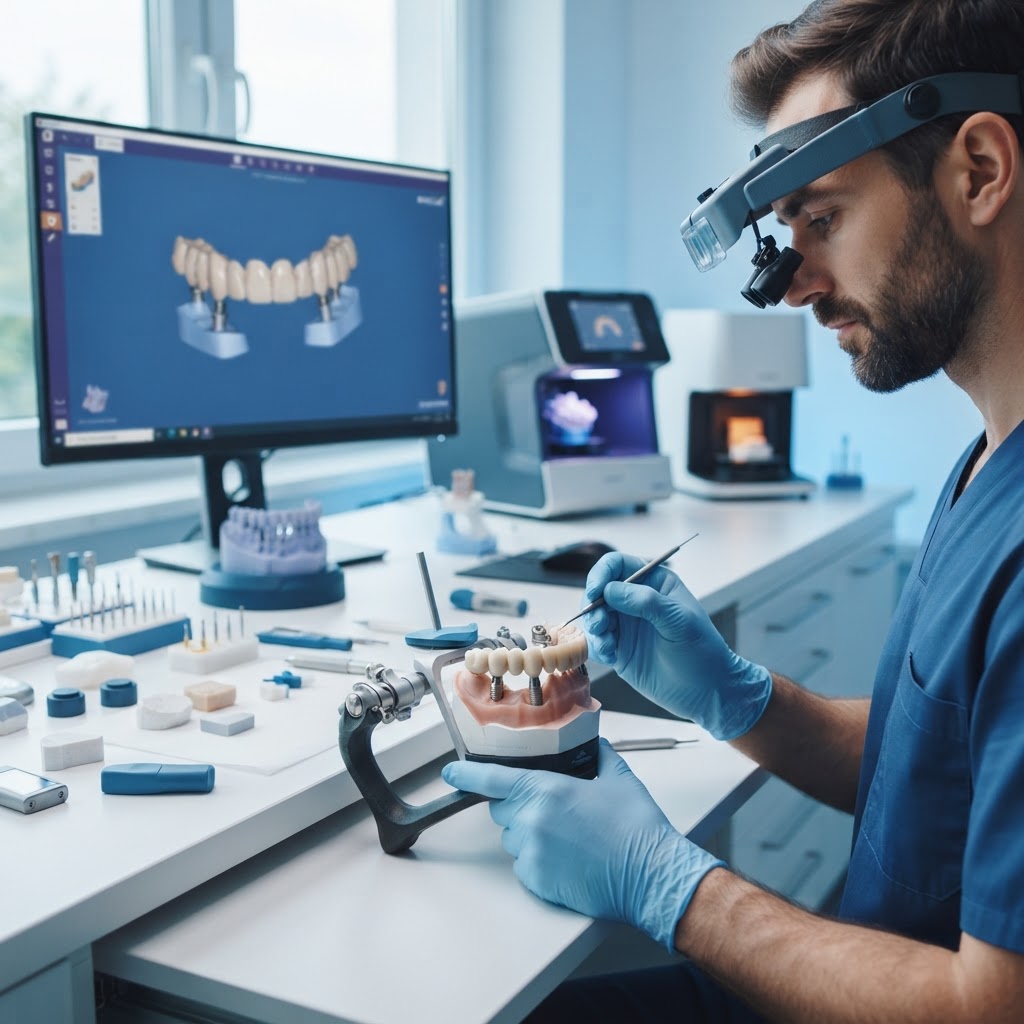
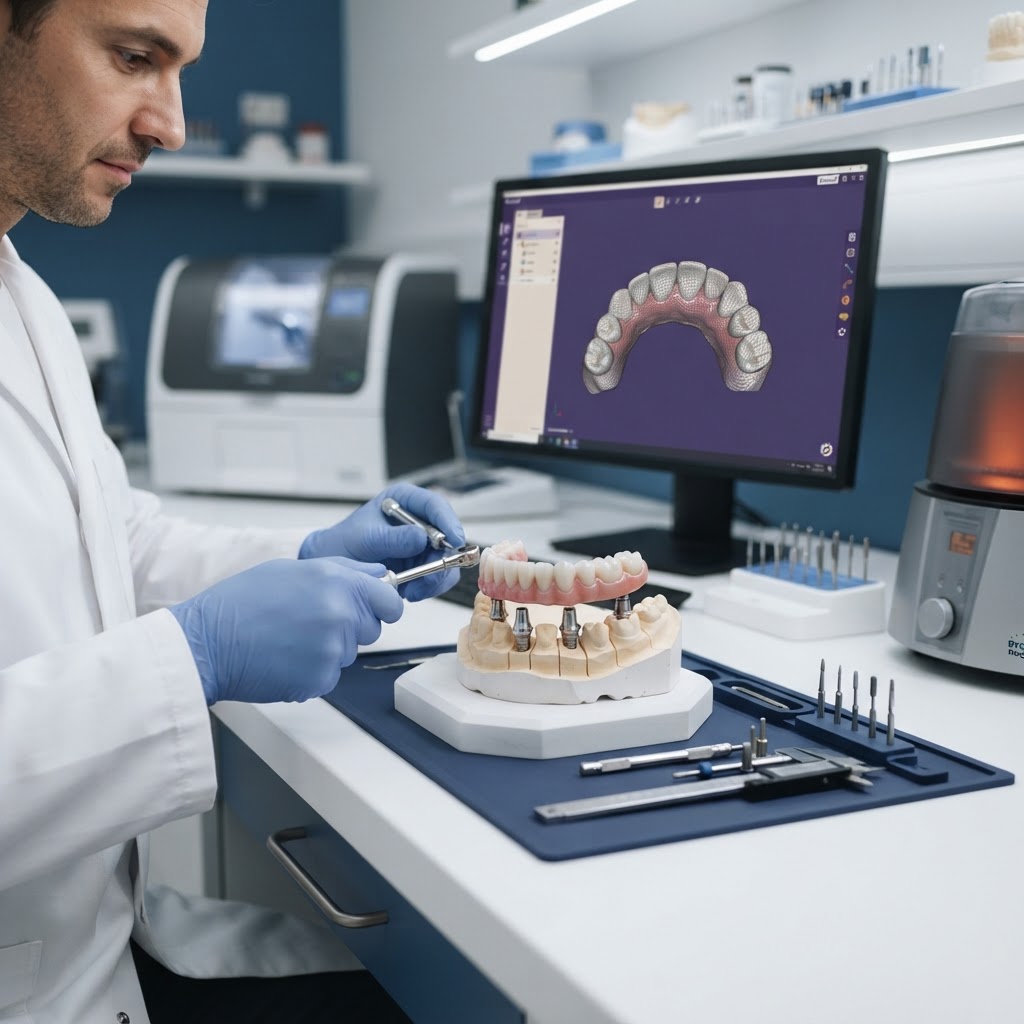
The transition to a fully digital workflow is the most significant trend in implant dentistry. By integrating intraoral scanners (IOS) with advanced planning software, labs can now align surgical plans with restorative goals before the patient even enters the chair. However, achieving accuracy in full-arch cases remains a challenge for standard IOS alone.
The Role of Photogrammetry
To overcome the inherent inaccuracies of scanning large edentulous spans, photogrammetry (such as iMetric 4D) has emerged as a game-changer. By capturing the precise spatial relationship of implant positions, photogrammetry provides the CAD software with the data necessary to fabricate a passive-fitting framework, significantly reducing the need for remakes and clinical adjustments.
AI and 3D Printing Innovations
Artificial Intelligence is streamlining design processes, while 3D printing is revolutionizing the speed of delivery. From AI-driven retainer design to the rapid production of 3D-printed dentures and surgical guides, these technologies allow labs to offer same-day or next-day solutions. The use of dual-tank printing systems and specialized resins is further accelerating the production of high-quality temporaries.
Actionable Insights for Labs and Clinics
- Early Collaboration: Involve your lab partner during the Stage 0 planning phase to ensure implant positioning aligns with the final prosthetic design.
- Verification Jigs: Utilize digital verification jigs or the 'Grammetry' process to communicate accurate records to the lab, ensuring a passive fit.
- Standardize Protocols: Adopt a consistent digital protocol that connects planning, surgery, and final delivery to minimize variables and improve predictability.
Conclusion
The future of full-arch implant restoration lies in the seamless integration of digital data and high-performance materials. By embracing technologies like photogrammetry and AI-assisted design, dental laboratories can provide clinicians with the tools to deliver life-changing, predictable results. Ready to elevate your lab's full-arch capabilities? Contact our technical team at Cosmetic Smile Studio today to discuss integrating our advanced digital workflows into your practice.