The Paradigm Shift in Full-Arch Implantology
The landscape of restorative dentistry is undergoing a seismic shift. For decades, the goal of full-arch restoration was simply to provide functional stability. Today, the bar has been raised. Clinicians and laboratories are now expected to deliver restorations that are not only bio-compatible and durable but also indistinguishable from natural dentition, all while maintaining a streamlined, predictable workflow. As we move deeper into the digital age, the convergence of advanced material science and automated digital ecosystems is redefining what is possible in All-on-X therapy.
For the modern dental professional, staying ahead of these trends isn't just about adopting new gadgets; it is about understanding how these innovations integrate to improve patient outcomes and practice efficiency. This article explores the current state of full-arch restorations, focusing on the materials, workflows, and digital tools that are shaping the future of our industry.
Material Innovations: Beyond Traditional Monolithic Zirconia
Materials are the foundation of any successful restoration. While traditional monolithic zirconia remains a staple due to its incredible flexural strength, the industry is moving toward materials that offer a better balance between aesthetics and mechanics. The evolution of zirconia has been particularly noteworthy, moving from the opaque, high-strength 3Y-TZP (3-mol% yttria-stabilized tetragonal zirconia polycrystal) to more translucent 4Y and 5Y formulations.
Multilayered and Gradient Zirconia
The newest generations of zirconia have solved the "chalky" aesthetic issues of the past. Multilayered zirconia now features a transition of both shade and translucency within a single disc. By varying the yttria content throughout the layers, manufacturers have created materials that are strong at the base (for implant connection stability) and highly translucent at the incisal edge. This reduces the need for extensive porcelain layering, which in turn minimizes the risk of chipping—a common failure point in traditional porcelain-fused-to-zirconia restorations. The result is a monolithic restoration that mimics the natural gradient of human enamel and dentin without sacrificing the structural integrity required for full-arch loading.
High-Performance Polymers and PEEK/PEKK
There is a growing interest in shock-absorbing frameworks. High-performance polymers like PEEK (Polyetheretherketone) and PEKK (Polyetherketoneketone) are being utilized as framework materials, often veneered with composite or individual zirconia crowns. These materials offer a modulus of elasticity closer to human bone (approximately 3-4 GPa for PEEK vs. 200 GPa for zirconia), potentially reducing the stress transferred to the implants—a critical factor for patients with heavy parafunctional habits or limited bone volume. These "hybrid" restorations provide a level of resilience that can protect the underlying implant-to-bone interface from the high impact forces of mastication.
The Rise of Printed Long-Term Provisionals
3D printing technology has evolved to the point where resin-based provisionals are no longer just for short-term use. New ceramic-filled resins allow for high-strength, aesthetic temporaries that can withstand the healing phase while allowing the clinician to test the vertical dimension and aesthetics before committing to the final prosthesis. These printed provisionals serve as a "blueprint" for the final restoration, allowing for adjustments in phonetics and occlusion that can be easily scanned and duplicated in the final zirconia or polymer bridge.
Revolutionizing the Workflow: The Digital Thread
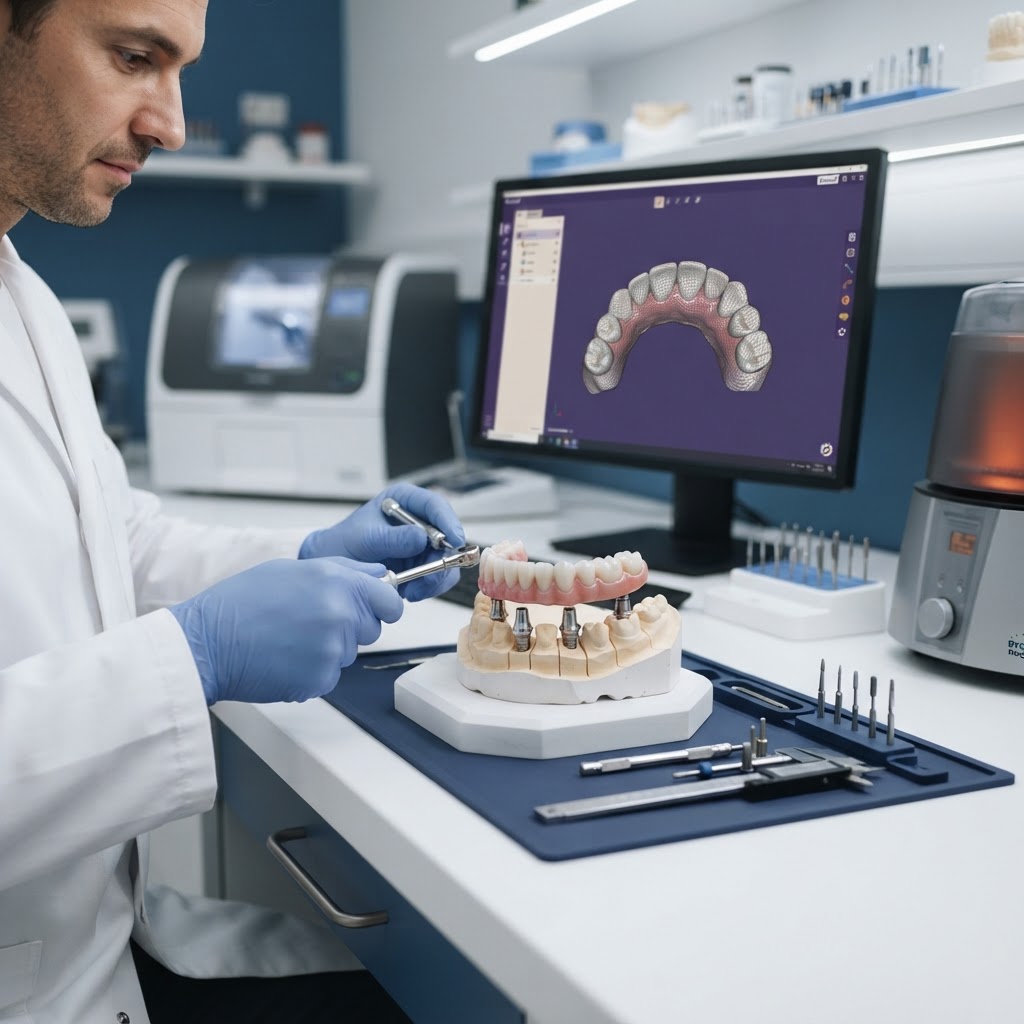
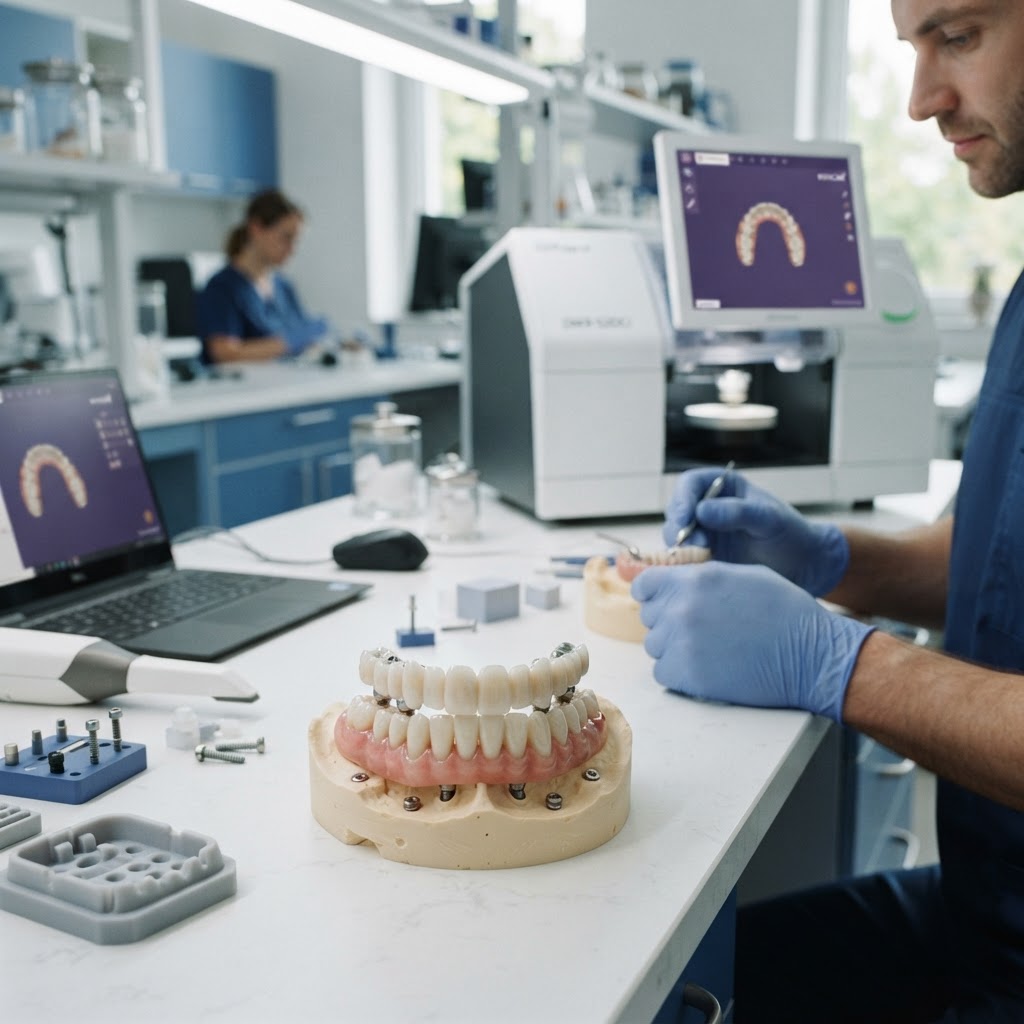
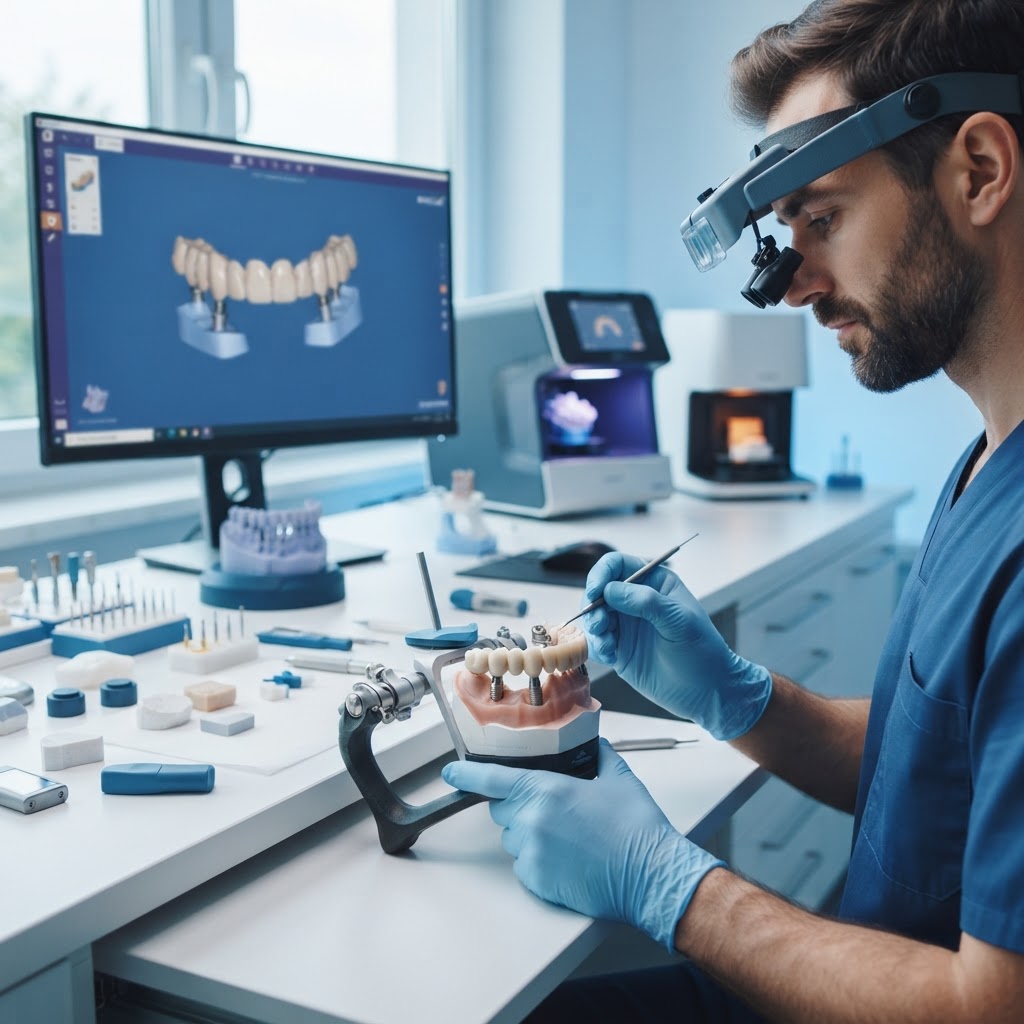
The transition from analog impressions to a fully digital workflow is perhaps the most significant change in full-arch dentistry. The goal is to eliminate the variables inherent in stone models and manual verification jigs, which are prone to expansion, contraction, and human error.
- Photogrammetry: The Gold Standard for Passive Fit: This is arguably the most impactful innovation for full-arch accuracy. While intraoral scanners (IOS) are excellent for single units, they often struggle with the cross-arch accuracy required for a passive fit on multiple implants due to the accumulation of stitching errors over a long span. Photogrammetry systems (such as the PIC system or iCam4D) capture the precise 3D relationship of implant positions using specialized targets and a high-precision camera system, ensuring a passive fit every time. This technology eliminates the need for traditional verification jigs, saving hours of chair time.
- Facial Scanning and 3D Smile Design: Aesthetics are no longer limited to the mouth. Digital face scanners allow labs to integrate the patient’s facial dynamics into the CAD software. By overlaying the intraoral scan with a 3D facial scan, the technician can ensure that the midline, smile line, and incisal edge position are perfectly harmonized with the patient's unique facial features, such as the interpupillary line and lip mobility.
- Stackable Surgical Guides: The "All-on-X" procedure has become significantly more predictable through the use of stackable guides. These systems guide every step—from bone reduction and implant placement to the delivery of the immediate provisional—reducing chair time and surgical stress. The precision of these guides ensures that the implants are placed in the optimal prosthetic position, rather than the surgeon having to compromise based on bone availability alone.
Digital Innovations: AI and CAD/CAM Synergy
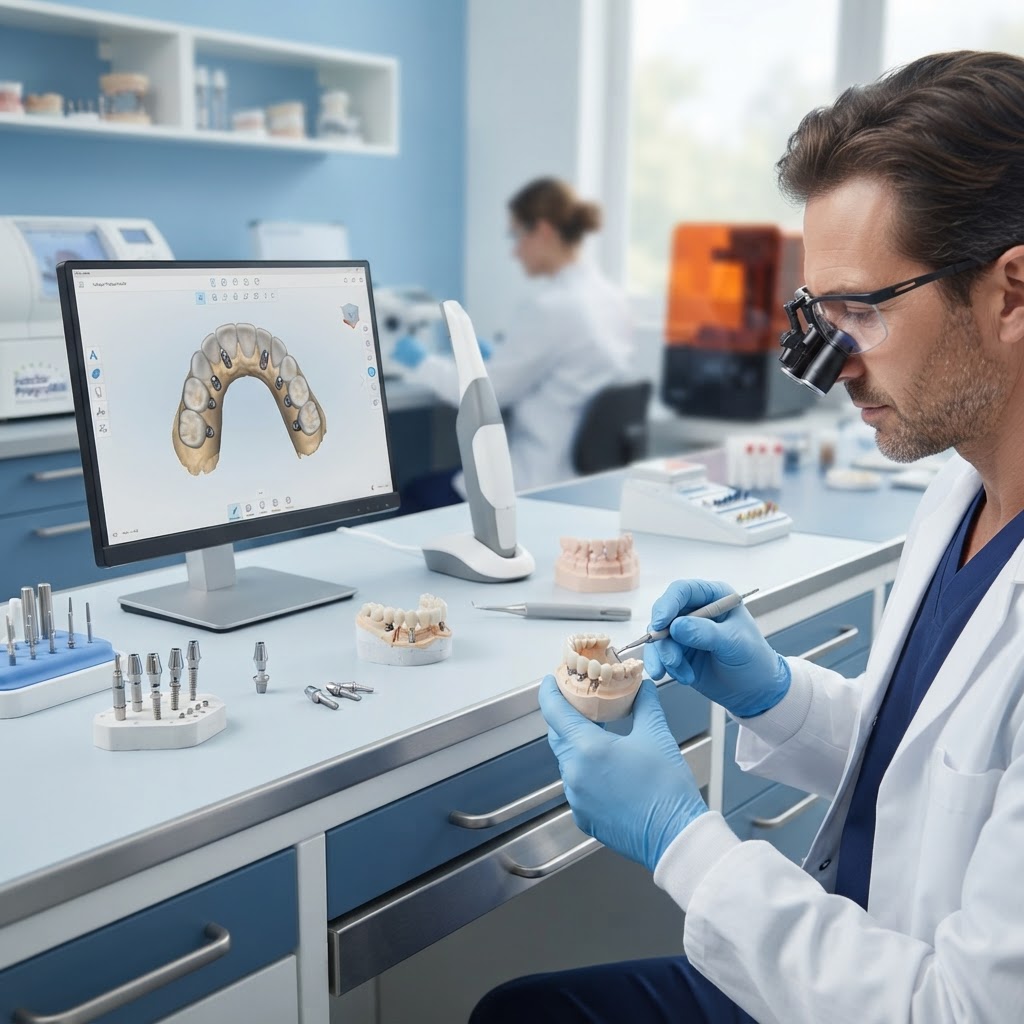
Artificial Intelligence is no longer a buzzword; it is a functional tool within our design software. Leading CAD platforms like Exocad and 3Shape are integrating AI to automate the initial design stages. AI algorithms can now analyze the patient's remaining dentition or facial scans to propose an ideal tooth arrangement, which the technician can then refine. This "AI-first" approach significantly reduces the time required for the initial setup, allowing technicians to focus on the fine details of occlusion and characterization.
Furthermore, the synergy between the clinic and the lab has been enhanced by cloud-based collaboration platforms. Real-time file sharing and 3D web viewers allow clinicians to review and approve designs in minutes, ensuring that the final product meets the clinical expectations before the milling process even begins. This level of transparency reduces the likelihood of remakes and ensures that the patient's aesthetic goals are met.
Practical Insights for the Dental Team
Adopting these trends requires a strategic approach. For clinics looking to optimize their full-arch offerings, consider the following actionable steps:
- Invest in Precision Capture: If you are performing multiple full-arch cases per month, photogrammetry is a worthy investment to eliminate the "non-passive fit" headaches and costly remakes. The ROI is realized quickly through reduced chair time and improved patient satisfaction.
- Embrace the Prototype Phase: Never skip the printed provisional or "try-in" phase. Use this stage to verify aesthetics, phonetics, and occlusion. A digital tweak at this stage is free; a remake in zirconia is expensive. The prototype is the most valuable diagnostic tool in the digital workflow.
- Partner with a Digitally-Fluent Lab: Your laboratory should be more than a vendor; they should be a technical partner. Ensure your lab is equipped to handle IOS files, photogrammetry data, and facial scans. A lab that understands the nuances of digital file integration will be your greatest asset.
- Prioritize Material Selection: Match the material to the patient. A heavy bruxer may benefit more from a PEKK-based hybrid than a monolithic zirconia bridge. Consider the opposing dentition and the patient's history of prosthetic failure when selecting the final material.
Conclusion: The Future is Integrated
The future of full-arch implant restoration lies in the seamless integration of technology and biology. By leveraging high-translucency materials, precision photogrammetry, and AI-assisted design, we are entering an era of unprecedented predictability and aesthetic excellence. As the digital ecosystem continues to evolve, the bond between the clinician and the dental laboratory will only grow stronger, driven by a shared commitment to patient-centered innovation. The transition to a fully digital workflow is no longer an option for those seeking to lead in the field of cosmetic and restorative dentistry; it is a necessity.
Ready to elevate your full-arch cases? Contact Cosmetic Smile Studio today to learn how our advanced digital workflow and premium material selection can transform your clinical outcomes and streamline your restorative process.