The Evolution of Edentulous Care
The landscape of full-arch implant dentistry is undergoing a seismic shift. As the 'All-on-X' concept matures, the focus in the dental industry has pivoted from basic functionality to a sophisticated trifecta of aesthetics, biocompatibility, and long-term mechanical stability. For the modern dental laboratory and clinician, staying competitive means navigating an increasingly complex array of digital tools and high-performance materials. This article explores the current trends defining the next generation of full-arch restorations.
Material Science: The Rise of High-Performance Polymers
For years, monolithic zirconia was the undisputed king of full-arch restorations due to its strength and resistance to fracture. However, the industry is seeing a nuanced return to hybrid approaches, driven by the need for better shock absorption and lower weight. The following materials are currently at the forefront of laboratory innovation:
- Graphene-Reinforced Polymers: Graphene-enhanced resins, such as G-CAM, are revolutionizing the industry. These materials offer a unique combination of strength and flexibility, acting as a shock absorber for the underlying implants while maintaining the aesthetic qualities required for premium restorations.
- PEEK and Pekkton: High-performance polymers like Polyetheretherketone (PEEK) are being utilized as framework materials. Their elastic modulus is closer to human bone than traditional titanium or zirconia, which may reduce the risk of implant failure in patients with heavy parafunctional habits.
- Multilayered Zirconia: The evolution of 3D-gradient zirconia has minimized the need for extensive porcelain layering, which was often the weak point in full-arch designs. New formulations offer high translucency at the incisal edge while maintaining significant flexural strength at the gingival margin.
Digital Workflows: Beyond the Intraoral Scanner
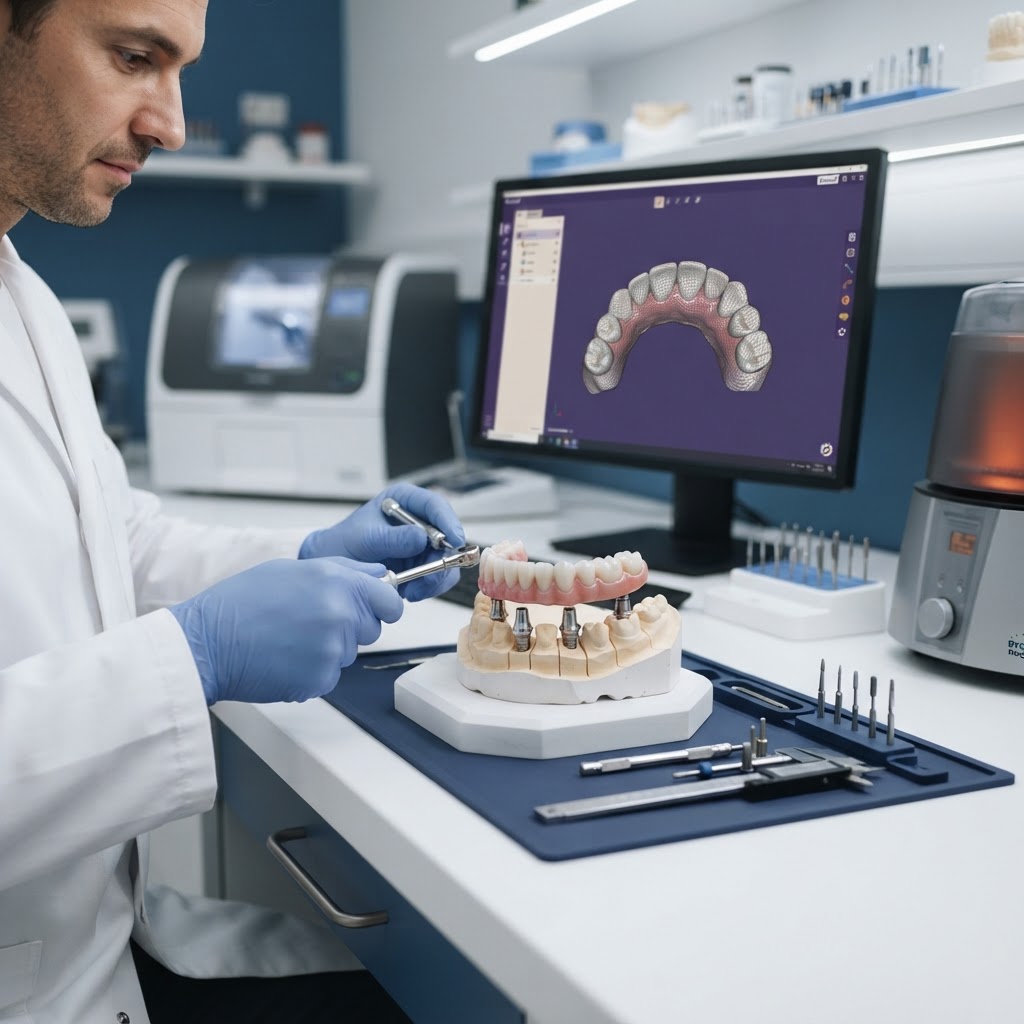
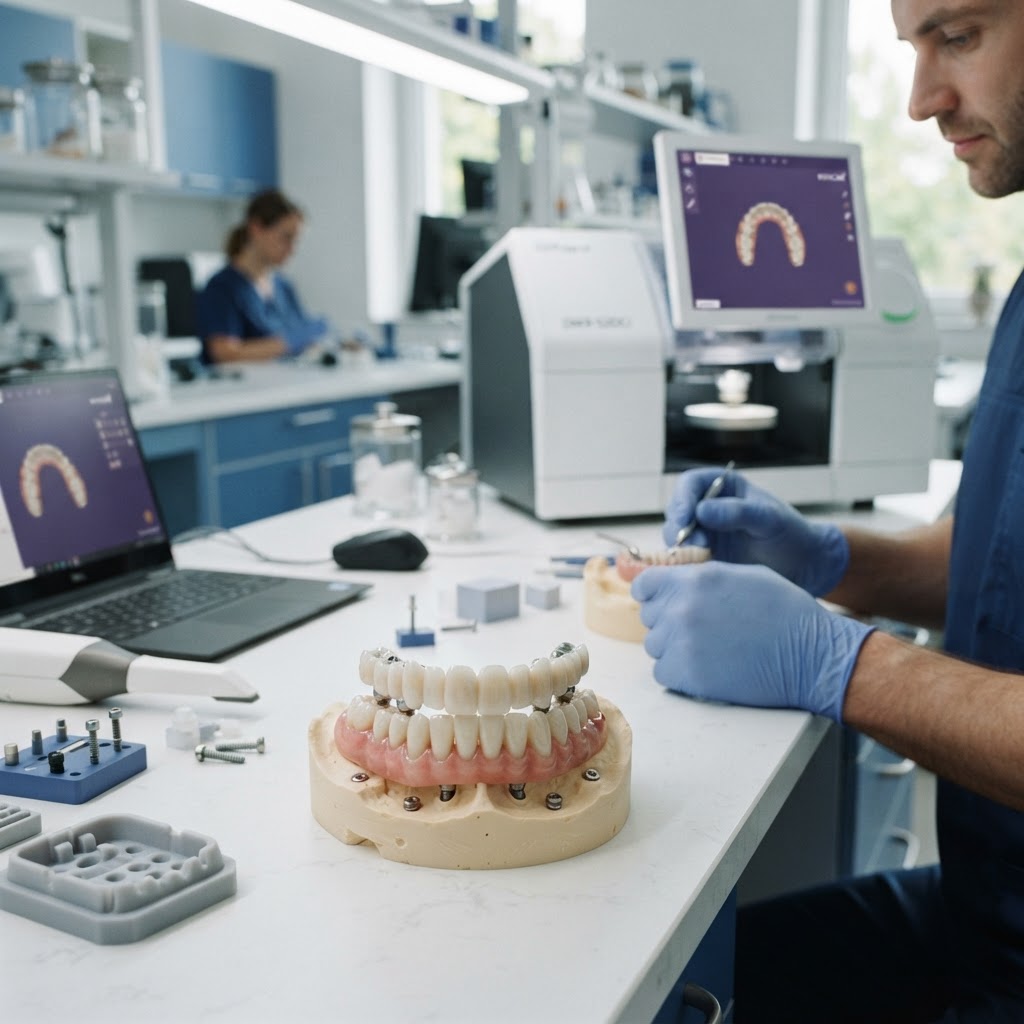
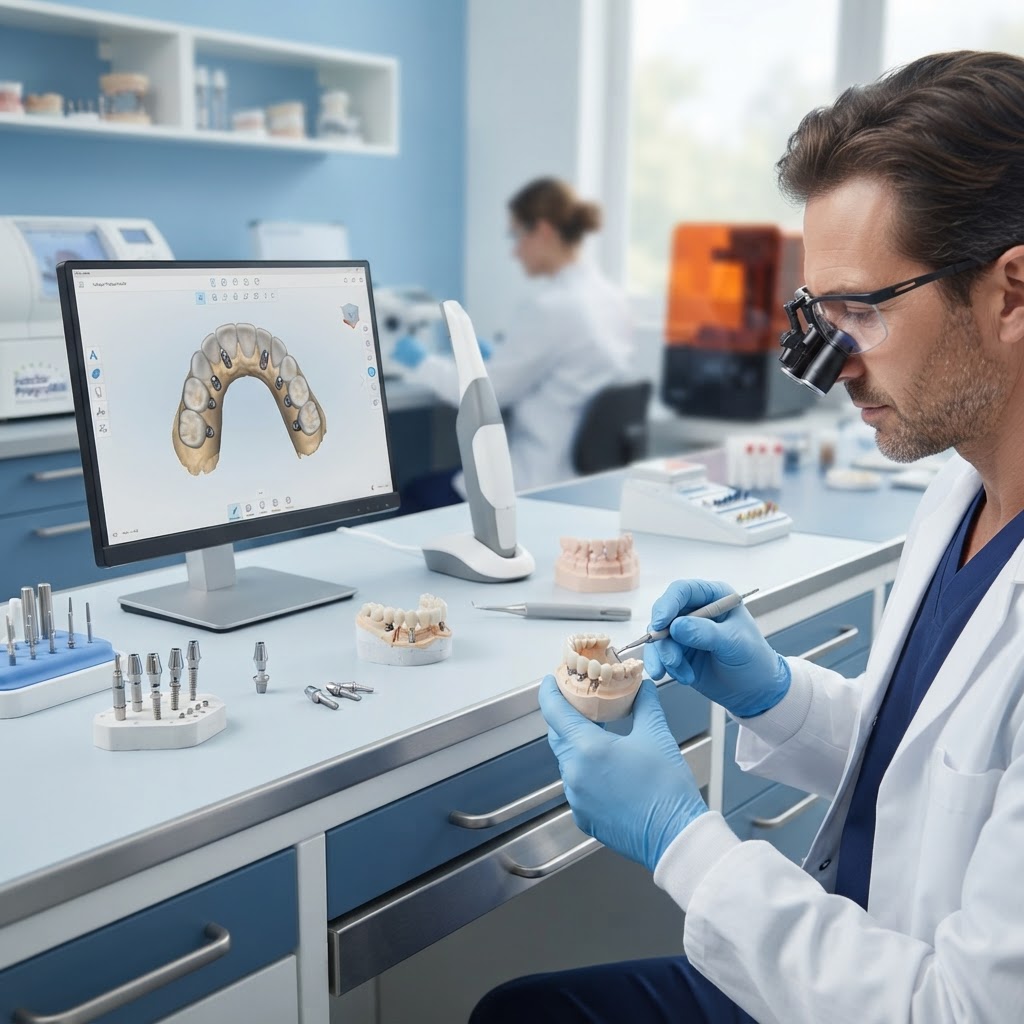
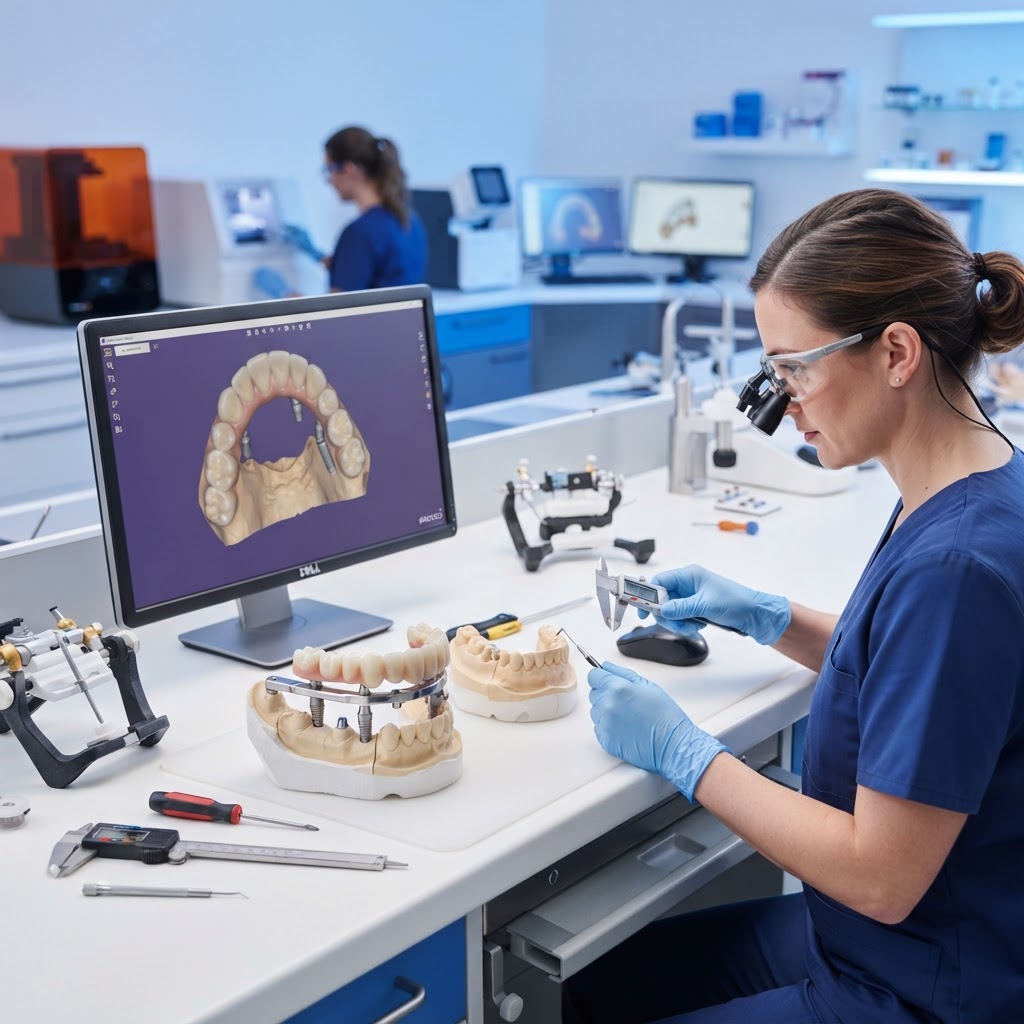
While intraoral scanners (IOS) have become standard for single-unit restorations, the full-arch digital workflow presents unique challenges, particularly regarding the accurate capture of the relationship between implants across the arch. To combat the inaccuracies of 'stitching' long spans, labs and clinics are adopting advanced capture technologies.
The Impact of Photogrammetry
Photogrammetry has emerged as the gold standard for full-arch implant impressions. Systems like the PIC system or ICam4D allow clinicians to capture the precise 3D position of implant analogs in seconds. This data is significantly more accurate than traditional IOS for long-span distances, ensuring a 'passive fit'—the holy grail of full-arch dentistry. When the lab receives a photogrammetry file, the need for verification jigs is often eliminated, saving hours of chair time.
AI-Driven Design and Prototyping
Artificial Intelligence is no longer a futuristic concept; it is an active participant in the CAD process. Modern design software now uses AI to analyze the patient's preoperative state and propose tooth positions based on thousands of successful cases. Furthermore, the use of 3D-printed 'try-in' prototypes has become an essential step. These high-fidelity resin models allow the patient to 'test drive' the aesthetics and phonetics of the restoration before the final framework is milled in expensive materials.
Optimizing the Clinical-Laboratory Partnership
The success of a full-arch case is rarely the result of a single person; it is a collaborative effort between the surgeon, the restorative dentist, and the laboratory technician. To optimize this workflow, clinics are moving toward 'stackable' surgical guides. These systems allow for a seamless transition from tooth-supported to bone-supported guidance, ensuring that the implants are placed exactly where the restorative plan dictates.
Key Insights for Dental Professionals:
- Prioritize Passive Fit: Even the strongest material will fail if the framework is under internal tension. Utilize photogrammetry or high-quality verification jigs for every case.
- Consider the Opposing Dentition: When selecting materials, consider what the restoration will be occluding against. A zirconia arch against natural teeth can cause significant wear; a graphene-based or composite-layered bridge may be more appropriate.
- Embrace Digital Communication: Utilize cloud-based platforms to share design files and 3D facial scans. The integration of facial scanning allows the technician to design the smile within the context of the patient's full face, not just a stone model.
Conclusion: The Future of Full-Arch Excellence
As we move further into 2026, the boundary between the clinic and the laboratory will continue to blur. The adoption of high-performance polymers, the precision of photogrammetry, and the efficiency of AI-driven design are not just trends; they are the new standards of care. By embracing these innovations, dental professionals can provide patients with restorations that are not only beautiful but are engineered for a lifetime of performance.
At Cosmetic Smile Studio, we specialize in the intersection of digital precision and artistic mastery. If you are looking to elevate your full-arch cases with the latest in material science and digital workflows, contact our technical team today to discuss your next project.