The Paradigm Shift in Full-Arch Implantology
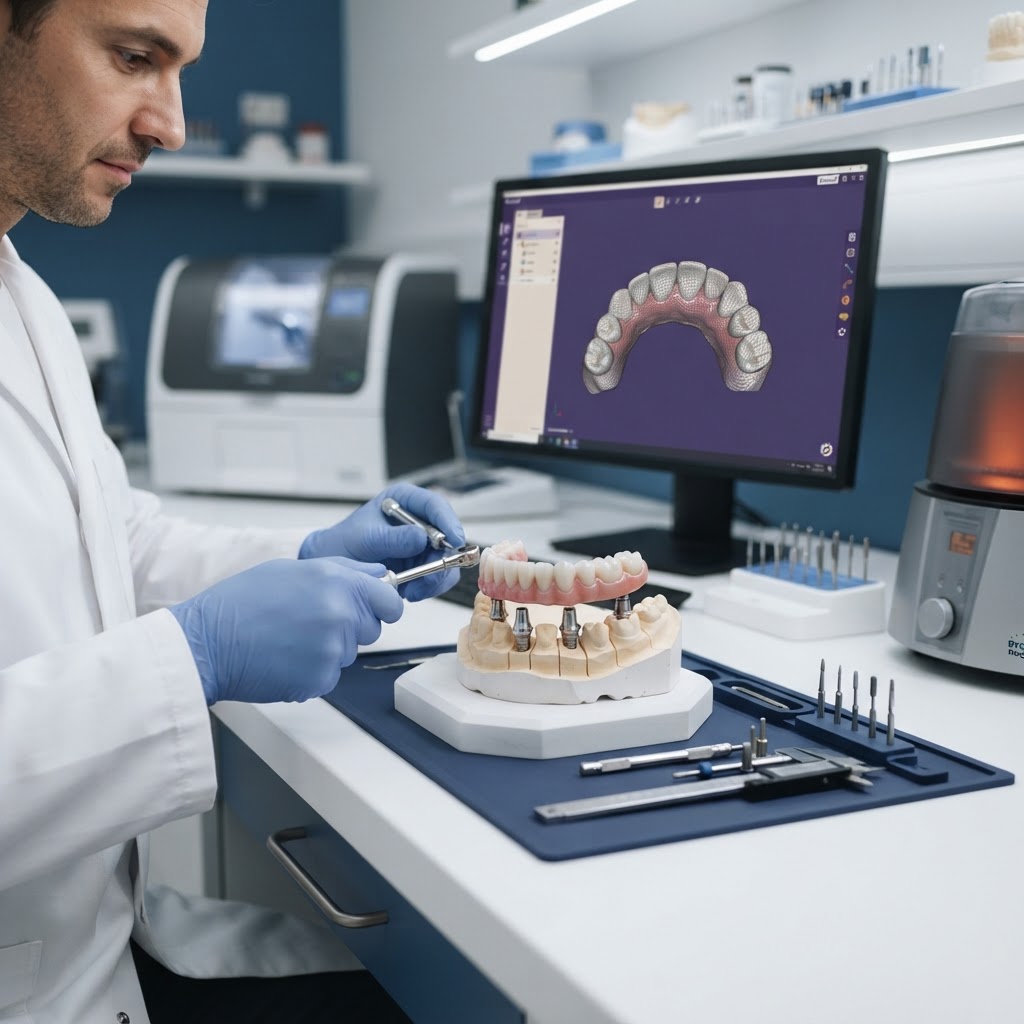
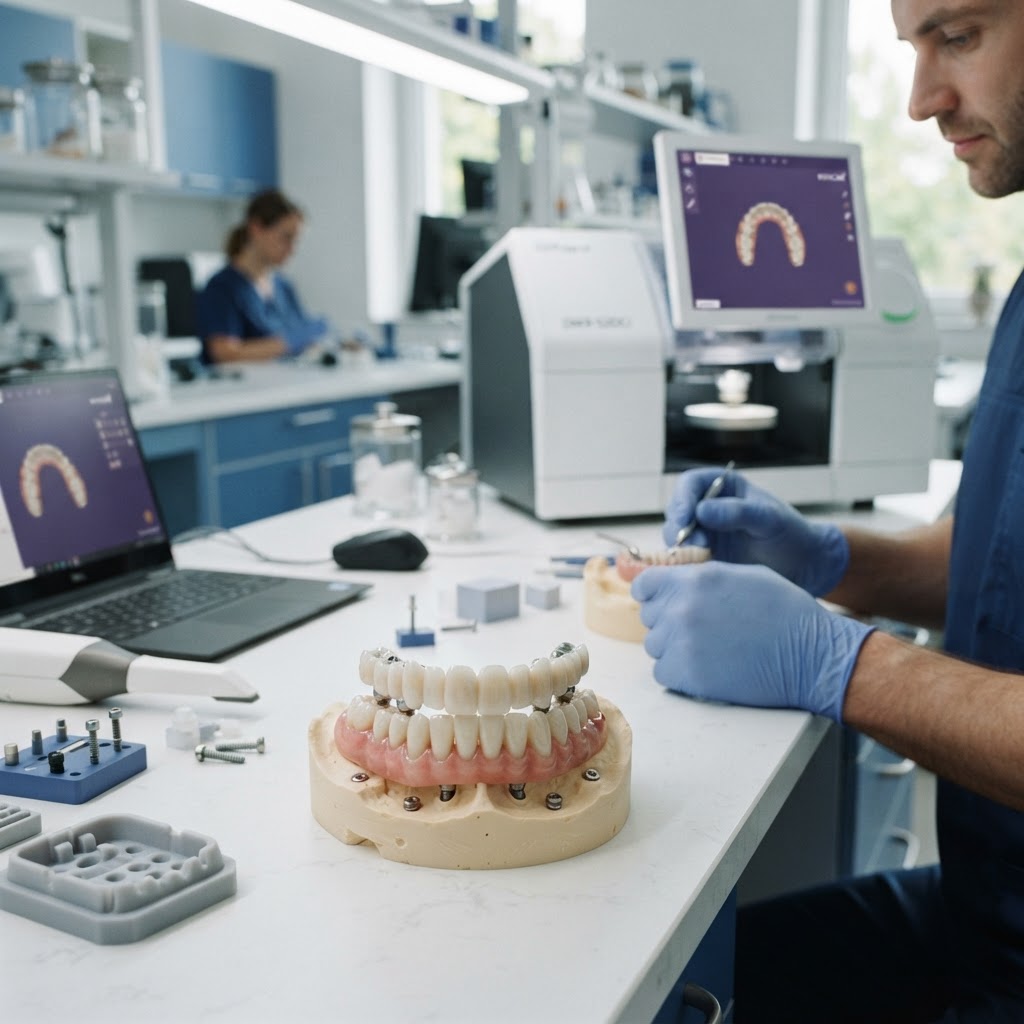
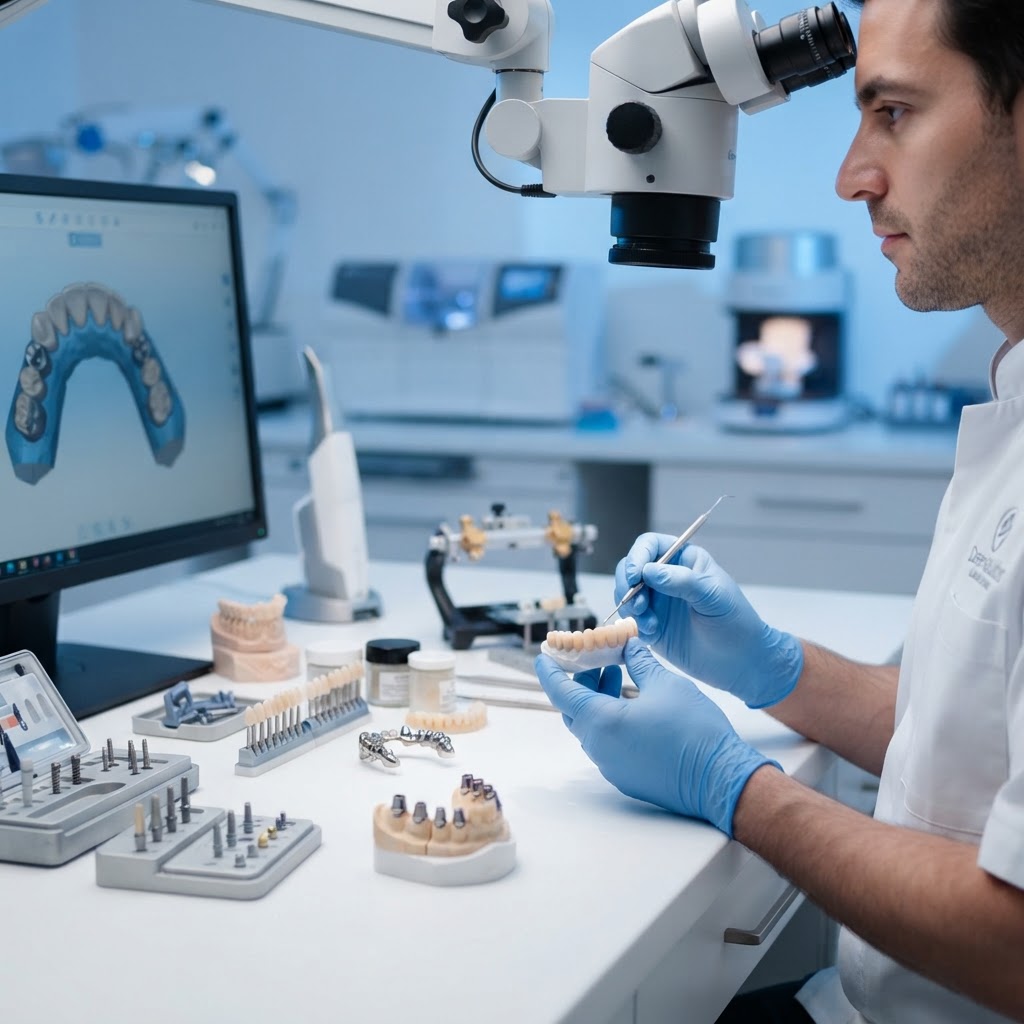
The landscape of restorative dentistry is undergoing a radical transformation. What was once a high-risk, labor-intensive procedure—the full-arch implant restoration—has evolved into a predictable, streamlined process driven by technological synergy. For the modern dental laboratory and the restorative clinician, staying at the forefront of this evolution is not just about adopting new tools; it is about mastering the intersection of material science and digital precision. As we move further into 2026, the 'analog' mindset is rapidly being replaced by a digital-first philosophy that prioritizes passive fit, biocompatibility, and long-term aesthetic stability.
The Evolution of High-Performance Materials
The choice of material for a full-arch prosthesis remains the most critical decision in the treatment planning phase. We have moved beyond the limitations of traditional porcelain-fused-to-metal (PFM) and are seeing a sophisticated diversification in material options.
Monolithic Gradient Zirconia
Monolithic zirconia continues to be the gold standard for full-arch restorations, but the technology has matured. The industry has shifted toward multi-layered, gradient zirconia that transitions seamlessly from high-strength 3Y (yttria-stabilized) zirconia at the base to high-translucency 5Y zirconia at the incisal edge. This 'strength-where-needed' approach minimizes the risk of chipping while providing the lifelike esthetics required for premium cosmetic cases. Modern milling strategies and sintering protocols now allow for these restorations to be produced with minimal post-processing, ensuring that the structural integrity of the material is preserved.
High-Performance Polymers and Graphene
While zirconia dominates the definitive market, high-performance polymers like PEKK (Polyetherketoneketone) and graphene-reinforced resins are carving out a significant niche. Graphene-reinforced biopolymers, such as G-CAM, offer a unique combination of lightweight properties and shock absorption. These materials are particularly beneficial for patients with heavy bruxism or those with limited bone density, as they reduce the occlusal forces transmitted directly to the implants. Furthermore, their ability to be easily repaired or modified chairside makes them an excellent choice for long-term provisionals and, in some cases, final prosthetics in specific clinical scenarios.
Digital Impression Accuracy: Beyond the Intraoral Scanner
The 'Achilles' heel' of full-arch digital workflows has historically been the accuracy of the digital impression over long spans. While intraoral scanners (IOS) have improved, the risk of 'stitch-error' over a full-arch still exists. This has led to the rise of specialized digital capture technologies.
- Photogrammetry: Systems like the PIC system or ICAM4D have become indispensable for labs specializing in full-arch work. By using specialized flags and high-speed cameras, photogrammetry captures the precise 3D relationship between implants with micron-level accuracy, ensuring a perfect passive fit every time.
- Digital Verification Jigs: Even when using IOS, labs are increasingly utilizing 3D-printed verification jigs. These 'printed bridges' are tried in the mouth to verify the digital model before the final zirconia frame is milled, drastically reducing the need for costly remakes.
The AI-Driven Design Revolution
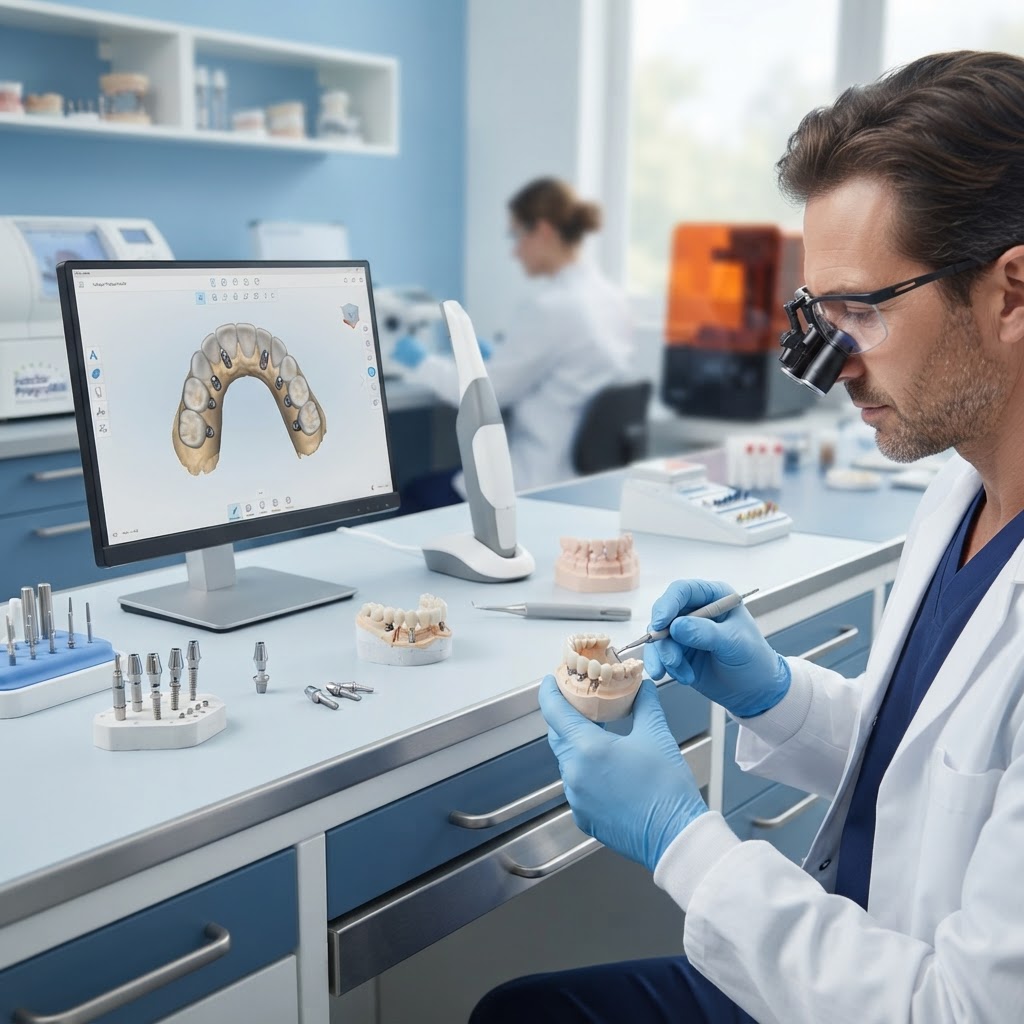
Artificial Intelligence is no longer a futuristic concept; it is a current reality in the CAD/CAM suite. AI-driven software, such as the latest iterations of exocad and 3Shape, is now capable of automating the most tedious aspects of full-arch design.
Automated Gingiva and Tooth Arrangement
AI algorithms can now analyze the patient's preoperative scans and facial photos to suggest the most anatomically correct tooth arrangement and gingival architecture. By referencing massive databases of natural tooth forms, the software can generate a design that respects the Golden Proportion while ensuring proper speech and functional clearance. For the dental technician, this means shifting from a 'builder' to an 'editor' role, significantly increasing throughput without sacrificing quality.
Optimizing the Lab-Clinic Communication Loop
The success of a full-arch case is predicated on communication. The modern digital workflow facilitates a 'Virtual Patient' model where all diagnostic data—CBCT, IOS, facial scans, and digital bite registrations—are integrated into a single coordinate system. This allows the lab to show the clinician a digital mockup before a single bur touches a block of zirconia. This transparency manages patient expectations and ensures that the final prosthetic delivery is a celebration rather than a troubleshooting session.
Actionable Insights for the Modern Practice
To capitalize on these trends, laboratories and clinics should consider the following steps:
- Invest in Accuracy: If you are performing more than two full-arch cases a month, consider integrating photogrammetry into your workflow to eliminate the variables of traditional impressions.
- Explore Material Hybridization: Don't limit yourself to zirconia. Understand the benefits of Graphene and PEKK for specific patient profiles.
- Adopt Facial Scanning: Integrating 3D facial scans allows for a truly prosthetically-driven plan that accounts for the patient's smile line and lip support in real-time.
Conclusion
The future of full-arch implant restoration is defined by a commitment to precision, the intelligent use of advanced materials, and a seamless digital bridge between the surgical and restorative phases. By embracing these trends, dental professionals can provide outcomes that are not only aesthetically stunning but biologically sound and long-lasting. At Cosmetic Smile Studio, we are dedicated to pioneering these digital frontiers, ensuring our partners have access to the most advanced restorative solutions available today. Ready to elevate your full-arch cases? Contact our technical team today to discuss how our digital workflow can transform your practice.