The Intelligence Revolution: A New Era for Dental Labs
In the rapidly evolving landscape of restorative dentistry, the leap from manual waxing to computer-aided design (CAD) was once considered the pinnacle of progress. However, as the industry moves further into the digital age, a new paradigm is shifting the way dental professionals approach restoration planning: Artificial Intelligence (AI). At Cosmetic Smile Studio, we are witnessing a fundamental transformation where AI is no longer a peripheral novelty but the core engine driving efficiency and precision in dental lab workflows. The integration of machine learning and neural networks into daily operations is allowing labs to overcome traditional bottlenecks while reaching new heights of anatomical accuracy.
The Evolution of CAD/CAM: From Manual Digital to AI-Automated
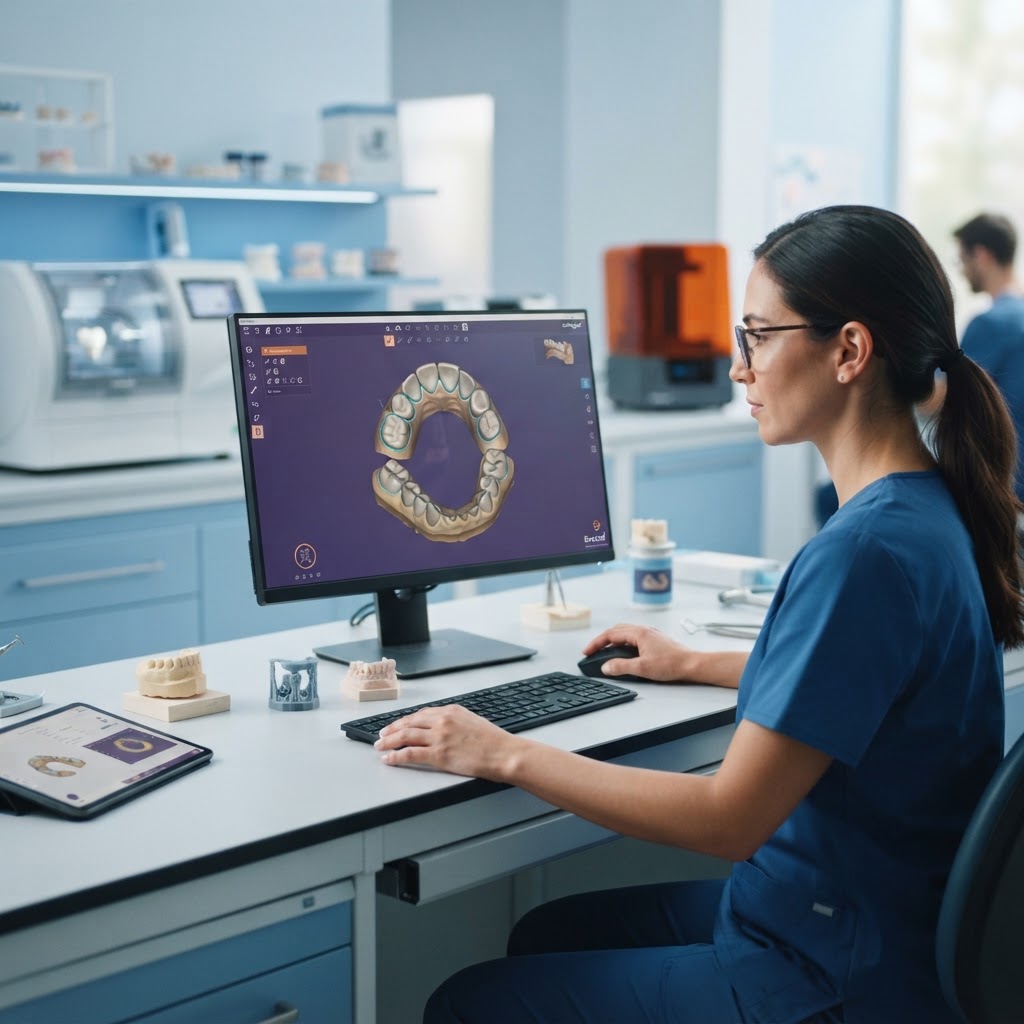
Traditional CAD software revolutionized the dental lab by providing tools for digital sculpting, but it still relied heavily on the manual input and technical skill of the designer. Technicians would spend significant portions of their day manually marking margin lines, orienting the path of insertion, and meticulously shaping anatomy. AI is fundamentally changing this dynamic by automating the most labor-intensive aspects of the design process, moving us toward a more intuitive and hands-off approach.
Automated Margin Detection and Segmentation
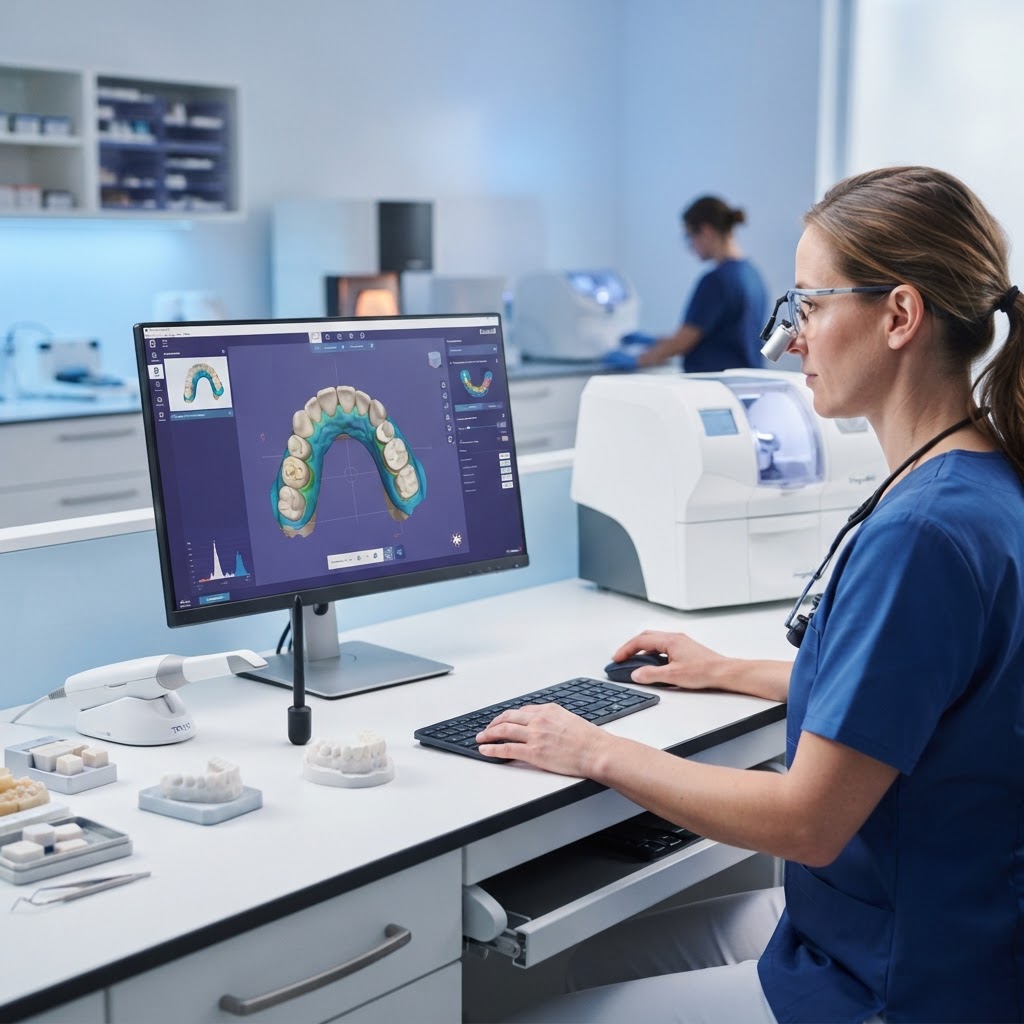
One of the most significant bottlenecks in the digital workflow has always been margin detection. AI-powered software now utilizes deep learning algorithms trained on millions of high-resolution intraoral scans to identify and trace prep margins with uncanny accuracy. This not only saves minutes per case but also reduces the likelihood of human error, especially in cases where the scan quality may be suboptimal or the gingival tissue is complex. By automating the segmentation process, labs can process a higher volume of cases without compromising the fit of the final restoration, ensuring that the critical seal between the tooth and the prosthetic is perfect every time.
Predictive Anatomy and Aesthetic Consistency
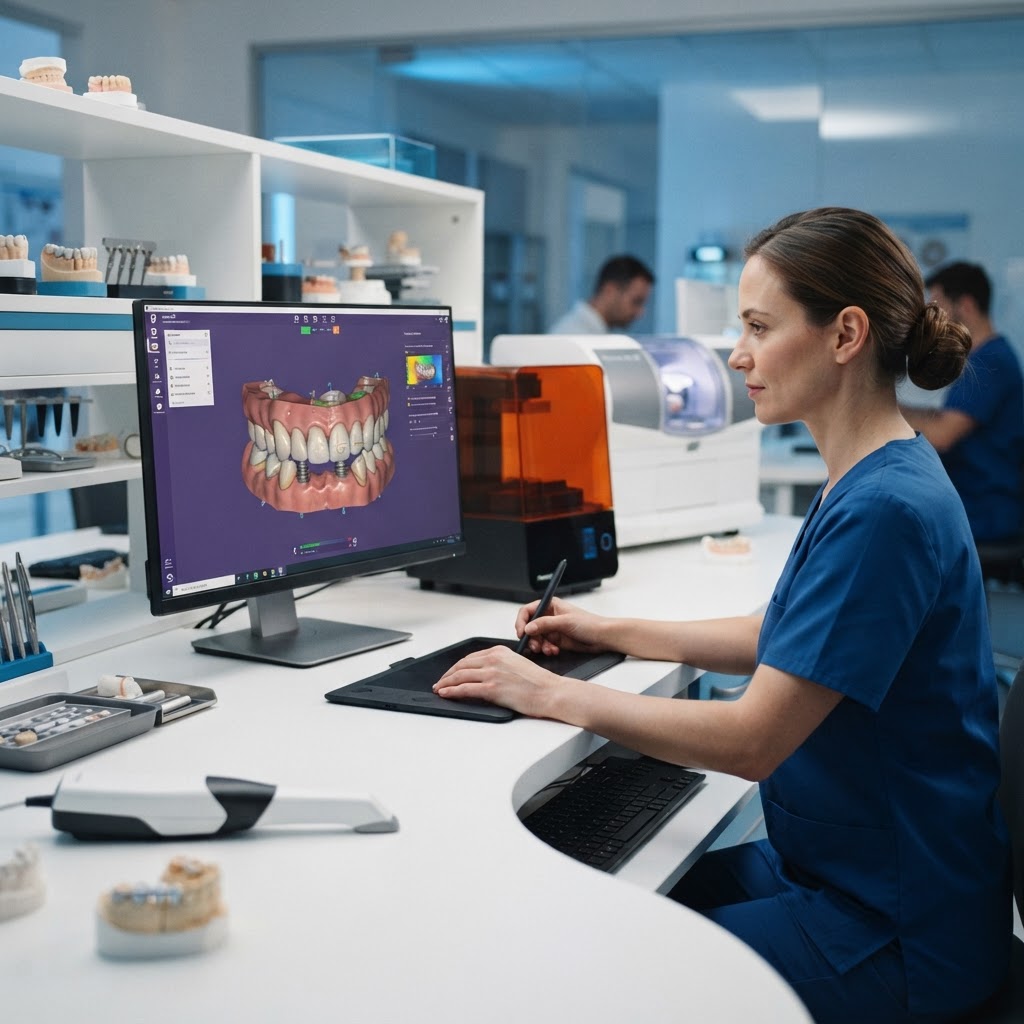
The beauty of AI in dental design lies in its predictive capabilities. Modern AI design engines don't just provide a generic tooth shape; they analyze the patient's unique dentition, including the wear patterns of adjacent teeth and the morphology of the contralateral tooth, to propose a restoration that is bio-harmonious and aesthetically pleasing. This level of "intelligent design" ensures that the occlusal surfaces are not only functional but also require minimal adjustment at the chairside. For complex cases involving multiple units, the AI can maintain consistent aesthetic features across the entire arch, something that previously required an immense amount of manual artistic coordination.
Standardizing Excellence Across Every Case
For large-scale dental laboratories, maintaining a consistent level of quality across different technicians can be a challenge. AI serves as a powerful equalizer. By utilizing standardized algorithms that adhere to established clinical parameters, AI ensures that every crown, bridge, or veneer meets a high baseline of quality. This allows the master technician to shift their role from creating basic anatomy to refining the intricate aesthetic details that characterize premium cosmetic work. Instead of spending time on the basics, the expert can focus on the nuances of characterization and translucency.
Operational Efficiency: Faster Turnarounds for Modern Clinics
In a world where patients expect "same-day" or "next-day" results, the speed of the dental lab is a critical competitive advantage. AI-driven workflows can reduce the design time for a single posterior crown from 10-15 minutes to under two minutes. When multiplied across hundreds of units, the operational impact is staggering. This efficiency allows for a more agile response to clinical needs.
- Reduced Labor Costs: Automation allows labs to scale production without necessarily increasing headcount, keeping overhead manageable.
- Faster Communication: AI can generate "instant" digital mock-ups, allowing dentists to share 3D visualizations with patients immediately during the consultation phase, which dramatically improves case acceptance.
- Minimized Re-makes: The increased precision in fit and occlusion provided by AI reduces the rate of costly and frustrating remakes, which are often caused by minor manual design errors.
Integrating AI with 3D Printing and Milling
The transformation doesn't stop at the design phase. AI is also optimizing the manufacturing process. Advanced nesting software uses AI to determine the most efficient placement of restorations within a 3D printing build plate or a milling puck, minimizing material waste and maximizing throughput. Furthermore, AI monitoring systems in milling machines can now predict tool wear and alert technicians before a failure occurs, ensuring that the transition from digital design to physical restoration is seamless and uninterrupted. This connectivity between design and fabrication represents the true potential of the digital thread in modern dentistry.
Strategic Implementation: Actionable Insights for Labs
To successfully integrate AI, labs should focus on data quality. The accuracy of AI output is directly proportional to the quality of the input. Dental professionals should ensure intraoral scans are clear and free of artifacts to give the AI the best possible foundation. Additionally, labs should invest in software that offers an "open architecture," allowing AI design tools to communicate seamlessly with existing scanners and mills. Training staff to act as "AI editors"—technicians who oversee and refine AI proposals—is the most effective way to leverage this technology without losing the human touch. This collaborative model ensures that technology serves the clinical goals of the doctor and the aesthetic desires of the patient.
Conclusion: Embracing the Future of Dental Technology
The integration of Artificial Intelligence into dental lab design is not about replacing the skilled technician; it is about empowering them. By removing the burden of repetitive, manual tasks, AI allows dental professionals to focus on the artistry and clinical expertise that define high-end cosmetic dentistry. As we look to the future, the labs that thrive will be those that embrace these intelligent technologies to deliver faster, more accurate, and more beautiful results for their clinical partners and patients alike. At Cosmetic Smile Studio, we remain at the forefront of this digital revolution, ensuring that every restoration we produce is a testament to the synergy of human expertise and artificial intelligence. Contact us today to learn how our AI-enhanced workflows can benefit your practice and elevate the standard of care for your patients.