The Paradigm Shift: From Manual CAD to Intelligent Design
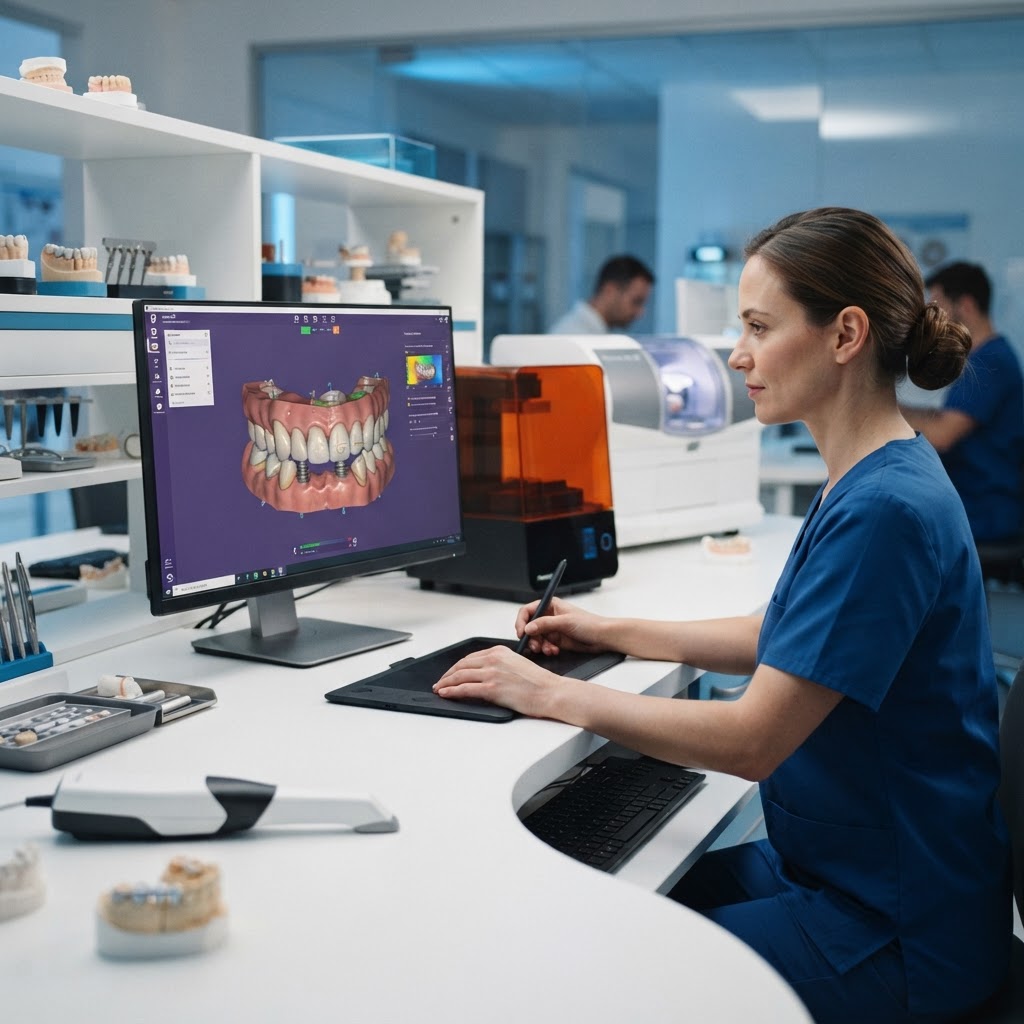
For decades, the dental laboratory industry has undergone a steady evolution from manual waxing and casting to the digital precision of Computer-Aided Design and Manufacturing (CAD/CAM). However, even within the digital sphere, the process has remained labor-intensive, requiring technicians to spend hours manually clicking through software interfaces to define margins, adjust contacts, and perfect occlusal anatomy. Today, we are witnessing the next great leap: the integration of Artificial Intelligence (AI) into the design workflow. This shift is not merely an incremental update; it is a total transformation of how restorations are conceived and executed.
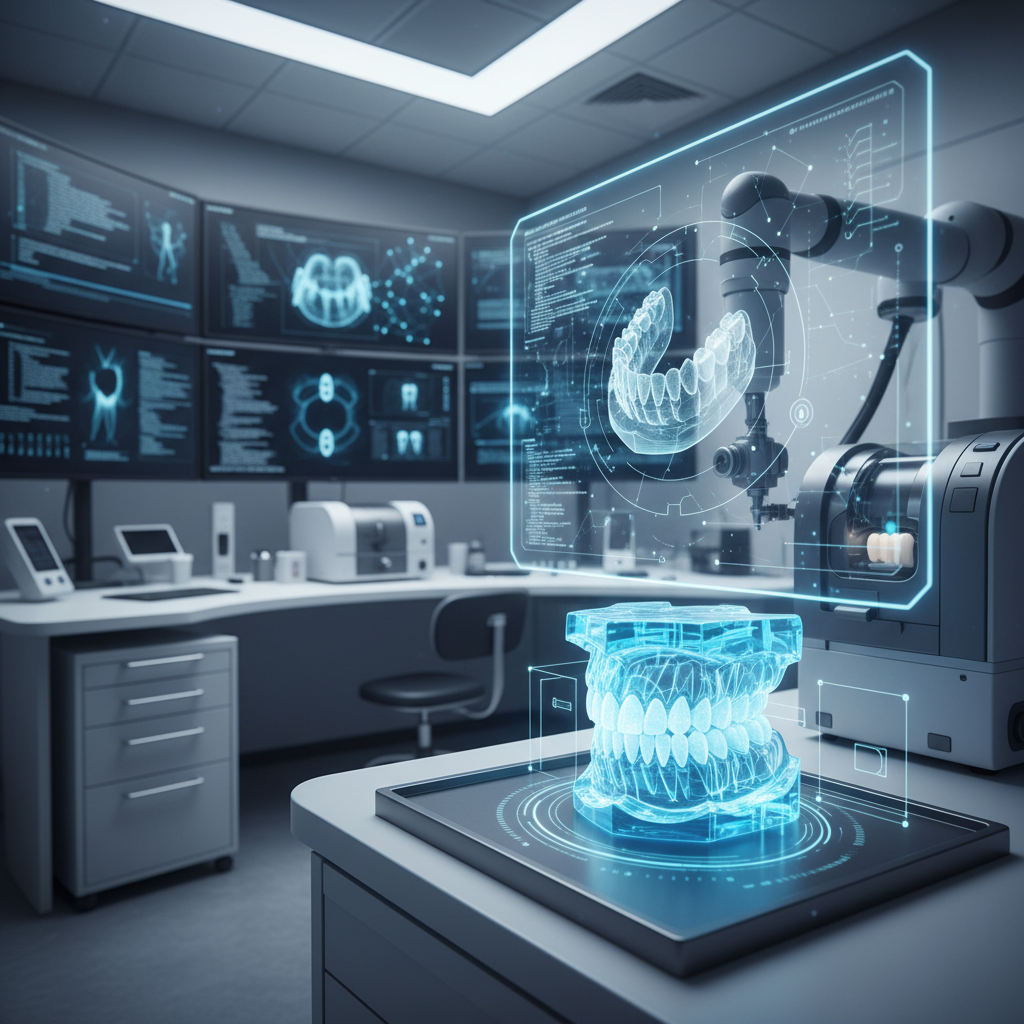
Artificial intelligence, specifically machine learning and convolutional neural networks (CNNs), is now being trained on millions of clinical datasets. This allows the software to 'understand' dental anatomy, path of insertion, and patient-specific occlusion in ways that were previously impossible. For the modern dental lab, this means moving from a reactive workflow to a predictive one, where the software anticipates the technician's needs and automates the most tedious aspects of the design process.
The Core Technologies: How AI 'Sees' the Restoration
AI in dental design relies on deep learning algorithms that have been fed vast amounts of high-quality intraoral and laboratory scans. This data allows the AI to perform several critical functions with sub-micron accuracy:
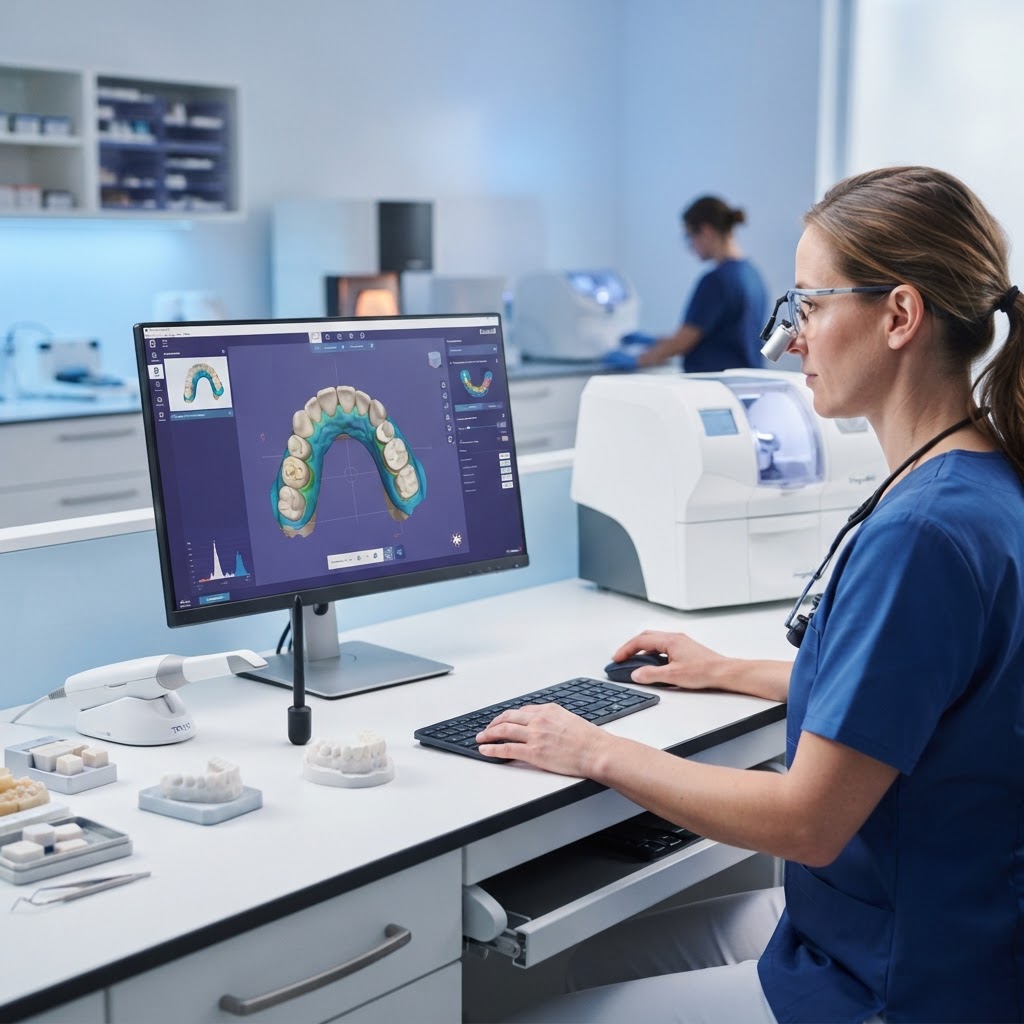
- Automated Margin Detection: One of the most time-consuming tasks in CAD is identifying the finish line. AI-driven systems can now detect margins with a level of consistency that rivals or exceeds human technicians, particularly in complex cases with varying preparation styles.
- Intelligent Tooth Segmentation: AI can instantly distinguish between tooth structure, gingiva, and neighboring dentition. This auto-segmentation allows for a cleaner design environment and more accurate initial proposals.
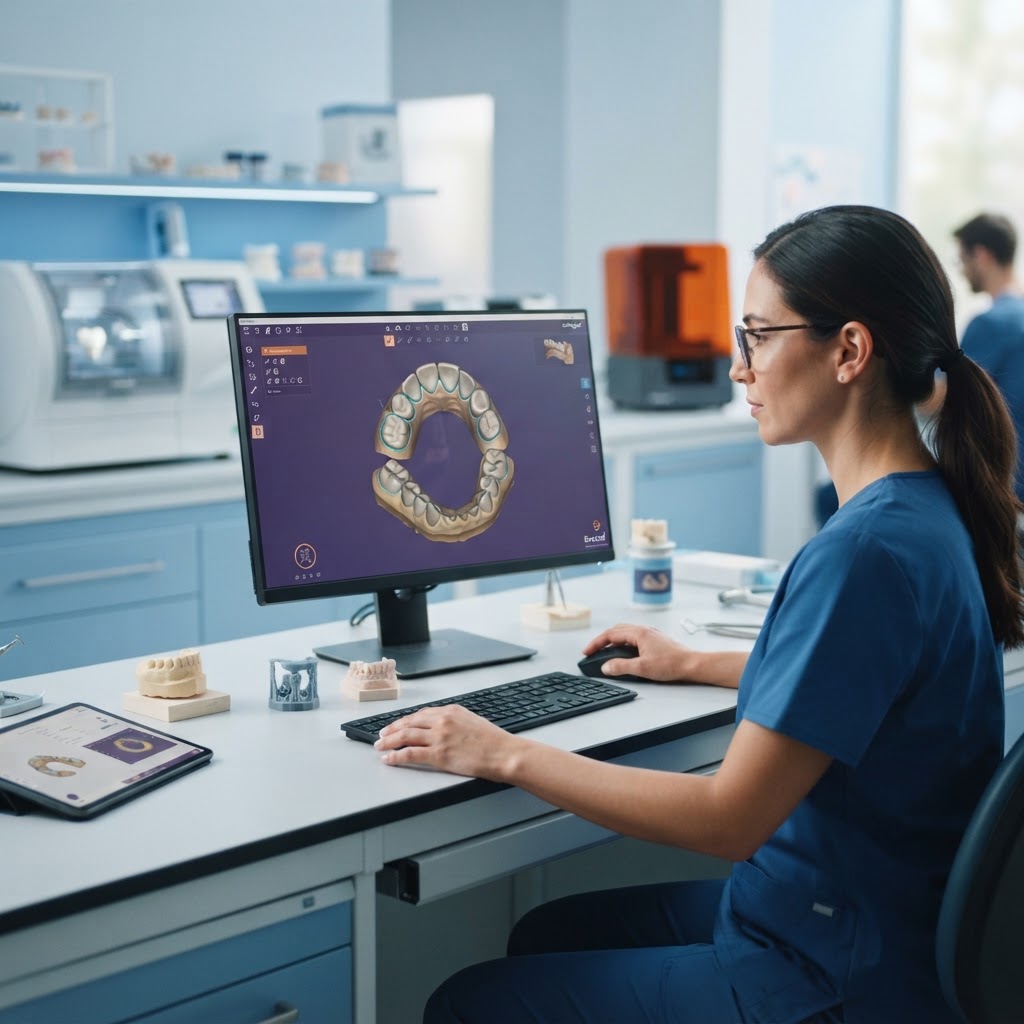
- Morphological Adaptation: Instead of simply pulling a standard tooth from a library, AI analyzes the surrounding teeth to generate a crown or bridge that fits the specific morphological character of the patient, ensuring a natural aesthetic and functional harmony.
Streamlining the CAD/CAM Workflow
The practical application of AI in the lab manifests most clearly in productivity gains. Traditionally, a single crown design might take a skilled technician 10 to 15 minutes of active work. With AI-driven design automation, that time can be reduced to less than two minutes. This efficiency is achieved through 'generative design' principles, where the software presents a near-final proposal that only requires minimal refinement from the technician.
Enhanced Occlusal Mapping
AI algorithms are exceptionally proficient at calculating dynamic occlusion. By analyzing the opposing arch and the movements of the temporomandibular joint (TMJ) as captured by digital records, AI can propose occlusal schemes that minimize chairside adjustments for the dentist. This high level of functional precision reduces the rate of remakes and enhances the laboratory's reputation for quality.
Nesting and Milling Optimization
Beyond the design phase, AI is transforming the manufacturing side of the lab. AI-driven nesting software can automatically arrange restorations within a material disc to maximize material yield and minimize milling time. Furthermore, predictive algorithms can monitor milling tool wear, alerting technicians to potential failures before they result in a ruined restoration, thereby maintaining a consistent production schedule.
The Strategic Value for Clinics and Labs
For the laboratory owner, AI represents a path to scalability. In an era where skilled dental technicians are increasingly difficult to find, AI allows labs to maintain high output without compromising on the quality that cosmetic dentistry demands. It democratizes high-level design, allowing junior technicians to produce results that previously required years of experience.
- Increased Throughput: Labs can process more units per day, leading to faster turnaround times for the clinic and the patient.
- Consistency Across Cases: AI does not get tired or lose focus. The 50th crown of the day will have the same level of anatomical accuracy as the first.
- Reduced Costs: By optimizing material use and reducing human labor hours per unit, labs can improve their bottom line while remaining competitive in the market.
Human-AI Collaboration: The Technician as an Editor
A common concern within the industry is that AI will replace the dental technician. On the contrary, the most successful labs are viewing AI as a powerful assistant rather than a replacement. The technician’s role is evolving from a 'builder' to an 'editor' or 'architect.' The AI handles the heavy lifting of data processing and geometric calculations, while the technician applies their artistic eye and clinical judgment to the final restoration. This partnership ensures that the final product is not just mathematically correct, but clinically and aesthetically superior.
Actionable Steps for Modernizing Your Lab
To stay ahead in this rapidly evolving landscape, labs and clinics should consider the following steps:
- Audit Your Current Software: Ensure your CAD suite (such as Exocad or 3Shape) is updated to the latest versions that include AI-enhanced modules. Many of these features are hidden in recent updates.
- Invest in Training: Shift your staff's focus toward digital literacy and the nuances of AI proposal refinement rather than manual tool manipulation.
- Leverage Cloud Computing: AI is computationally expensive. Using cloud-based AI design services can provide access to high-end processing power without needing massive on-site hardware investment.
Conclusion: The Future is Automated
The integration of AI in dental lab design is a transformative force that is here to stay. By automating the technical minutiae of CAD/CAM and restoration planning, AI allows dental professionals to focus on what matters most: patient care and the artistry of the perfect smile. As we move further into 2026 and beyond, the competitive advantage will belong to those who embrace these intelligent workflows to deliver precision, efficiency, and excellence.
Ready to see the future of dental design in action? Contact Cosmetic Smile Studio today to learn how our AI-integrated digital workflow can elevate your practice’s restorative outcomes.