The Paradigm Shift: From Manual Digital to Autonomous Intelligence
For the past two decades, the dental industry has been defined by its transition from analog wax-ups to digital CAD/CAM workflows. However, while 'digital' replaced the physical, it still required significant manual labor—hours of clicking, dragging, and refining points on a screen. Today, we are entering a second, more profound transformation: the integration of Artificial Intelligence (AI) and Machine Learning (ML) into the very core of dental lab design. AI is no longer a futuristic concept; it is an active partner that is redefining how dental technicians and clinicians approach restoration planning.
At Cosmetic Smile Studio, we recognize that the 'Digital Laboratory' of 2024 and beyond is essentially a 'Neural Laboratory.' By leveraging vast datasets of human dental anatomy, AI-driven software can now predict, propose, and execute design tasks that previously required years of specialized training. This shift is not merely about speed; it is about achieving a level of consistency and biological harmony that was previously unattainable at scale.
How AI is Transforming CAD/CAM Workflows
Artificial Intelligence in dental lab design operates primarily through deep learning algorithms trained on millions of high-resolution 3D scans. These algorithms learn the intricate nuances of dental morphology, including how teeth wear over time and how they interact within a functional occlusion. This intelligence manifests in several critical areas of the design process:
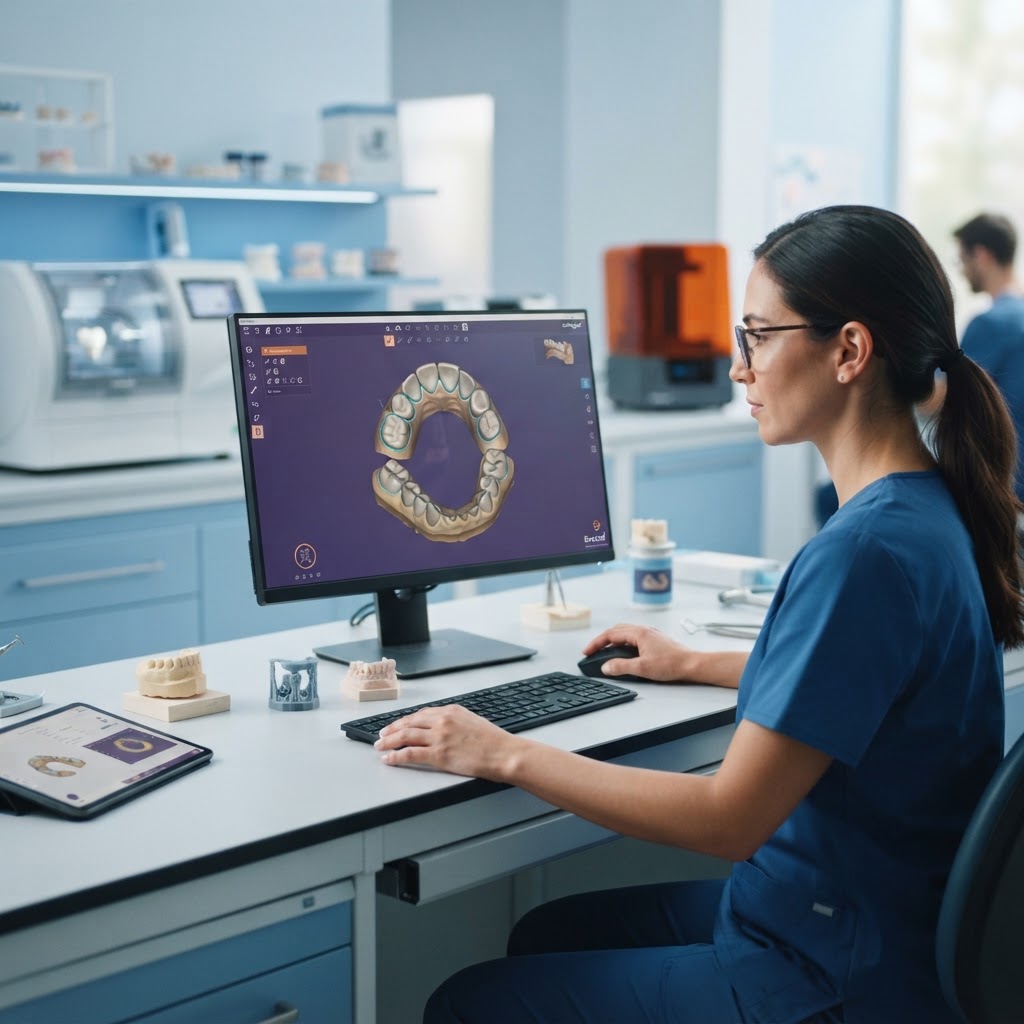
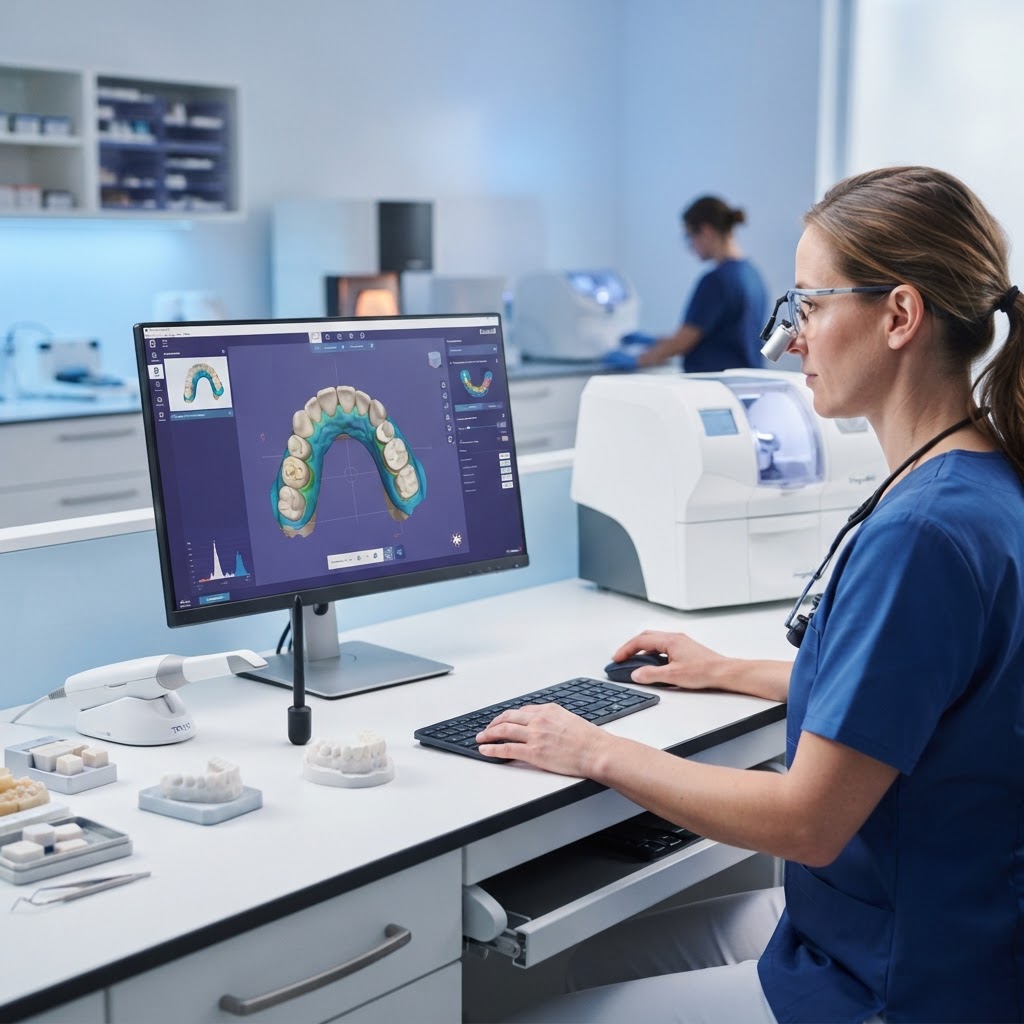
- Automated Margin Line Detection: One of the most time-consuming tasks for a technician is the manual identification of the preparation margin. AI algorithms can now analyze the surface geometry of an intraoral scan to identify the margin with sub-micron precision, even in cases where the retraction or scan quality is less than ideal.
- Intelligent Segmentation: AI can instantly distinguish between the prepared tooth, adjacent teeth, and gingival tissues. This automated segmentation allows the software to understand the spatial context of the restoration immediately upon file import.
- Generative Tooth Morphology: Instead of pulling a static 'tooth library' template, AI analyzes the patient's existing dentition, including the contralateral teeth and the opposing arch, to generate a custom restoration shape that mimics the patient’s unique genetic blueprint.
The End of the 'Click-Heavy' Design Process
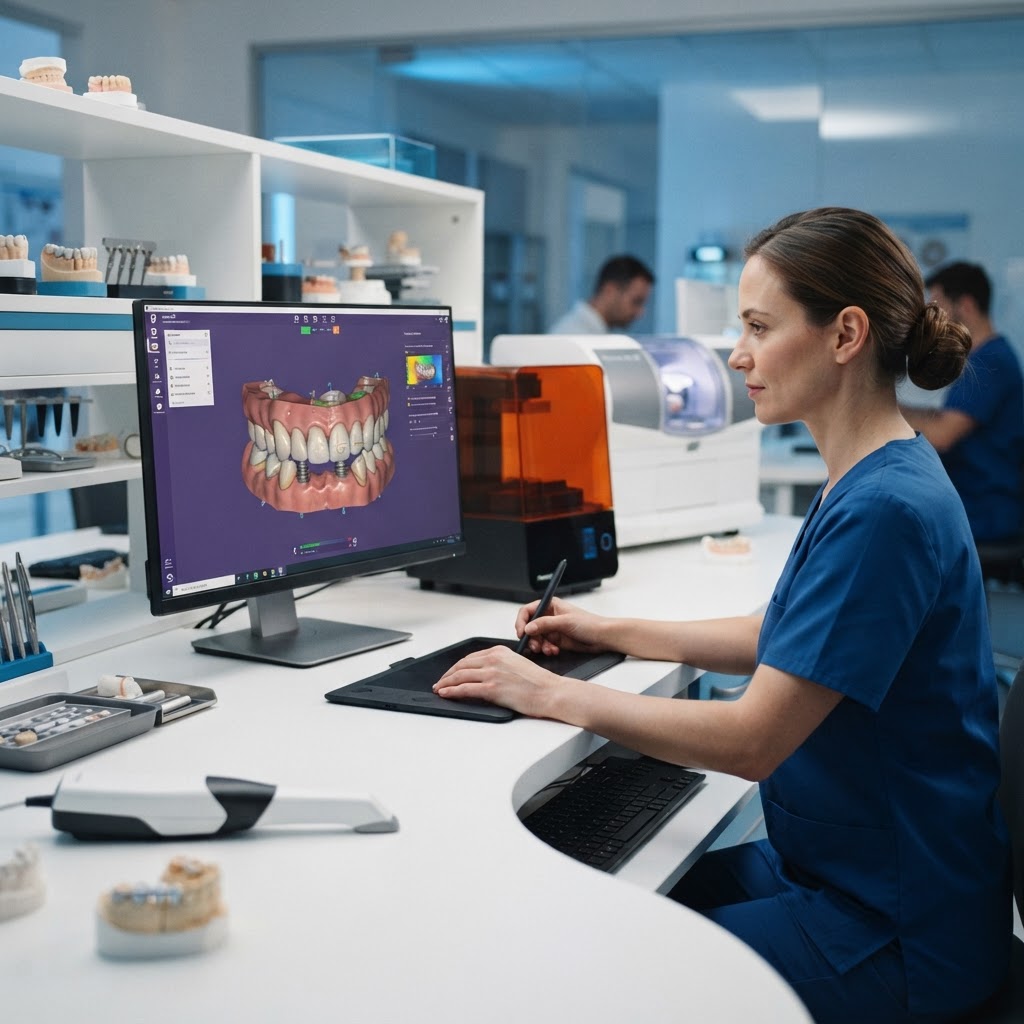
In traditional CAD software, creating a single posterior crown could take a skilled technician 10 to 15 minutes of manual adjustment. AI-driven platforms like those integrated into modern exocad or 3Shape ecosystems can now produce a 'first-best' proposal that is 95% complete in under two minutes. This allows technicians to move from being 'designers' who build from scratch to 'editors' who validate and refine. This reduction in 'mouse fatigue' and cognitive load allows laboratory staff to focus on complex cases that require true artistic intervention, such as anterior aesthetic cases and full-mouth rehabilitations.
Enhancing Precision and Reducing Remakes
The primary friction point between dental labs and clinics has always been the 'remake.' Whether due to a poor fit, high occlusion, or lack of interproximal contact, remakes represent a significant loss of time and profitability. AI significantly mitigates these risks by removing human subjectivity from the initial design phase. Because AI can analyze 'big data' regarding successful restoration outcomes, it can predict potential failure points in a design—such as areas where the ceramic wall thickness is too thin or where the occlusion will be too aggressive—and alert the technician before the file is even sent to the mill or 3D printer.
The Clinical Advantage: Faster Turnarounds and Better Outcomes
For the practicing dentist, the integration of AI in the lab design phase translates to direct clinical benefits. The most obvious is speed. As design times drop, labs can offer faster turnaround times without sacrificing quality. Furthermore, restorations designed with AI-enhanced morphology tend to require fewer chairside adjustments. Because the AI considers the dynamic movement of the jaw (virtual articulation) based on thousands of similar functional cases, the occlusal fit is often superior to traditional manual design.
Actionable Insights for Modern Dental Practices
- Invest in High-Quality IOS: AI thrives on data. The better the initial intraoral scan, the more accurately the AI can detect margins and propose morphology.
- Request AI-Assisted Proposals: When communicating with your lab, ask how they are utilizing AI to ensure consistency in your restoration designs.
- Focus on Collaboration: Use the time saved by AI automation to have deeper clinical conversations with your lab technicians about the 5% of the design that requires human artistry.
The Future: Real-Time Design and Predictive Diagnostics
The trajectory of AI in dental labs points toward a future of real-time design. We are approaching a point where, as a dentist is scanning a patient, the AI in the cloud is already designing the crown in the background. By the time the patient is out of the chair, the design is ready for review. Beyond design, AI will also play a role in predictive diagnostics—analyzing scans over time to predict wear patterns and suggesting proactive restorative interventions before a tooth fractures.
Conclusion: Embracing the Intelligence Revolution
AI is not here to replace the dental technician; it is here to augment them. It provides the foundation of precision and speed upon which the technician can layer their aesthetic expertise. At Cosmetic Smile Studio, we believe that the synergy between human creativity and artificial intelligence is the key to the next generation of dental excellence. By embracing these technologies, labs can provide more predictable, faster, and more beautiful restorations than ever before.
Are you ready to experience the precision of AI-enhanced restoration design? Contact our team at Cosmetic Smile Studio today to learn how our digital workflow can elevate your clinical outcomes and streamline your practice.