Introduction: The Transformation of Full-Arch Restorations
In the rapidly evolving landscape of restorative dentistry, the full-arch implant restoration remains one of the most challenging yet rewarding procedures. For clinicians and dental laboratories across the United States, the shift from traditional analog methods to fully digital workflows is no longer a luxury—it is a necessity for achieving the precision, esthetics, and efficiency required by modern patients. Today, we are witnessing a convergence of advanced material science and digital innovation that is redefining the 'All-on-X' paradigm. This article explores the current trends shaping the industry and how dental professionals can leverage these advancements for superior clinical outcomes.
High-Performance Materials: Beyond Standard Zirconia
The choice of material is foundational to the longevity and success of a full-arch restoration. While monolithic zirconia has been the industry standard for the past decade, new variations and alternative polymers are gaining significant traction in high-end cosmetic laboratories.
- Multilayered and High-Translucency Zirconia: Gone are the days of opaque, 'toilet-bowl white' restorations. Advanced gradient zirconia pucks now provide varying levels of translucency and flexural strength within a single disk. This allows technicians to mill restorations that mimic the natural transition from a high-strength cervical area to a highly translucent incisal edge, often eliminating the need for hand-layering porcelain and the subsequent risk of chipping.
- High-Performance Polymers (PEEK and Pekkton): These materials offer a modulus of elasticity similar to human bone. By acting as a shock absorber, PEEK-based frameworks reduce the mechanical stress transmitted to the implants and the underlying bone. This is particularly beneficial for patients with heavy parafunctional habits or those with limited bone density.
- Carbon Fiber Reinforcement: Trinia and other metal-free frameworks are providing lightweight, high-strength alternatives to traditional titanium bars. These materials are easier to mill and offer excellent biocompatibility, making them a favorite for patients with metal sensitivities.
The Enduring Role of Titanium
Despite the rise of polymers, CAD/CAM milled titanium substructures remain a gold standard for structural integrity. When paired with individual zirconia or lithium disilicate crowns, the 'Maló-style' bridge offers unparalleled repairability. If a single crown fractures, the entire bridge does not need to be replaced—only the individual unit, saving both time and costs for the patient and the clinic.
Digital Impressioning and the Photogrammetry Revolution
Accuracy begins at the impression stage. While intraoral scanners (IOS) have improved significantly, capturing a perfectly passive fit for a full-arch span remains a hurdle in purely optical workflows due to the potential for stitching errors over long distances.
The Rise of Photogrammetry
Photogrammetry systems, such as PIC or Imetric, are revolutionizing the way we capture implant positions. By using specialized targets (capture flags) and high-speed cameras, these systems provide micron-level accuracy that far exceeds traditional open-tray impressions. The digital file generated is inherently verified, eliminating the need for time-consuming verification jigs. This drastically reduces chair time and ensures a predictable fit for the final prosthesis on the very first try.
The Integrated Digital Workflow: From Design to Delivery
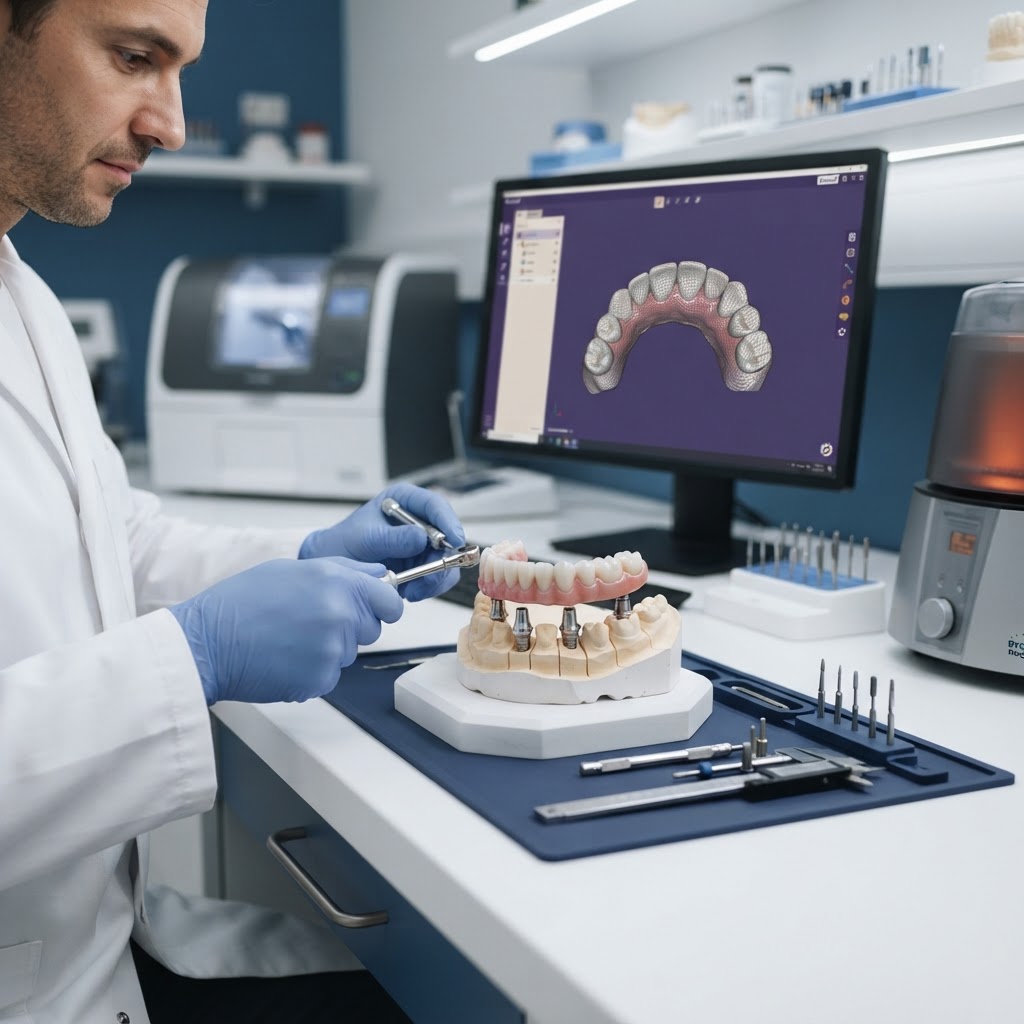
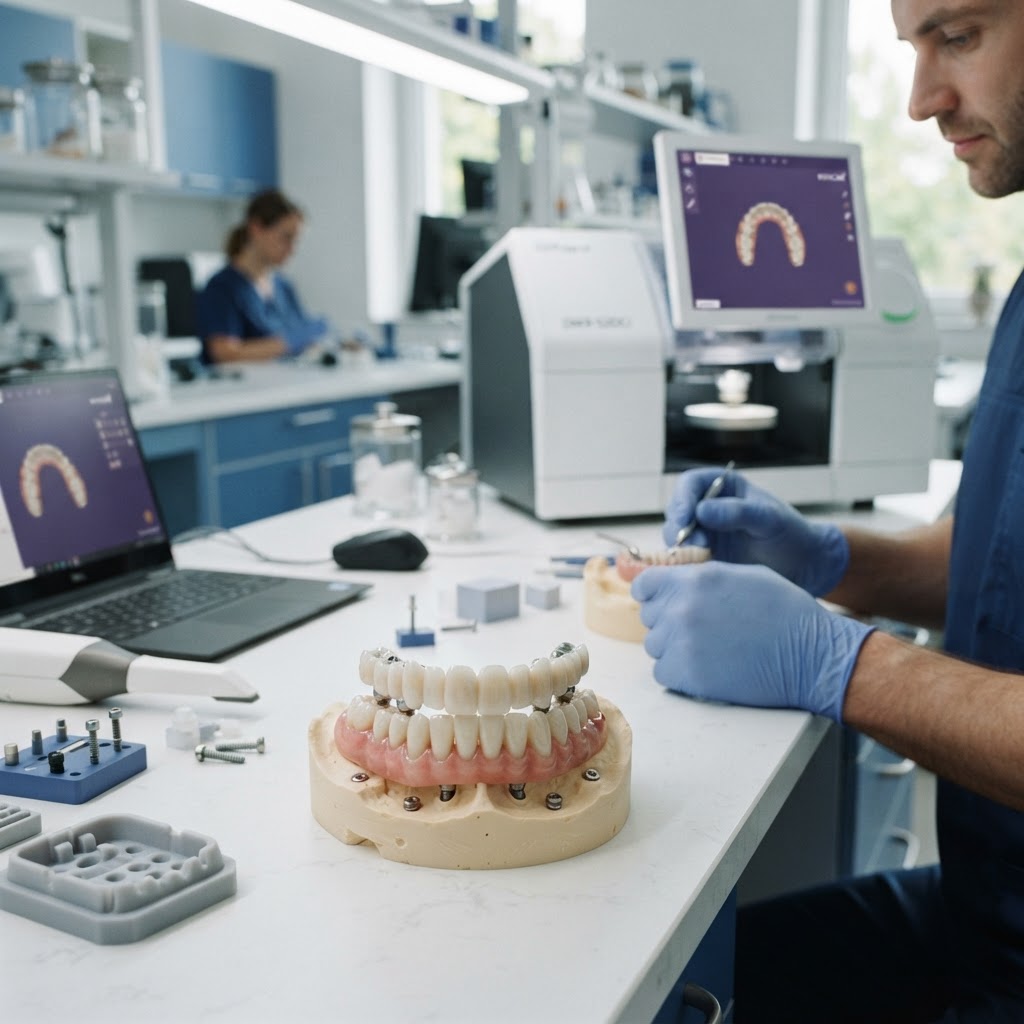
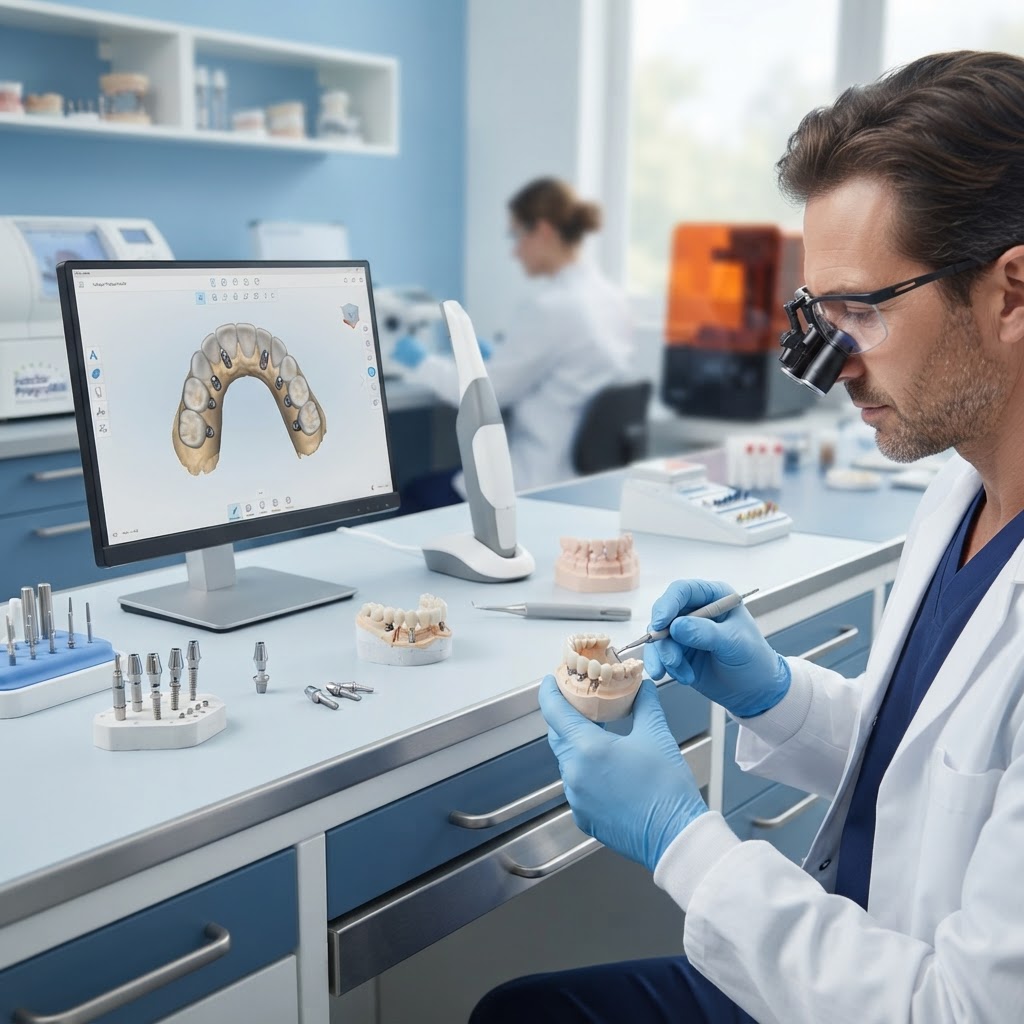
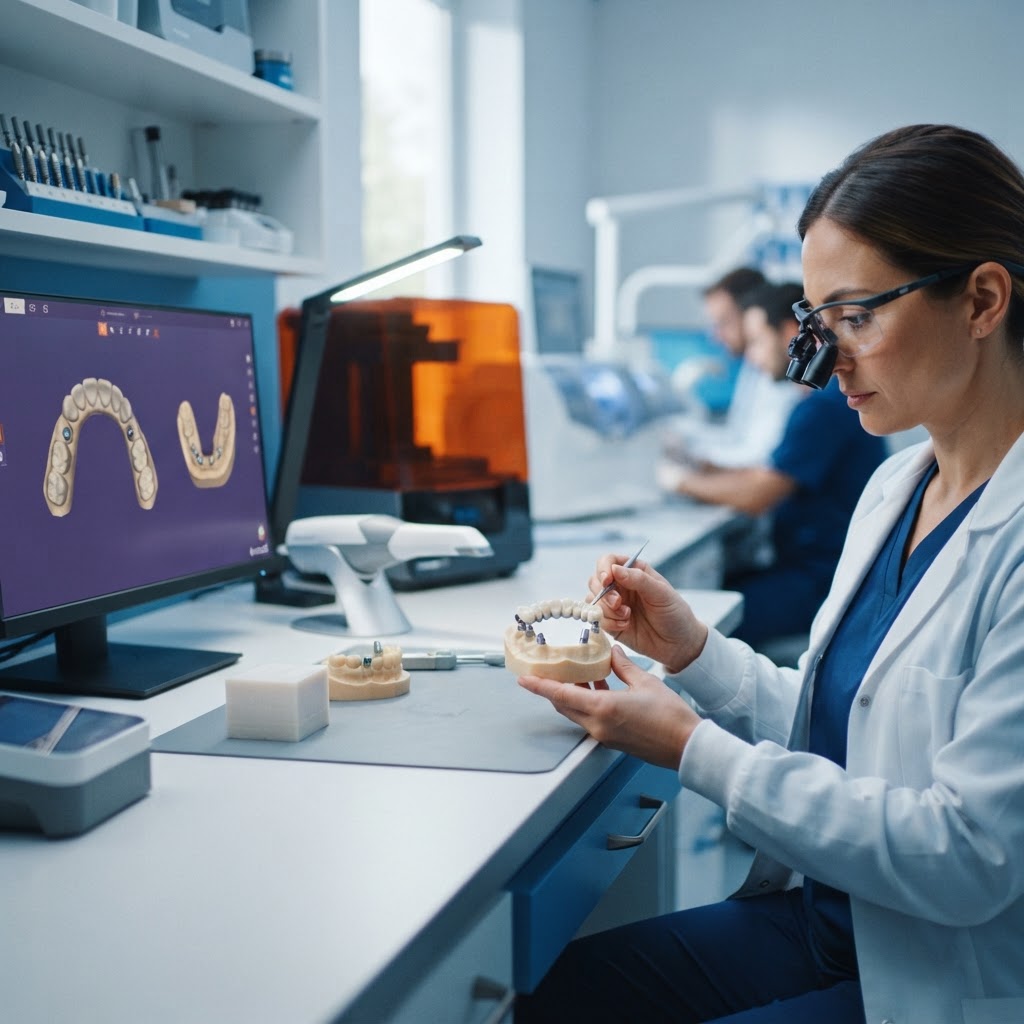
A seamless workflow is the backbone of a successful lab-clinic partnership. The integration of various digital tools allows for a predictable 'top-down' restorative approach. This involves several key stages:
- Digital Smile Design (DSD): Visualizing the final result before the first incision allows for better patient communication. By overlaying 2D photos with 3D scans, clinicians can design a smile that complements the patient's facial features and personality.
- Guided Surgery and Stackable Guides: Merging CBCT data with digital impressions ensures implants are placed in restorative-driven positions. Stackable guide systems allow for a seamless transition from bone reduction to implant placement and immediate provisionalization.
- The 3D Printed Provisional: 3D printing has become an essential tool for the provisional phase. Printed long-term provisionals allow patients to 'test drive' their new smile, providing critical data on phonetics, aesthetics, and function that the lab can then duplicate in the final zirconia restoration.
AI and Automation in the Dental Laboratory
Artificial Intelligence is no longer a futuristic concept; it is actively optimizing laboratory efficiency. In the modern digital lab, AI algorithms assist technicians in several ways:
- Automated Tooth Arrangement: AI can suggest tooth positions based on thousands of successful cases, significantly reducing the time required for the initial setup.
- Gingiva Design: Sophisticated software can now auto-generate natural-looking gingival architecture, which the technician then refines for maximum esthetics.
- Structural Analysis: AI can identify potential 'weak spots' in a design before it is milled, suggesting where connectors should be thickened to prevent future fractures.
Practical Insights for Dental Professionals
To stay competitive in this fast-paced environment, clinics and laboratories should consider the following actionable steps:
- Invest in Open Systems: Avoid proprietary 'closed' ecosystems. Utilizing open-source software like exocad allows for maximum flexibility across various implant systems and milling centers.
- Prioritize Communication: Use cloud-based platforms for real-time sharing of STL and DICOM files. The more data a laboratory has—including pre-op scans and facebow records—the better the final result.
- Focus on Education: The learning curve for photogrammetry and guided surgery can be steep. Investing in team training ensures that the technology is utilized to its full potential, rather than becoming an expensive paperweight.
Conclusion: Embracing the Digital Shift
The future of full-arch implant restoration lies in the synergy of material science and digital precision. By moving away from analog uncertainties and embracing photogrammetry, AI-driven design, and high-performance materials, dental professionals can provide more predictable, esthetic, and durable outcomes for their patients. The transformation of the 'All-on-X' workflow is here, and it is paved with digital innovation.
Are you ready to elevate your full-arch cases? Contact Cosmetic Smile Studio today to discover how our advanced digital laboratory services can bring unparalleled precision and artistry to your practice. Let's build the future of smiles together.