The 2026 Digital Shift: From Tools to Intelligent Partners
As we navigate through 2026, the landscape of the dental laboratory has undergone a profound transformation. The days when CAD/CAM was merely a digital version of manual wax-ups are long gone. Today, we are witnessing the rise of the 'Autonomous Laboratory,' where software does not just assist the technician but acts as a highly predictive partner. For the premium dental lab, staying competitive in the USA market requires more than just owning the latest scanners; it demands a deep mastery of the new software ecosystems that define precision and productivity. This article explores the groundbreaking updates in CAD/CAM software for 2026, with a specific focus on the latest Exocad features and the design automation workflows that are reshaping the industry.
Exocad 2026: The New Frontier of Predictive Design
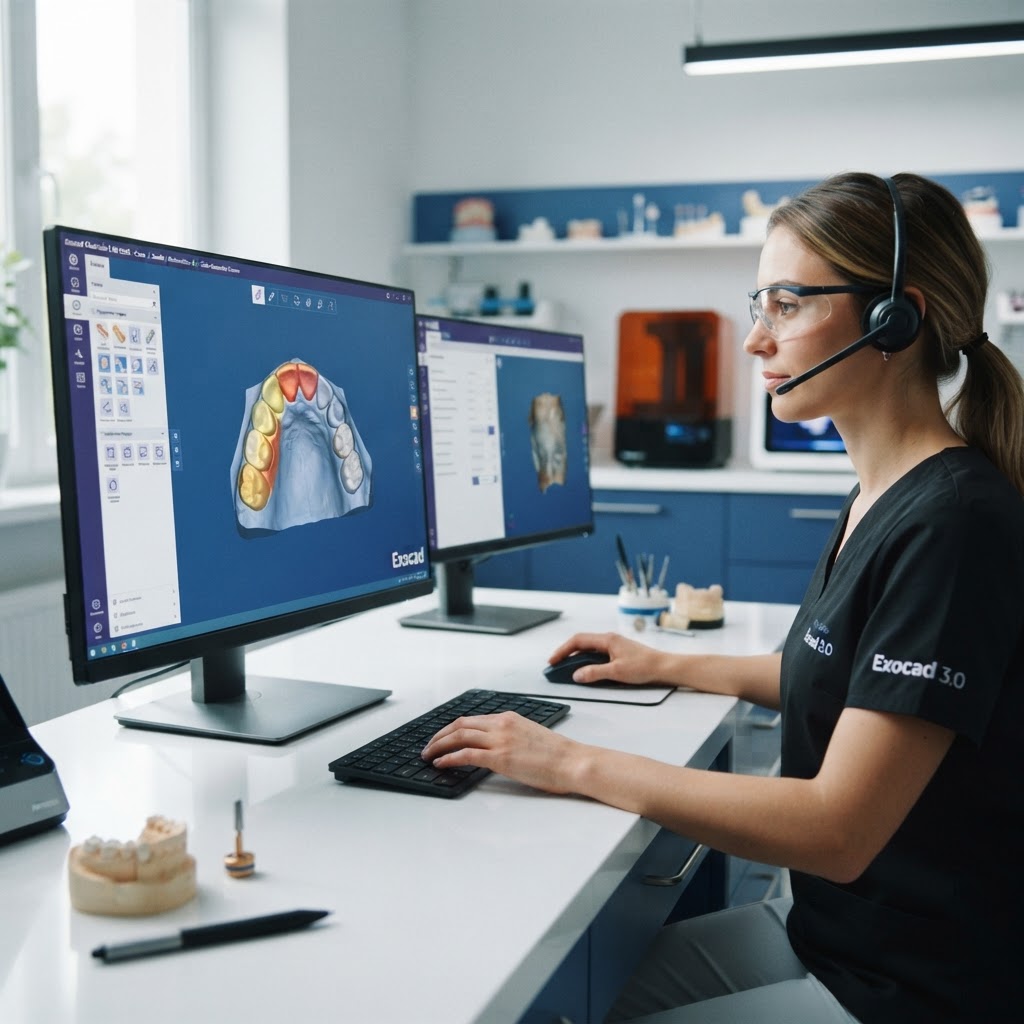
Exocad remains the industry standard, and its 2026 release—often referred to in the community as the 'Neural Era' update—has set a new benchmark for what dental technicians can achieve. The primary focus of this update is the integration of deep-learning neural networks that analyze thousands of successful clinical outcomes to inform every design choice. Key features include:
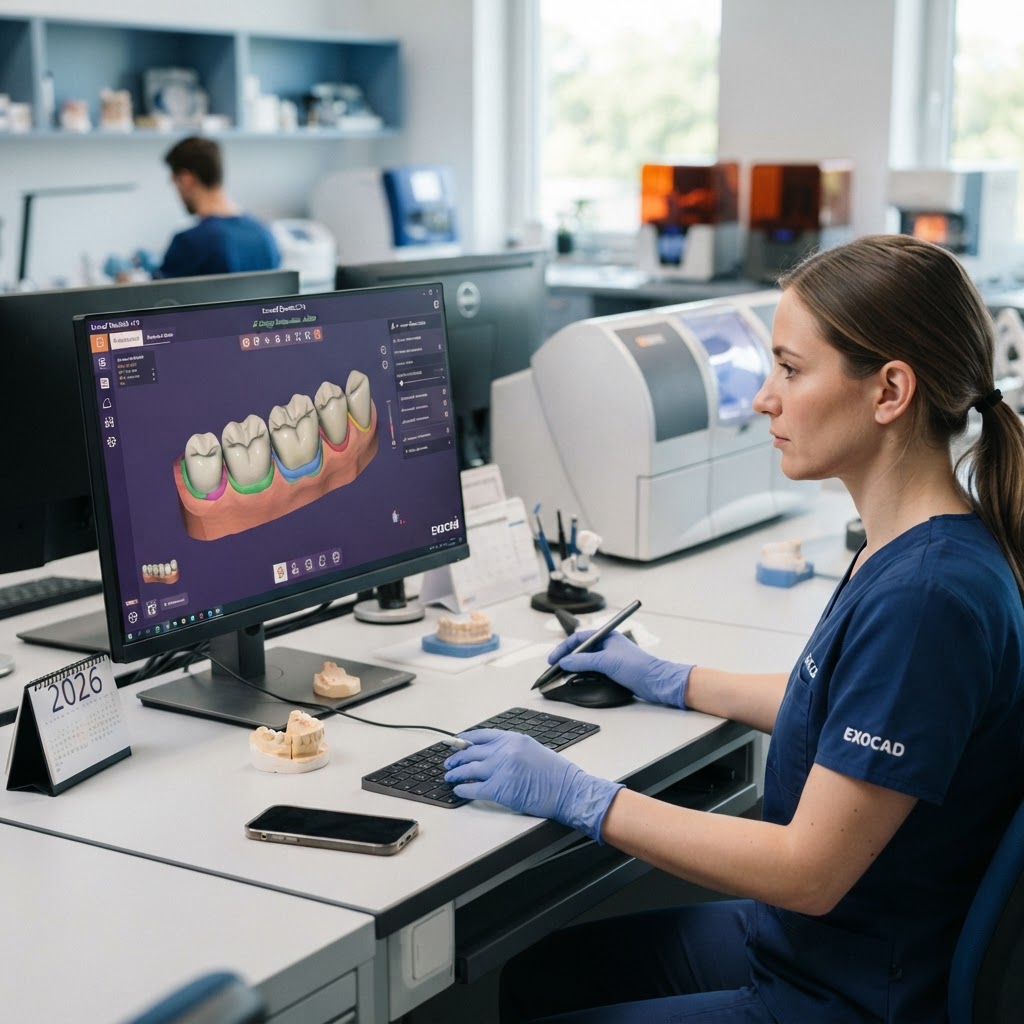
- Biometric Autopose: Using AI to analyze the patient’s remaining dentition, the software now automatically proposes tooth shapes that match the specific wear patterns and morphological characteristics of the individual patient, rather than relying on generic libraries.
- Dynamic Margin Intelligence: Margin line detection has reached near-perfect accuracy. The software now accounts for subgingival prep challenges by predicting the most likely margin location based on scanning data shadows, reducing the time spent on manual adjustments by up to 80%.
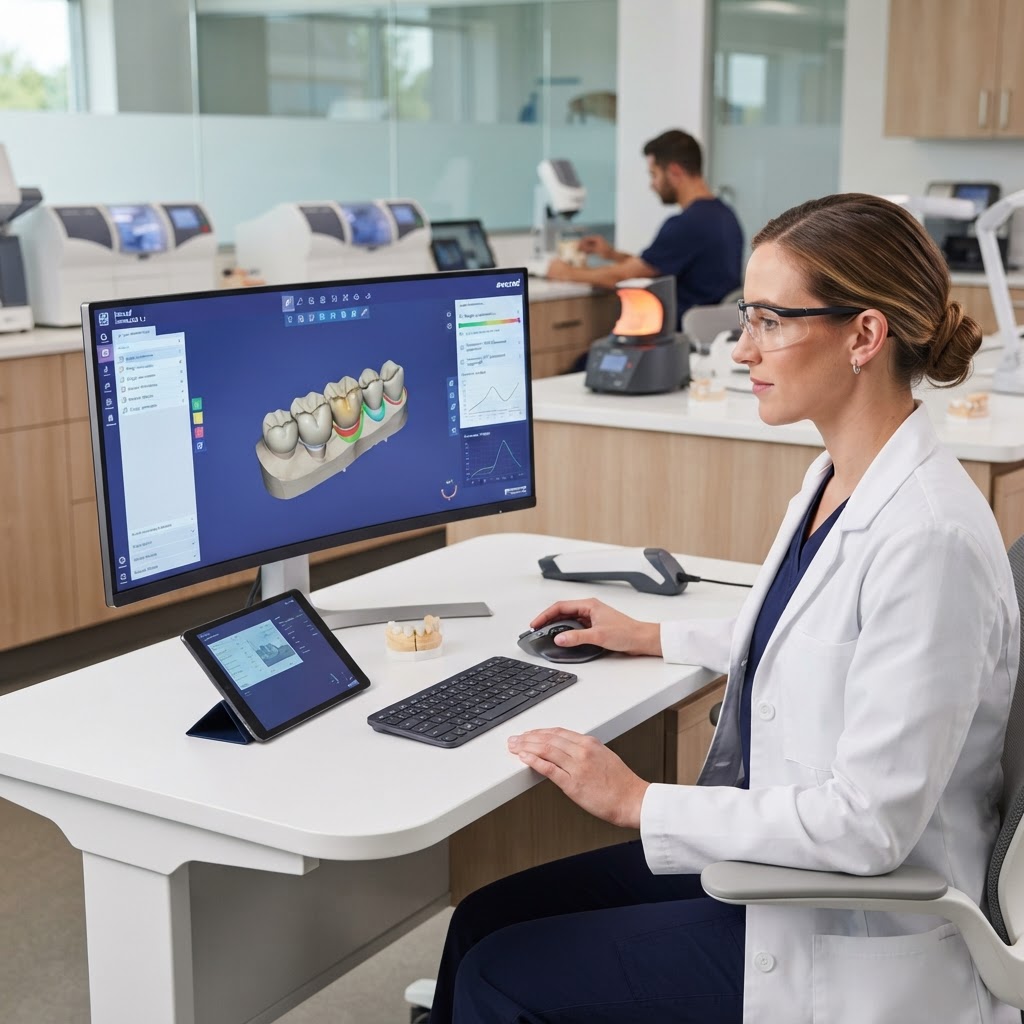
- Real-Time Stress Mapping: Before a design is even finalized, the 2026 update provides a heat map of mechanical stress based on the selected material’s properties (such as multilayered zirconia or hybrid ceramics), ensuring long-term restoration stability.
Cloud Synergy and Clinic-to-Lab Communication
Exocad 2026 has also revolutionized the way we interact with clinicians. The updated Smile Creator module now integrates directly with real-time video feeds from intraoral scanners. This allows for 'Live Design' sessions where the dentist can see the technician’s adjustments in real-time, facilitating an unprecedented level of chairside collaboration. This transparency reduces remakes and ensures that the final aesthetic aligns perfectly with the patient’s and doctor’s expectations.
The Automation Revolution: Beyond Single Crowns
Automation in 2026 is no longer restricted to simple posterior crowns. We are seeing a massive shift toward automated full-arch and complex implant workflows. Design automation tools are now capable of handling the heavy lifting of 'All-on-X' cases, which traditionally required hours of a senior technician’s time.
AI-Driven Full-Arch Prototyping
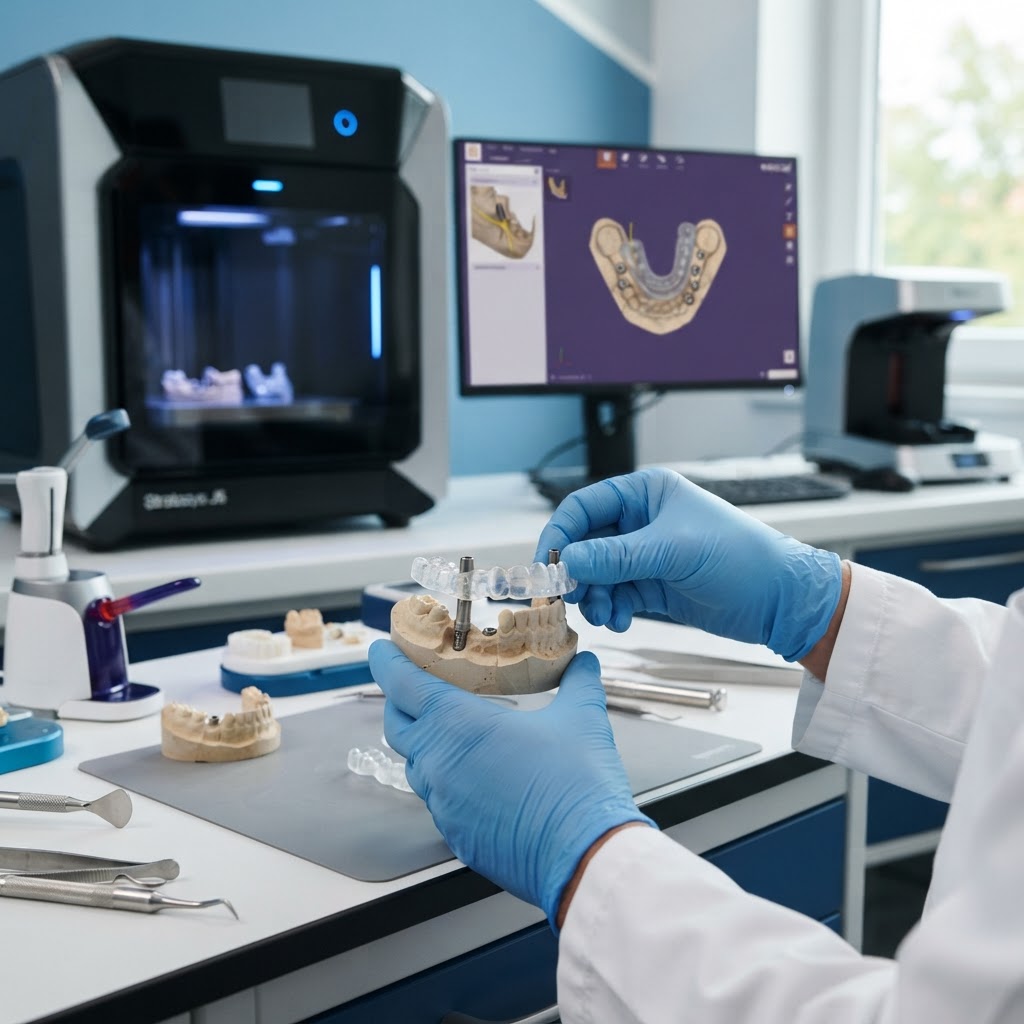
New plugins for 2026 allow technicians to input a few key parameters—such as the vertical dimension of occlusion (VDO) and midline—after which the software generates a complete full-arch prototype. This prototype includes optimized screw-access holes and gingival architecture that adheres to biological width principles. For the lab, this means a junior technician can prepare the 'rough draft' of a complex case, allowing the master technician to focus solely on the final artistic refinements.
Batch Processing and 'Lights-Out' Manufacturing
The integration between CAD software and CAM nesting has become seamless. Modern software suites now feature 'Auto-Nest 3.0,' which optimizes disc usage with 95% efficiency. Furthermore, the software can now automatically assign different milling strategies within the same disc based on the complexity of the anatomy, ensuring that delicate margins are milled with smaller burs while bulk material is removed rapidly. This has enabled many labs to transition to 'lights-out' manufacturing, where the software manages the entire production queue overnight without human intervention.
Material-Specific Algorithms: Optimizing the Final Product
One of the most overlooked updates in the 2026 CAD/CAM cycle is the advent of material-specific design algorithms. Software now recognizes the difference between milling a high-translucency zirconia and a 3D-printed permanent resin. When designing for 3D printing, the software automatically compensates for shrinkage and adds internal support structures that are optimized for post-processing removal. This level of granular control ensures that the fit observed in the software is exactly what is achieved in the patient’s mouth.
Strategic Implementation: How Your Lab Can Lead
Adopting these technologies is not merely about buying a license; it requires a strategic shift in lab management. Here are three actionable steps for dental labs looking to capitalize on these 2026 trends:
- Invest in Continuous Training: The complexity of AI-driven tools means that technicians need to understand the logic behind the software. Regular training sessions on the new Exocad modules are essential to unlock the full ROI of the software.
- Audit Your Hardware: The 2026 software updates are computationally intensive. Ensure your workstations are equipped with the latest GPUs and high-speed RAM to prevent bottlenecks during AI processing.
- Promote Your Digital Edge: Use your advanced CAD/CAM capabilities as a marketing tool. Show your clinical partners how your automated workflows result in faster turnaround times and more predictable fits.
Conclusion: The Future is Human-Centric Automation
As we look at the advancements in CAD/CAM and Exocad features in 2026, it is clear that the goal of automation is not to replace the dental technician, but to empower them. By removing the tedious, repetitive tasks of margin detection and initial tooth placement, these tools allow the technician to reclaim their role as a digital architect and artist. For labs like Cosmetic Smile Studio, embracing these innovations is the key to delivering the precision and aesthetics that modern restorative dentistry demands. If you are ready to elevate your practice with the precision of next-generation digital dentistry, contact us today to see how our state-of-the-art laboratory can support your clinical goals.