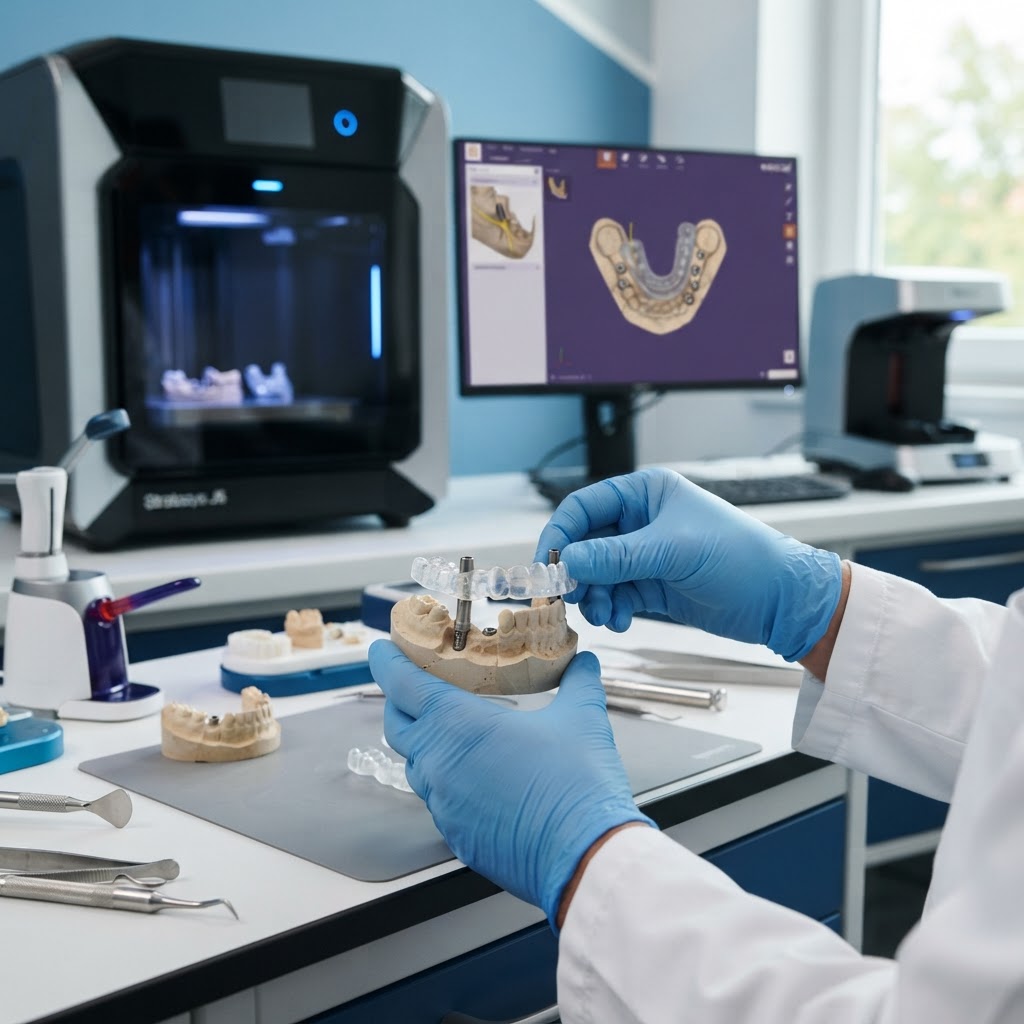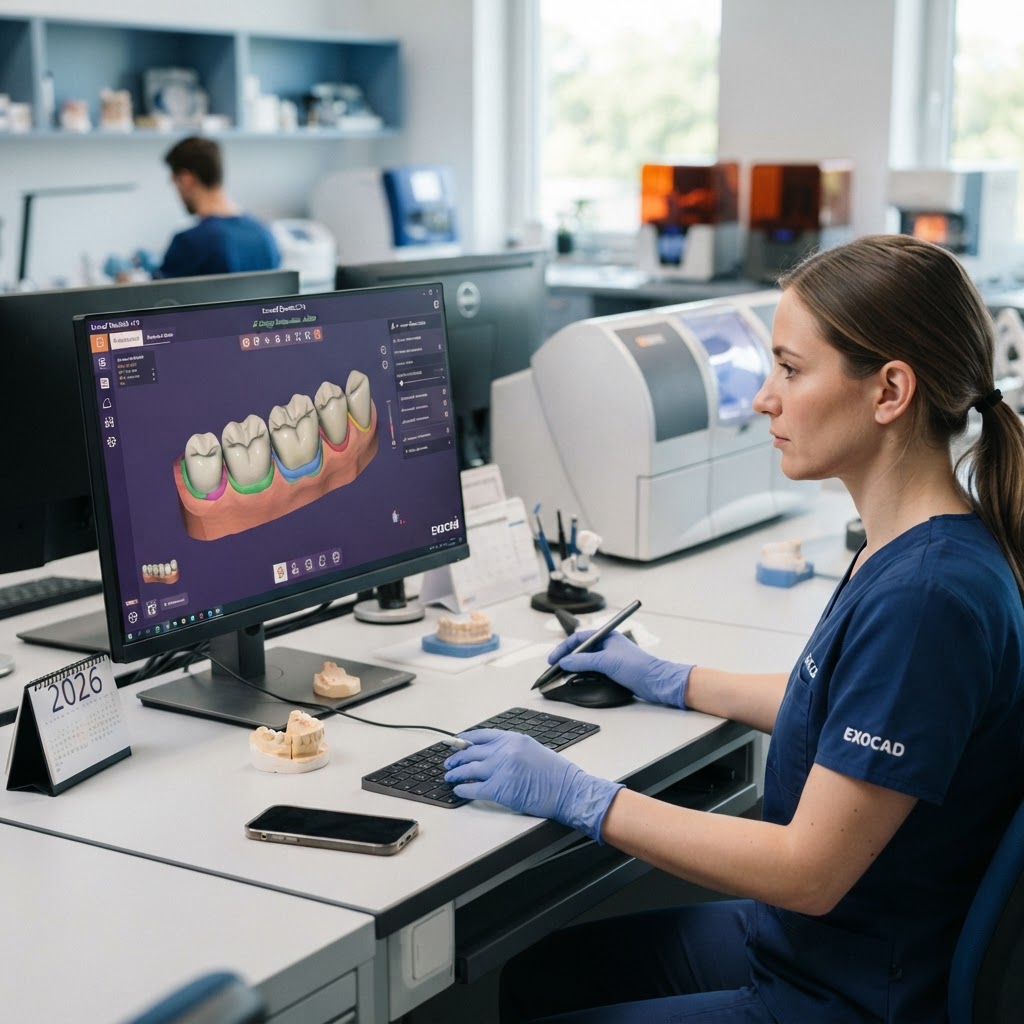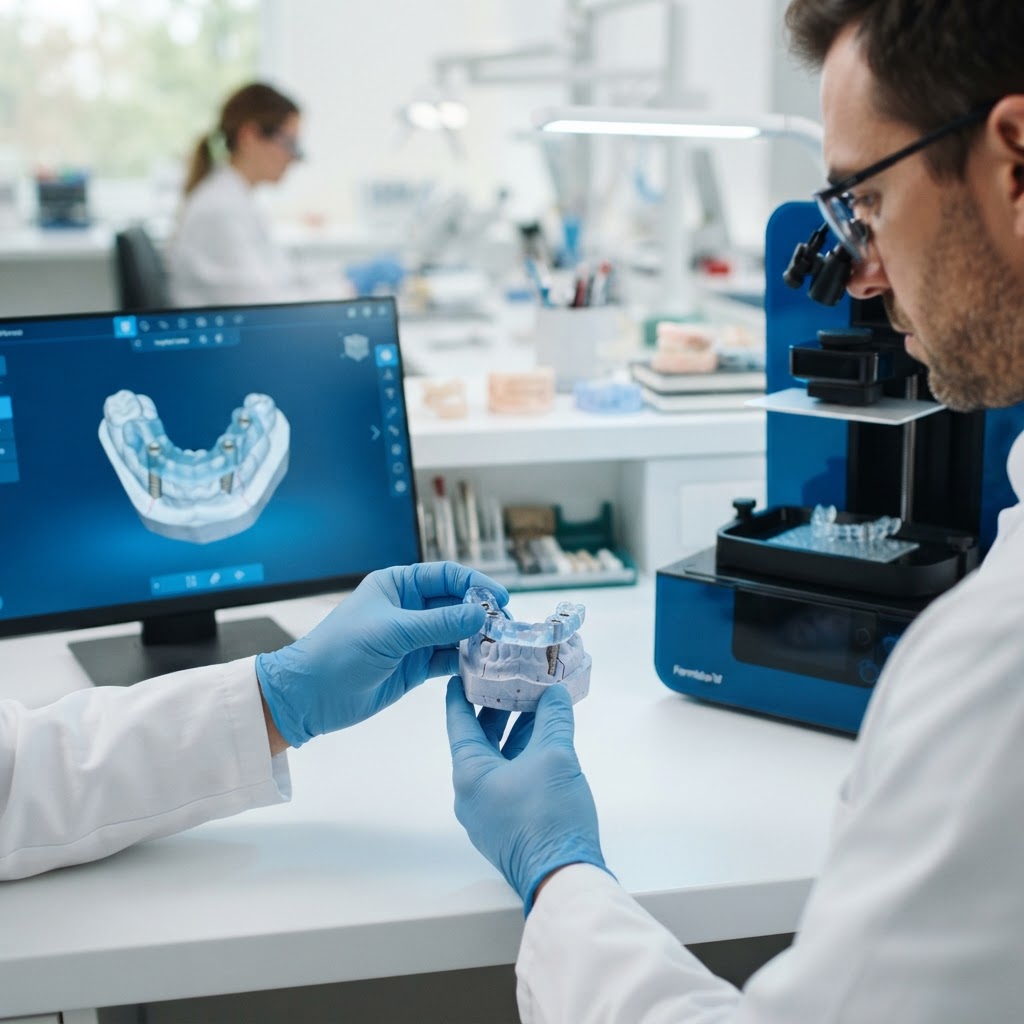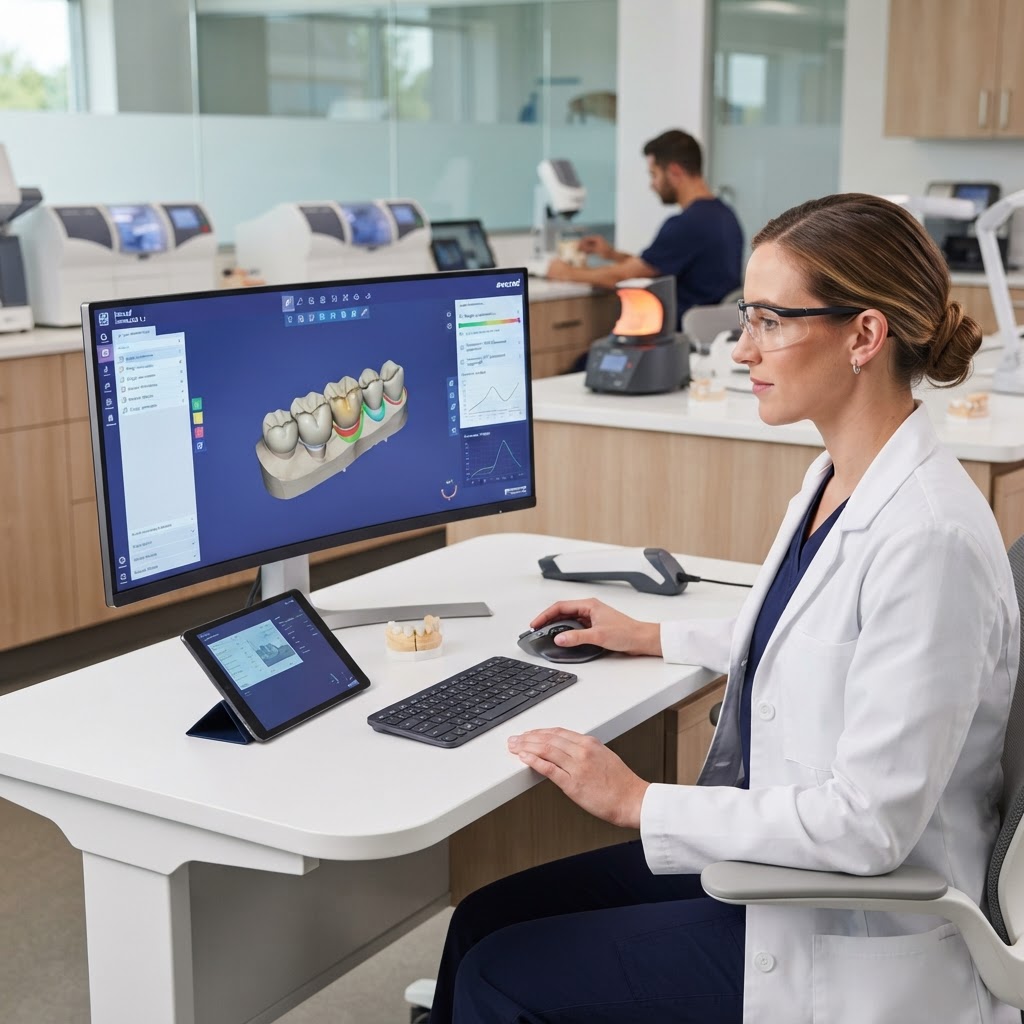
The dental laboratory landscape in 2026 is moving at unprecedented speed. What once required hours of manual anatomical waxing, complex die trimming, and tedious parametric tweaking is now shifting into rapid, intelligent workflows powered by automated design systems. Today, computer-aided design and manufacturing (CAD/CAM) platforms have matured beyond basic shape generation into proactive digital assistants. At the heart of this transformation sits exocad, continuing its push forward alongside other CAD/CAM innovators to unify clinicians, technicians, and automated production into a frictionless ecosystem.
For dental technicians and laboratory leaders aiming to protect their bottom line and elevate prosthetic precision, keeping pace with software releases is essential. Between cloud-rendered suites, automated margin repair tools, and synchronized ortho-restorative pipelines, 2026 marks the year CAD/CAM transitions from a design station to an intelligent design platform.
The Core Evolution: Exocad Chemnitz and AI-Driven Restorative Tools
With major rollouts such as DentalCAD 3.3 Chemnitz and PartialCAD 3.3, as well as iterative upgrades across previous versions like DentalCAD 3.2 Elefsina, software developers are addressing the real-world bottlenecks technicians encounter daily on the bench. The focal point of these releases is clear: targeted automation designed to minimize repetitive mouse clicks without stripping experienced technicians of their artistic control.
1. Automated Partial Denture and Split Workflows
Historically, digital removable partial dentures (RPDs) presented one of the steepest learning curves in laboratory CAD work. Exocad’s PartialCAD 3.3 Chemnitz introduces a guided, highly automated split denture protocol. This enhancement streamlines post design, automates gingival thickness calibration, and speeds up bar-top creation. By standardizing framework thickness and positioning retentive elements systematically, labs can lower turnaround times and reduce post-processing finishing labor.
2. Intelligent Margin Repair and Artifact Elimination
Technicians often deal with flawed digital impressions—ranging from tissue drops to scanner stitching artifacts. Recent AI margin repair tools allow laboratories to salvage suboptimal intraoral scans without demanding immediate chairside rescans. Algorithms analyze adjacent tooth architecture, calculate expected emergence profiles, and bridge scan voids, giving operators a reliable, clean prep line to work against.
3. Automated Articulation and Dynamic Occlusion
Virtual articulator modules now dynamically compute excursive contacts and clearance spaces across varying tooth libraries. By integrating immediate jaw motion parameters and automated collision detection, technician intervention for minor occlusal adjustments is significantly cut down, creating direct-to-mill restorations that seat with nominal hand adjustments.
The Cloud Paradigm: Designing Anywhere, Collaborating Everywhere
Perhaps the most significant architectural disruption highlighted at industry gatherings like exocad Insights 2026 is the migration of CAD computing into browser-based and cloud environments. For decades, labs were anchored to high-end, dedicated Windows workstations fitted with expensive GPUs. Today, cloud-native DentalCAD initiatives are changing that infrastructure.
- Universal Cross-Platform Access: Cloud architecture allows technicians, lab managers, and clinicians to run the full CAD suite—including Freeform and Smile Creator tools—within a standard browser on practically any operating system, including macOS.
- Real-Time Team Design Reviews: Technicians and dentists no longer need to rely on static 2D screenshots or cumbersome screen recordings to resolve challenging esthetic cases. Through secure digital portals, both parties can inspect the virtual model concurrently, manipulate margins, and finalize smile silhouettes live.
- Distributed Laboratory Scaling: Enterprise dental laboratories can scale design capacities across remote design talent instantly without procuring and maintaining on-premise hardware for each CAD station.
Batch AI Proposals vs. Technician Artistry
A common apprehension among dental ceramists and technicians is whether artificial intelligence will replace conventional bench craftsmanship. The real-world implementation in 2026 paints a very different picture: AI takes over baseline production so master technicians can invest their energy into complex, premium cases.
Batch crown proposals can now automatically assess opposing dentition, calculate marginal ridge alignment, honor minimum material thicknesses, and present near-finished single-unit designs in seconds. For high-volume labs milling standard posterior monolithic zirconia crowns, this automated baseline radically shortens CAD design time. Rather than plotting every cusp from scratch, the technician becomes an artful quality-assurance editor, refining macro-textures and contact pressures before exporting nested STL files straight to the 5-axis milling machine.
Bridging Ortho and Restorative in Single Digital Environments
Another major trend is the ongoing convergence of orthodontic planning and final restorative design. Supported by corporate synergy across aligner leaders and CAD developers (such as Align Technology and exocad), the line separating clear aligner therapies from pre-prosthetic planning has blurred. Technicians can now evaluate how minor pre-restorative tooth movements will simplify veneer preparation, preserve tooth structure, and optimize midline aesthetics before a single bur touches the enamel.
Practical Action Plan for Digital Labs and Clinics in 2026
Adopting modern software capabilities requires more than downloading an upgrade patch. To turn software features into tangible productivity, consider this roadmap:
- Audit Your File Intake Pipelines: Ensure your laboratory portal easily syncs with common intraoral scanners like iTero via automated bi-directional connections to minimize lost prescription details.
- Standardize Design Presets: Configure your digital libraries and material parameters (such as cement gap clearances and minimal wall thicknesses) directly inside the CAD preferences to keep multi-station milling consistent.
- Embrace Hybrid Subscriptions: Evaluate whether month-to-month seat licensing or traditional perpetual licenses align better with your lab’s seasonal case volume and cash-flow goals.
- Invest in Continuous Education: Enroll team members in digital masterclasses to leverage advanced wizard overrides and expert-mode shortcuts, transforming intermediate operators into power users.
Conclusion: Elevate Your Restorative Excellence
The CAD/CAM advancements of 2026 demonstrate that dental software is no longer a passive digital drawing board; it is an intelligent, connected ecosystem designed to accelerate precision manufacturing. By embracing automated workflows, advanced partial denture tools, and cloud collaboration, laboratories can bridge communication gaps with dentists, reduce remakes, and output predictable, lifelike prosthetics faster than ever before.
Are you ready to streamline your digital workflows and deliver stunning restorative solutions? Partner with Cosmetic Smile Studio today to experience how cutting-edge digital dentistry, precision CAD design, and high-performance milling can transform your clinical outcomes.