The Paradigm Shift: From Freehand Placement to Guided Certainty
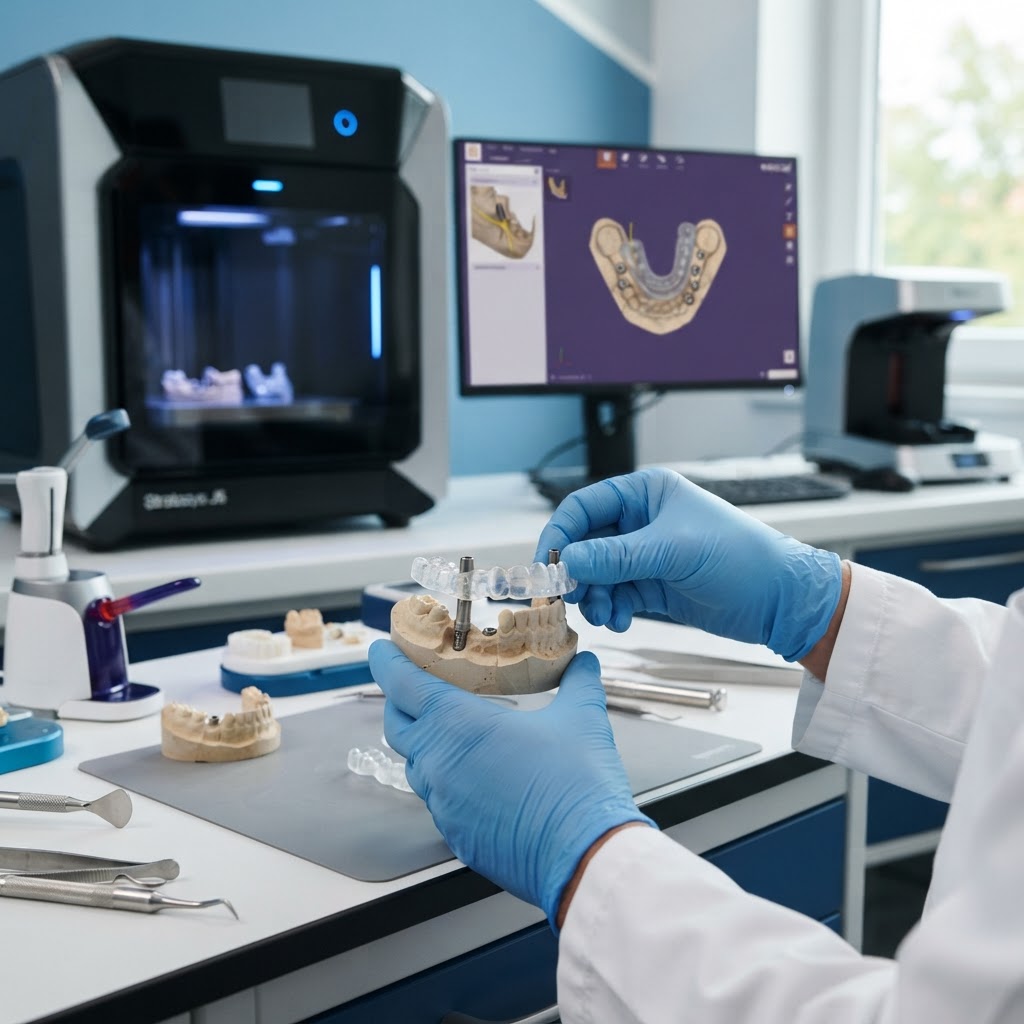
Implant dentistry has crossed a definitive threshold. The historical reliance on freehand surgical placement, while grounded in tactile feedback and clinical experience, introduces unavoidable deviations influenced by anatomical variations, visual obstructions, and manual positioning errors. According to clinical studies on digital implant workflows, guided implant surgery consistently outperforms freehand approaches by minimizing positional and angular discrepancies, protecting critical vital structures like the inferior alveolar nerve and maxillary sinuses, and establishing restorative-driven implant trajectories.
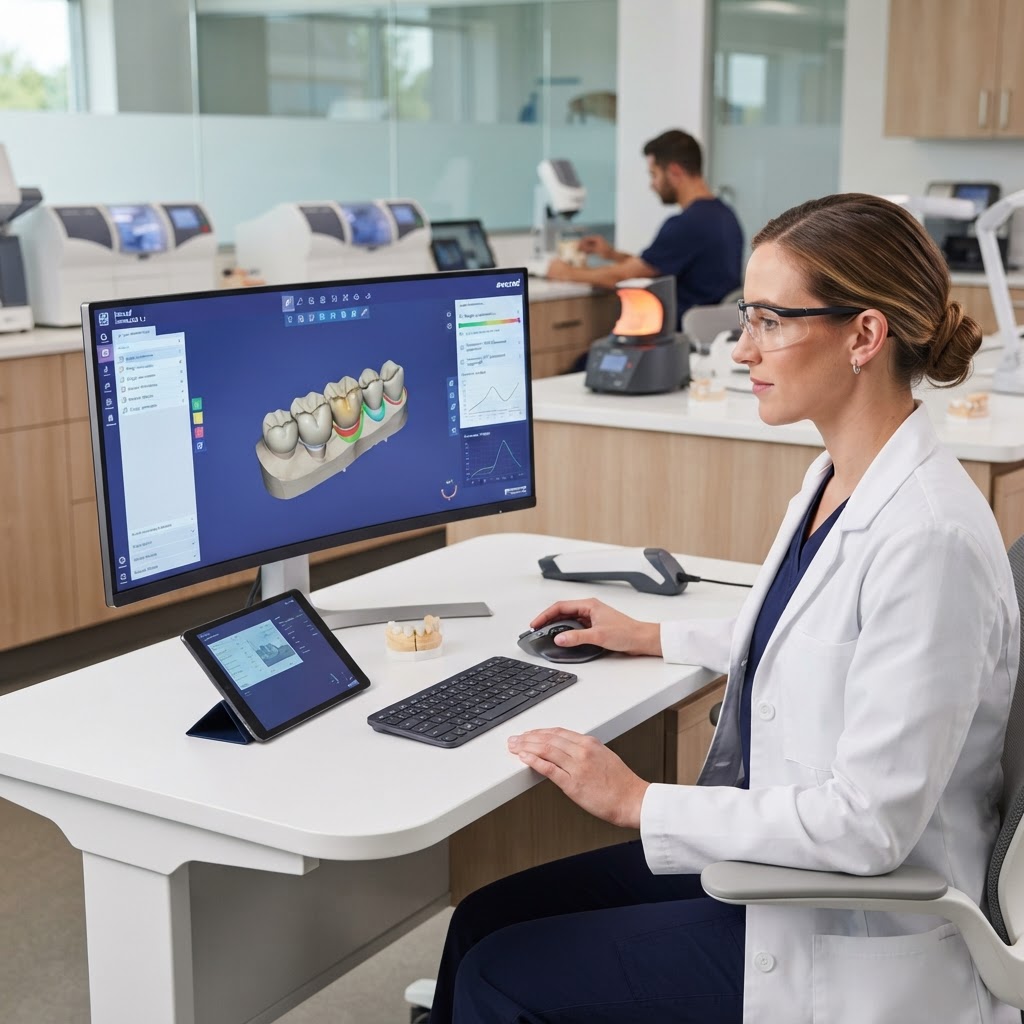
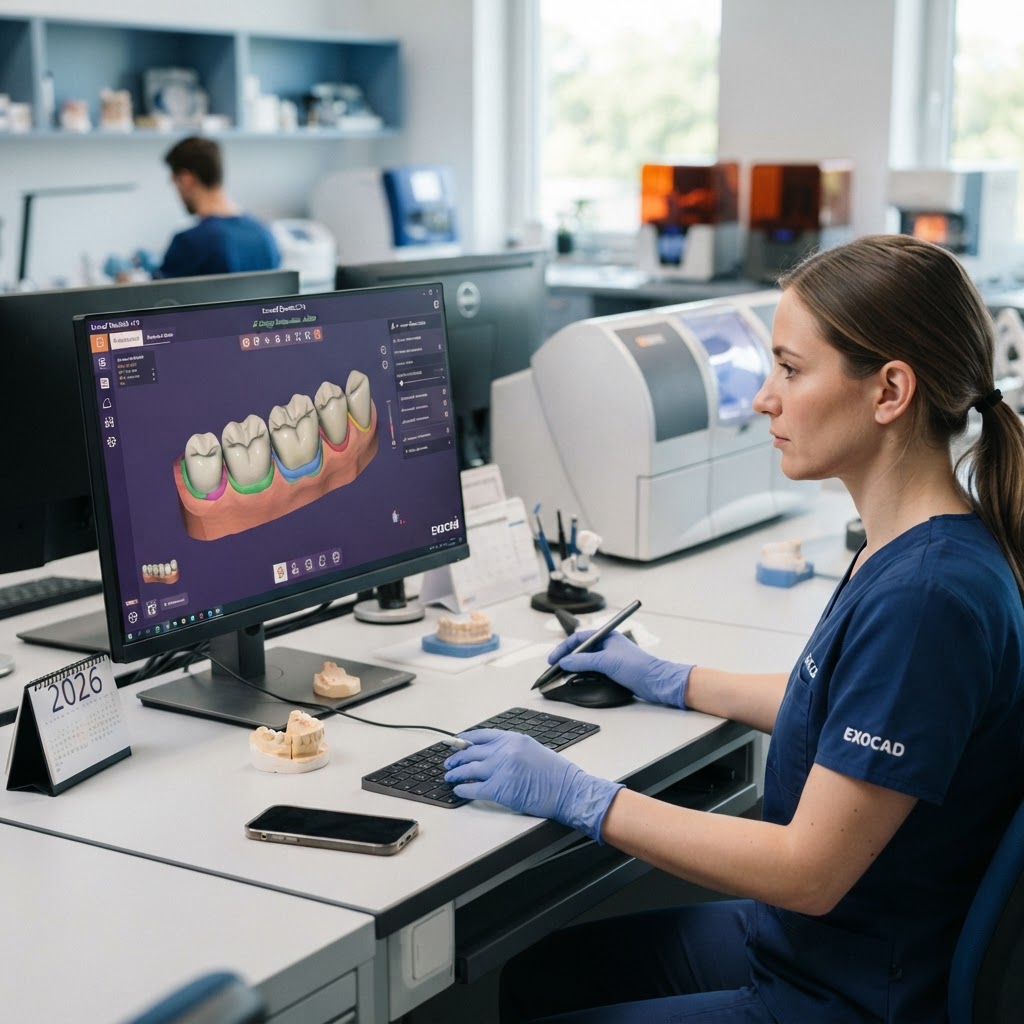
Today’s digital dental ecosystem hinges on predictable outcomes. Achieving sub-millimeter accuracy requires far more than just purchasing a desktop 3D printer; it demands an interconnected pipeline where CBCT data, intraoral optical impressions, computer-aided surgical planning, and additive manufacturing align seamlessly. For restorative dentists and dental technicians alike, mastering this integrated digital workflow is the key to minimizing chairside complications and delivering biologically sound, aesthetically superior prosthetic foundations.
The Core Digital Pipeline: Aligning Diagnostic Data
Predictable surgical guides begin with pristine diagnostic information. The integration process links volumetric radiographic anatomy with high-definition surface scans through precise alignment protocols:
- DICOM and STL/PLY Convergence: High-resolution Cone Beam Computed Tomography (CBCT) provides volumetric hard-tissue data in DICOM format, while intraoral optical scanners (IOS) deliver surface micro-topography of teeth and soft tissues as open STL or PLY meshes. Accurate point-based registration or automated surface-matching software is critical; any artifact or error during alignment directly propagates into the fabricated template.
- Prosthetically Driven Planning: Virtual wax-ups establish the emergence profile, crown contours, and occlusal plane prior to osteotomy planning. Implant positions are determined primarily by the restorative endpoint, balancing functional load-bearing with long-term soft tissue support.
- Safety Zones and Sleeve Selection: Guided surgery software requires exact parameters for guide sleeve offsets, master cylinder tolerances, and safety clearances. Factoring in mucosal thickness and adjacent root proximities ensures the guide seats firmly without tissue blanching or displacement.
Key Factors Dictating 3D Printed Surgical Guide Accuracy
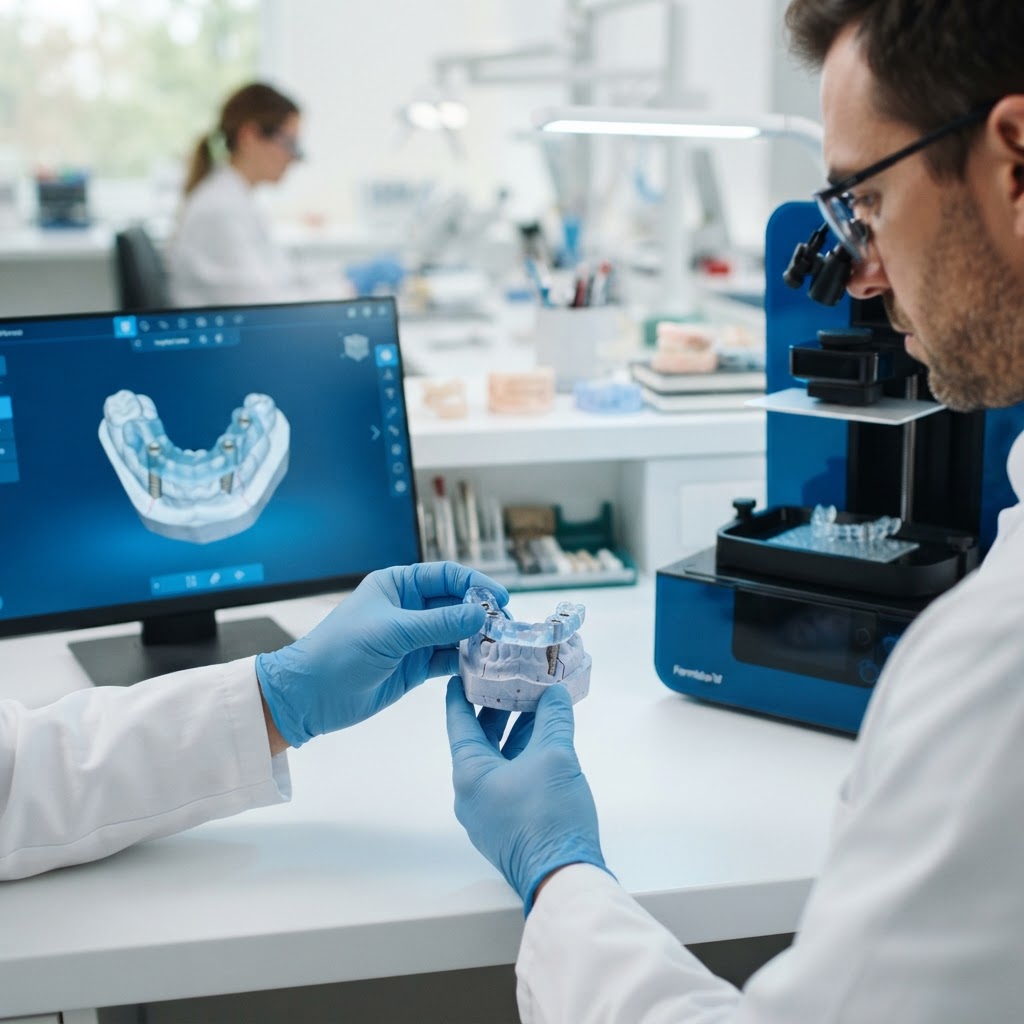
While design software provides the theoretical ideal, physical manufacturing introduces complex physical variables. Laboratories and clinics must manage several critical parameters during 3D printing to ensure clinical fidelity:
1. Additive Printing Technology: DLP, SLA, and LCD
Digital Light Processing (DLP), Stereolithography (SLA), and monochrome Liquid Crystal Display (m-LCD) systems offer high resolution, but optical fidelity varies. DLP uses DMD micromirror arrays with pixel-level precision, SLA utilizes targeted laser galvo paths, and high-resolution 8K/12K LCD screens provide uniform light intensity. Each system exhibits subtle micro-shrinkage tendencies that necessitate calibrated exposure parameters specific to Class I and Class II biocompatible surgical guide resins.
2. Print Orientation and Angulation
Orientation on the virtual build platform directly affects dimensional stability, print times, and sleeve roundness. Placing a guide flat against the platform causes significant suction peeling forces and z-axis distortion. Conversely, angling guides between 30 and 45 degrees relative to the build plate balances peel force distribution, minimizes support interference on critical intaglio surfaces, and prevents distortion within the cylindrical sleeve channels.
3. Support Placement and Tolerance Strategy
Supports must never intersect the internal tissue-contacting surfaces or sleeve housings. Even microscopic remnants from clipped supports alter guide seating, causing vertical displacement and tilt. High-end slicers allow dental technicians to customize support tip diameters, penetration depths, and placement exclusively along external non-critical guide perimeters.
4. Post-Processing and Photopolymerization
The manufacturing process does not end when the platform ascends from the resin vat. Suboptimal cleaning in isopropyl alcohol (IPA) or glycol ether solvents can leave excess unpolymerized monomer, skewing dimensions, while over-washing causes hydroscopic swelling and micro-fractures. Controlled UV post-curing chambers utilizing dual-wavelength curing with temperature regulation are mandatory to achieve the ultimate flexural modulus and biocompatibility required for intraoral surgical use.
Overcoming Practical Roadblocks: Clinical Seating and Fit Verification
Even with rigorous lab protocols, clinical insertion presents unique biomechanical variables. Achieving perfect clinical fit requires proactive design elements:
- Inspection Windows: Integrating visual inspection ports over incisal edges and cusp tips allows surgeons to confirm direct, intimate tooth contact and detect any incomplete seating or soft-tissue interference.
- Guide Fixation Strategies: For fully edentulous arches, tooth-borne support is absent. Clinicians must utilize mucosa-borne or bone-borne guides secured with lateral anchor pins to counteract rotational forces and tissue compressibility during dense cortical bone osteotomies.
- Thermal Stability: Sterilization protocols must not warp the resin. Clinics must strictly adhere to validated autoclave cycles or low-temperature chemical sterilization procedures specified by resin manufacturers to prevent guide deformation.
Conclusion: Elevating Clinical Confidence Through Additive Precision
Surgical guide accuracy represents the perfect synergy between digital diagnostic data and additive manufacturing science. When dental clinics and high-performance dental laboratories unite through calibrated 3D printing protocols, the result is predictable osteotomies, reduced surgical chair time, and uncompromising restorative perfection.
Is your practice ready to harness the full potential of guided implantology? Partner with Cosmetic Smile Studio for advanced CAD/CAM guide design and precision-crafted biocompatible solutions that elevate your surgical outcomes.