The Architecture of Precision: The 2026 CAD/CAM Landscape
As we navigate through 2026, the dental laboratory industry has moved beyond the simple digitization of manual tasks. We have entered the era of autonomous dental design. For the modern dental technician, the role is evolving from a manual CAD operator to a high-level digital architect. This shift is driven by massive updates in CAD/CAM software suites, most notably the latest releases from industry leaders like Exocad and 3Shape, which now leverage deep-learning algorithms to predict morphology with startling accuracy.
At Cosmetic Smile Studio, we have tracked these developments closely. The focus this year isn't just on speed; it is on "biometric synergy"—the ability of software to harmonize restorations with the patient’s existing biological structures using minimal human intervention. This article explores the core updates defining 2026 and how labs can leverage them to remain competitive in a premium market. The integration of artificial intelligence is no longer a peripheral feature; it is the central engine driving efficiency and predictability in the modern lab environment.
Exocad 2026: The Rise of AI-Driven Morphologies
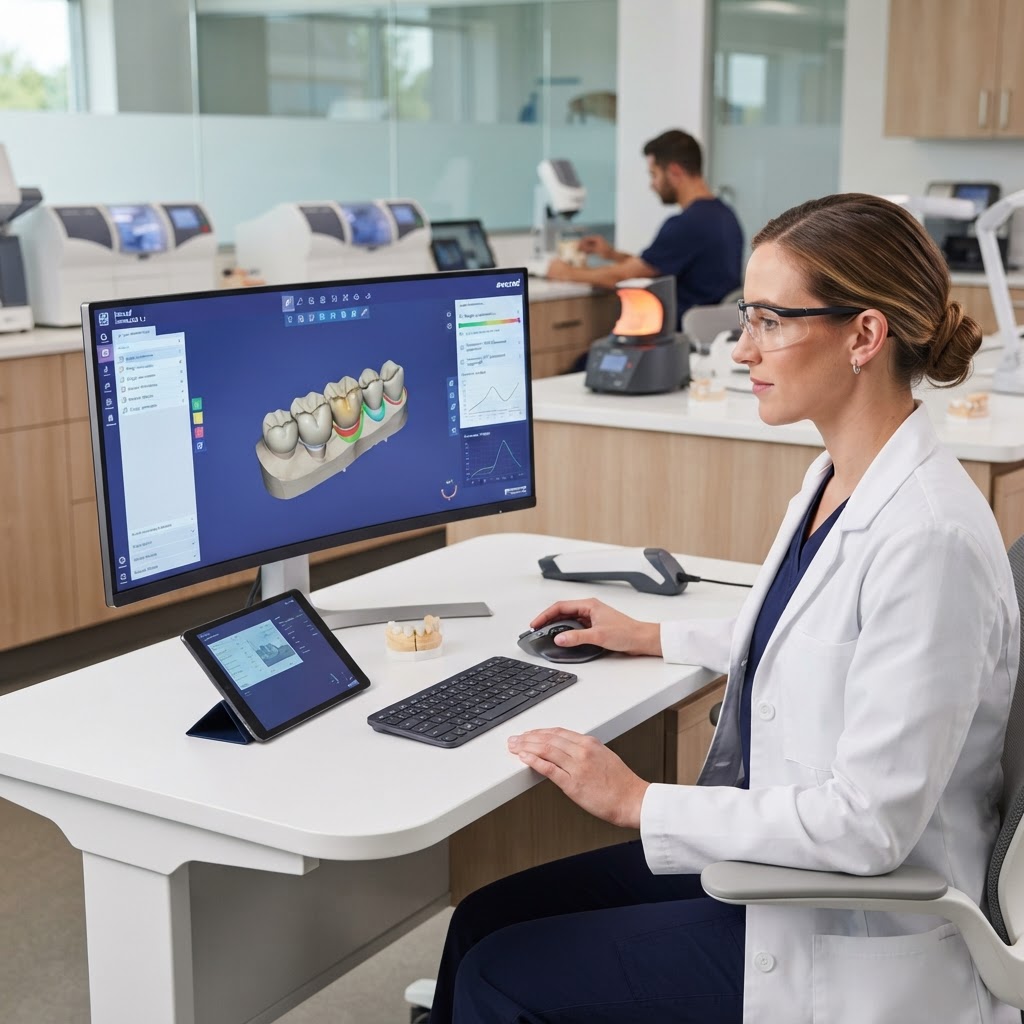
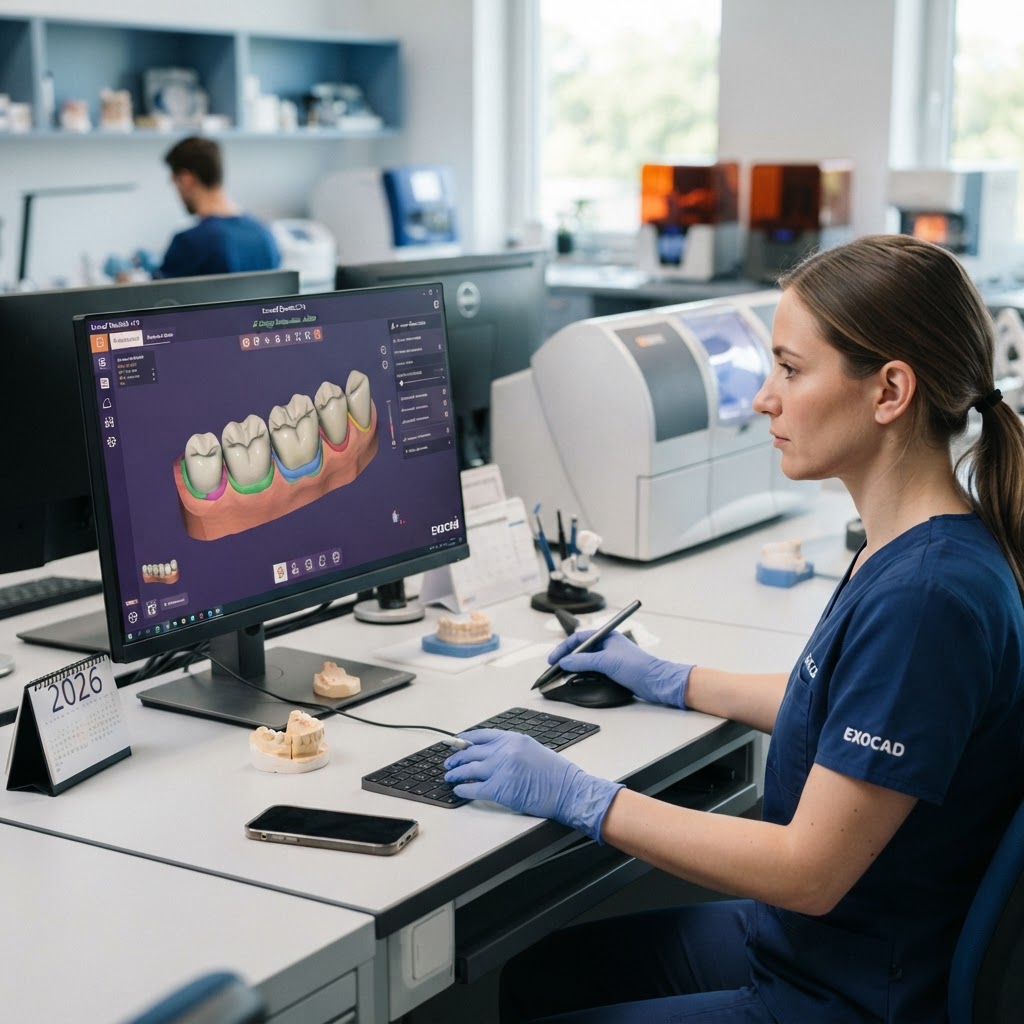
Exocad remains the backbone of the independent digital lab, and the 2026 software updates (centered around the new "Kyoto" Engine) have introduced features that were once considered science fiction. The most significant advancement is the AI-Morphology Predictor. Unlike previous iterations that relied on static tooth libraries, the 2026 update analyzes the patient's adjacent dentition, wear patterns, and even age-related characteristics to suggest a restoration that looks indistinguishable from nature.
Key Features in the Latest Exocad Release:
- Dynamic Margin Intelligence: The software now utilizes high-definition neural networks to identify preparation margins on intraoral scans with 99.9% accuracy, even in cases of subgingival preparations with marginal moisture interference. This reduces the need for manual margin marking by nearly 85%.
- Auto-Occlusion 2.0: Utilizing real-time virtual articulators that pull data from the patient's specific jaw movement records (via facial scanning), the software automatically adjusts occlusal anatomy to minimize chairside adjustments. The system now accounts for ligamentous laxity and individual condylar paths.
- Cloud-Native Collaboration: The integration between the clinic’s intraoral scanner and the lab’s CAD station is now instantaneous. Designers can view live scan data as the doctor captures it, allowing for real-time feedback on preparation clearances and path of insertion before the patient leaves the chair.
The Shift to Design Automation for Dental Technicians
Automation in 2026 is no longer about "batch processing"; it is about intelligent workflows. Design automation software can now handle the mundane tasks—such as crown bottom generation, support pin placement, and nesting—allowing technicians to focus exclusively on the aesthetic refinement of the "smile zone." The concept of "Generative Design" has also entered the dental space, where the software proposes multiple design iterations based on strength requirements and material properties, allowing the technician to select the optimal balance of form and function.
For high-volume labs, the implementation of "Lights-Out Design" workflows has become a reality. Software can now receive a digital impression, identify the restoration type, design a functional posterior crown, and send it to the milling queue without a technician touching a mouse. While this may sound threatening to traditional roles, it actually empowers the technician to handle more complex, multi-unit cosmetic cases where human artistry is still paramount. The technician becomes the quality controller and the artist, while the machine handles the repetitive geometry.
Actionable Insights: Optimizing Your Lab for 2026
To capitalize on these software advancements, dental labs must update more than just their license keys. The infrastructure supporting these high-computation tasks needs to be robust. Here are three actionable strategies for integrating these updates:
1. Upgrade to GPU-Accelerated Hardware
The AI engines in the 2026 CAD suites rely heavily on GPU (Graphics Processing Unit) power rather than just CPU. If your lab is still running workstations from 2022, you will experience significant bottlenecks. Investing in the latest dental-optimized graphics cards is now a requirement for real-time AI rendering and complex morphology generation. We recommend systems with at least 24GB of VRAM to handle the high-resolution textures used in modern facial scanning.
2. Implement Automated Nesting and Milling Loops
Modern CAD/CAM software now offers "closed-loop" integration with mills. Ensure your software and hardware are talking to each other via a unified CAM API. This allows the software to adjust the milling strategy based on the specific design features of the crown, such as automatically switching to finer burs for high-detail occlusal anatomy or adjusting feed rates for ultra-translucent zirconia to prevent micro-fractures.
3. Focus on Data Quality at the Source
Automation is only as good as the data it receives. Labs should provide digital training for their clinical partners. If the intraoral scan is missing data in the proximal contacts, the 2026 AI might "hallucinate" a contact that isn't biologically sound. Establishing a "Digital Quality Standard" protocol with your doctors—including the use of high-fidelity gingival retraction and proper scanning paths—will ensure the automation works for you, not against you.
The Impact on Cosmetic Dentistry
In the realm of premium aesthetics, the 2026 updates have brought Virtual Smile Design (VSD) to a new level. We are now seeing "Live Mock-ups" where the CAD software generates a photorealistic 3D overlay on a video of the patient talking. This immediate emotional connection helps increase case acceptance and ensures that the final ceramic restoration matches the patient’s expectations perfectly. The software can now simulate different lighting conditions—from office fluorescent to evening candlelight—to show how the translucency of the chosen material will behave in the real world.
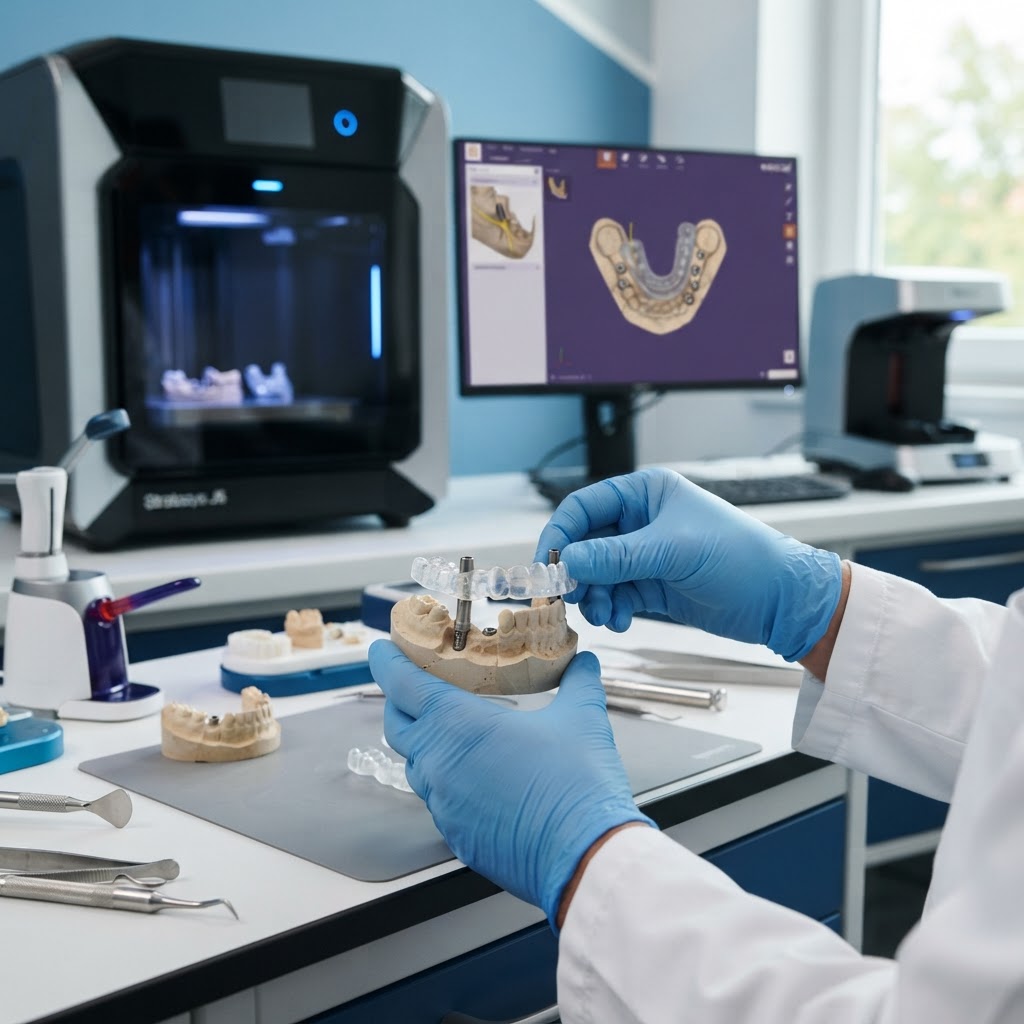
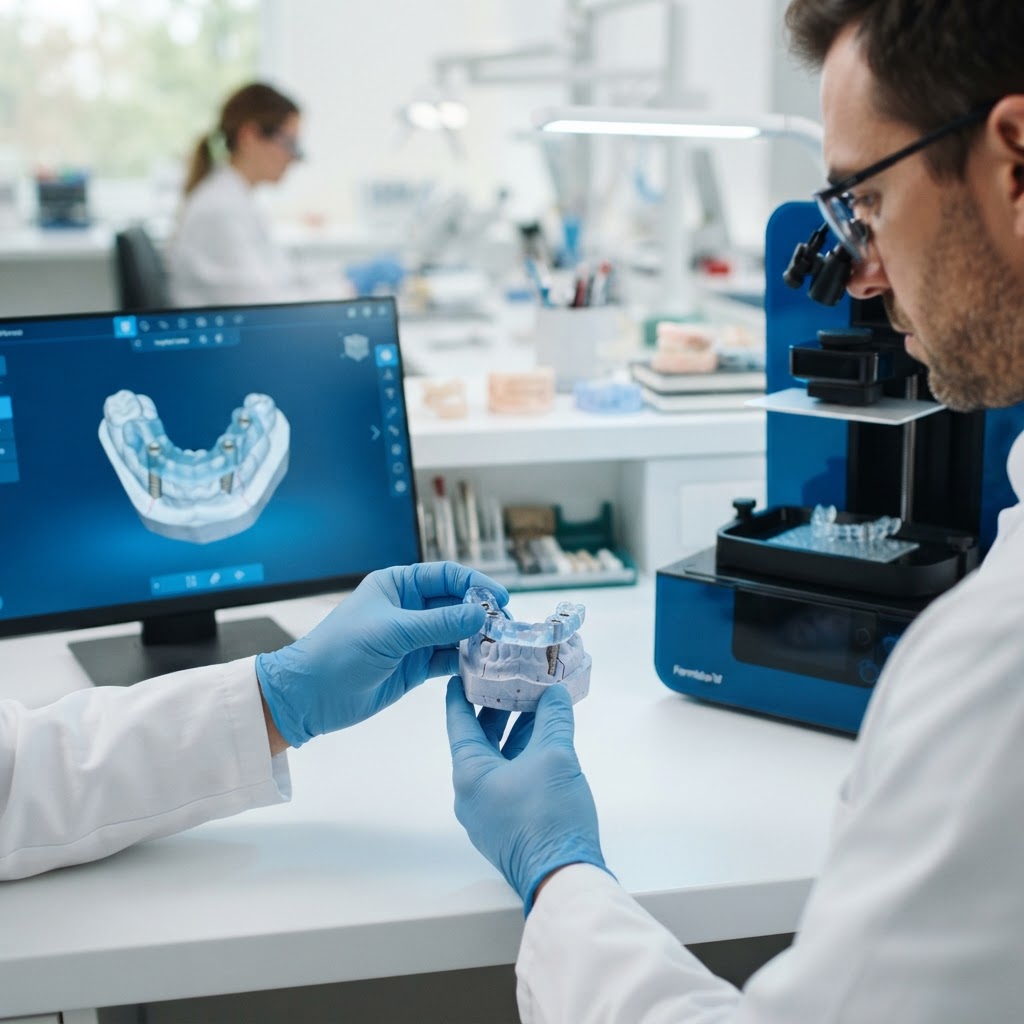
Furthermore, the automation of internal bridge structures and frameworks has allowed for thinner, more translucent restorations. By utilizing FEA (Finite Element Analysis) within the design software, we can now ensure that even the most delicate veneers are structurally sound before they even touch the mill. This predictive stress testing is a game-changer for long-span anterior bridges, where the balance between aesthetics and durability is most precarious.
Conclusion: Embracing the Digital Renaissance
The CAD/CAM updates of 2026 represent a turning point for our industry. By embracing Exocad’s AI capabilities and the broader move toward design automation, dental laboratories can achieve levels of precision and efficiency that were previously impossible. The goal is not to replace the technician, but to augment their skill set, allowing the artistry of a master ceramist to be backed by the unerring accuracy of artificial intelligence. As we look forward, the labs that thrive will be those that view these tools not as a cost, but as an essential investment in the future of patient care.
Is your lab ready to lead the digital charge? At Cosmetic Smile Studio, we are dedicated to staying at the forefront of these technological shifts. Contact us today to learn how our advanced digital workflows can elevate your restorative outcomes and streamline your production pipeline.