The Material Revolution: Engineering the Perfect Smile
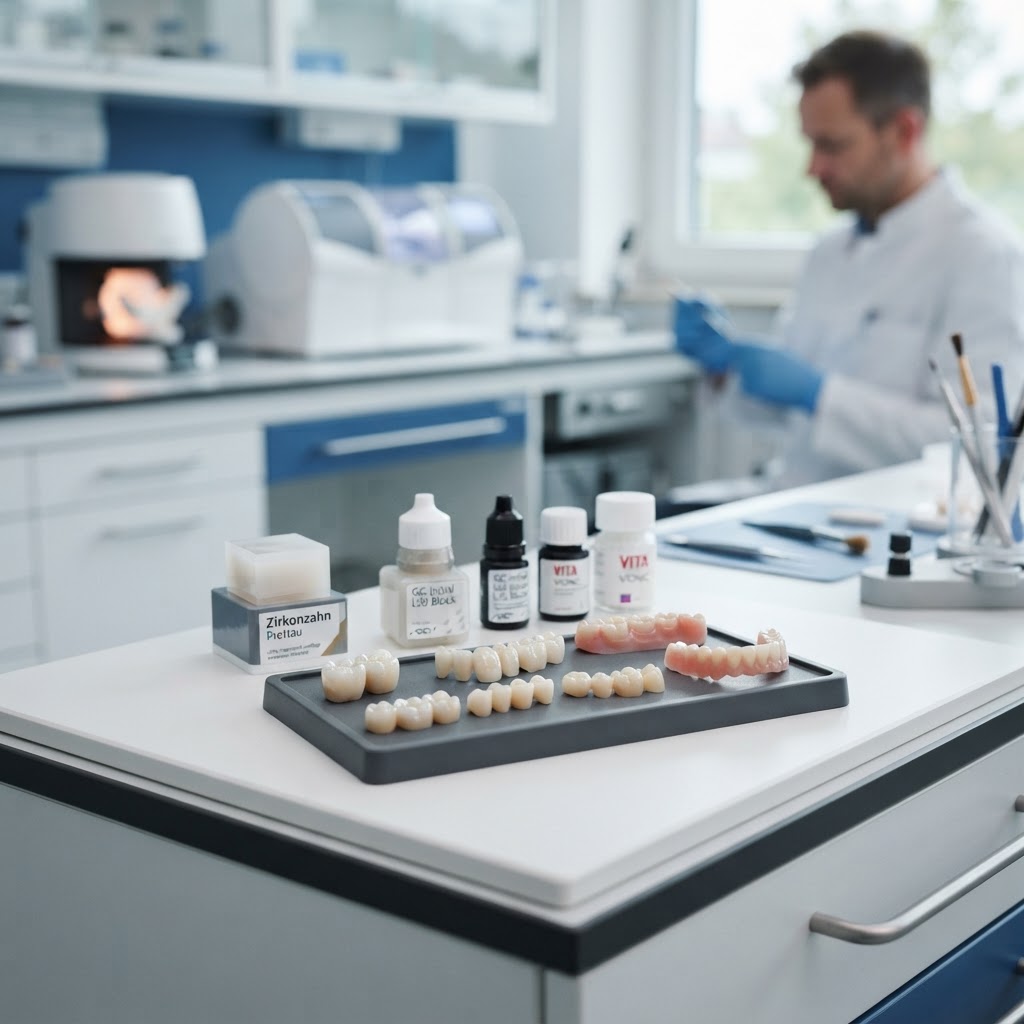
For decades, the dental industry faced a persistent compromise: choose strength and sacrifice esthetics, or prioritize beauty and risk structural failure. However, we have entered a new era of material science. As digital workflows become the standard across the USA, the focus has shifted from the transition to CAD/CAM to the mastery of the materials themselves. Today’s premium digital laboratories are no longer just milling restorations; they are engineering biocompatible solutions that mimic the complex optical and physical properties of natural dentition.
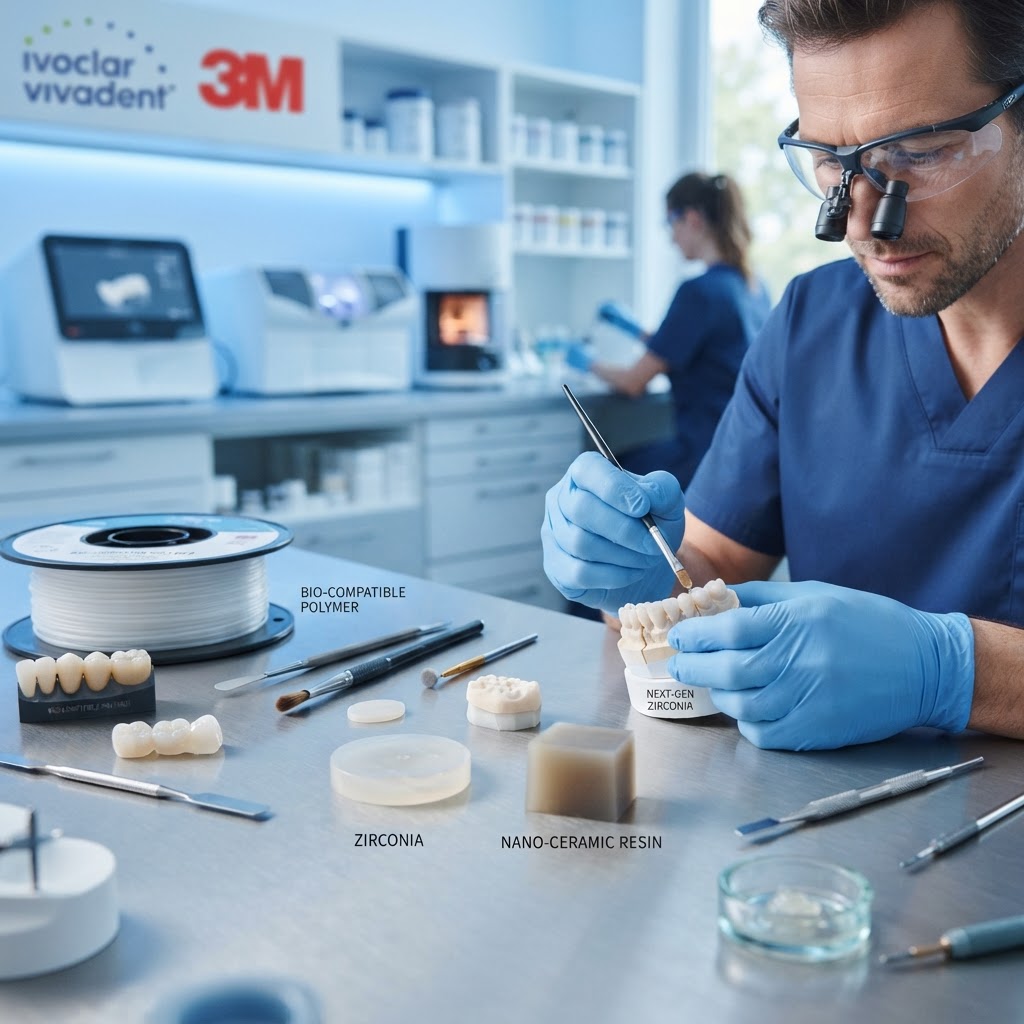
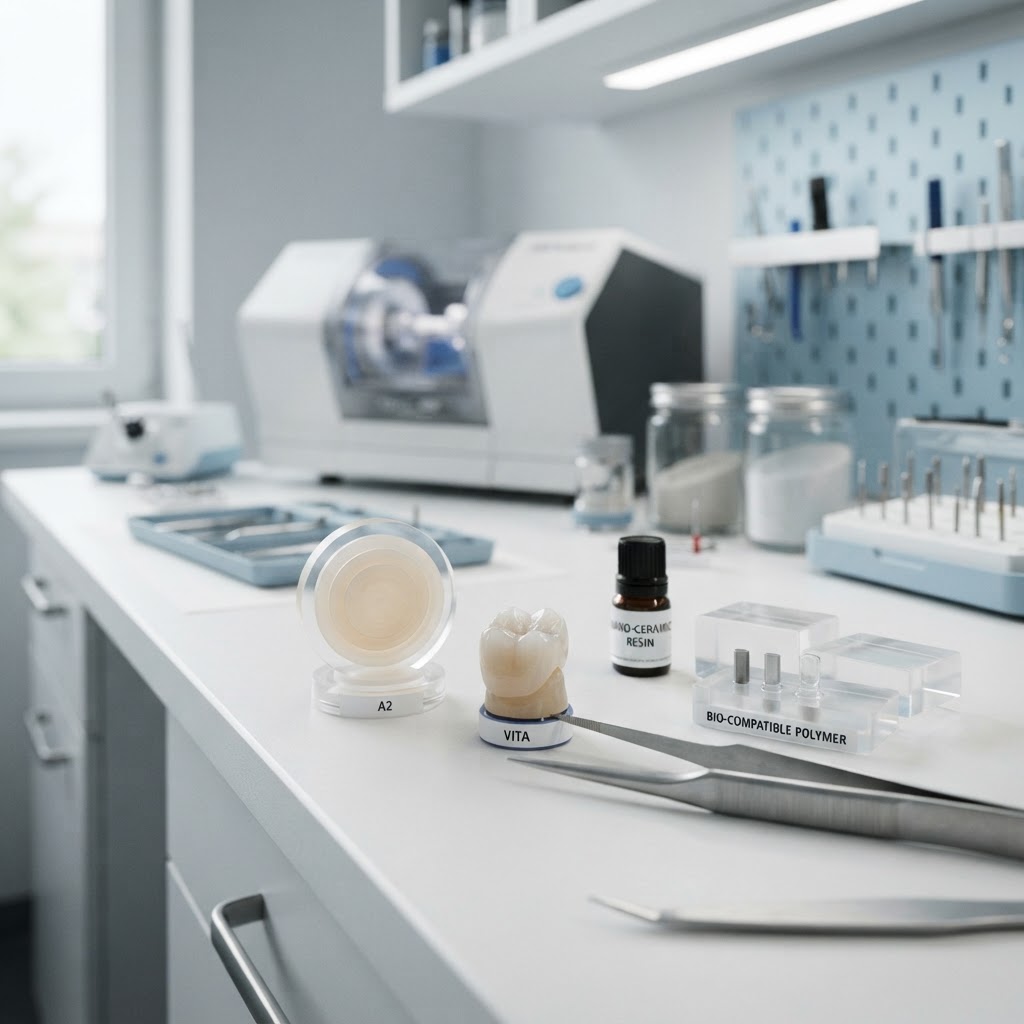
In this article, we explore the trifecta of modern restorative materials—next-generation zirconia, nano-ceramic resins, and high-performance bio-compatible polymers—and how these innovations are providing clinicians with unprecedented control over patient outcomes.
The Evolution of Multi-Layered Zirconia: Gradient Technology
Zirconia has come a long way since the days of the opaque, chalky "white" crowns that required heavy porcelain layering. The current gold standard is multi-layered, high-translucency zirconia. Unlike its predecessors, which had a uniform crystalline structure, next-gen zirconia utilizes gradient technology to vary both color and translucency from the cervical margin to the incisal edge.
Strength Meets Translucency
Modern zirconia achieves a delicate balance between tetragonal and cubic phases. By increasing the yttria content (4Y or 5Y), manufacturers have created materials that offer 700 to 1,200 MPa of flexural strength while maintaining translucency levels that rival lithium disilicate. This allows for:
- Monolithic Restorations: Reducing the risk of porcelain chipping while maintaining high-end esthetics.
- Minimal Preparation: High strength allows for thinner wall thicknesses, preserving more natural tooth structure.
- Seamless Integration: The multi-layered approach eliminates the "dead" look of monolithic restorations, blending naturally with adjacent teeth.
Practical Sintering Tips for Lab Technicians
To maximize the properties of next-gen zirconia, sintering protocols must be precise. Rapid sintering cycles are popular, but for long-span bridges or high-esthetic cases, a standard cycle ensures the crystalline structure stabilizes correctly, preventing long-term aging (low-temperature degradation).
The Rise of Nano-Ceramic Resins: The Hybrid Advantage
While zirconia dominates the posterior, nano-ceramic resins (often referred to as hybrid ceramics) are carving out a significant niche in the chairside and long-term provisional markets. These materials combine a highly cross-linked polymer matrix with up to 80% ceramic fillers (such as silica and zirconia nanoparticles).
Balancing Elasticity and Wear Resistance
One of the primary benefits of nano-ceramic resins is their modulus of elasticity, which is much closer to human dentin than traditional ceramics. This "shock-absorbing" quality makes them an ideal choice for:
- Implant-Supported Restorations: Reducing the stress transferred to the implant-bone interface.
- Inlays and Onlays: The material wears at a rate similar to natural enamel, protecting the opposing dentition.
- Repairability: Unlike pure ceramic, hybrid resins can be easily repaired intra-orally with conventional composite bonding if necessary.
For the laboratory, these materials offer exceptional millability. They do not require a firing process, significantly reducing turnaround times and allowing for precise margins that are less prone to chipping during the milling process.
High-Performance Bio-Compatible Polymers: The Metal-Free Future
Perhaps the most significant shift in reconstructive dentistry is the move toward high-performance polymers like PEEK (Polyetheretherketone) and PEKK (Polyetherketoneketone). These are not your standard plastics; they are medical-grade, bio-compatible polymers that have been used in orthopedics for decades.
PEEK and PEKK in Modern Prosthodontics
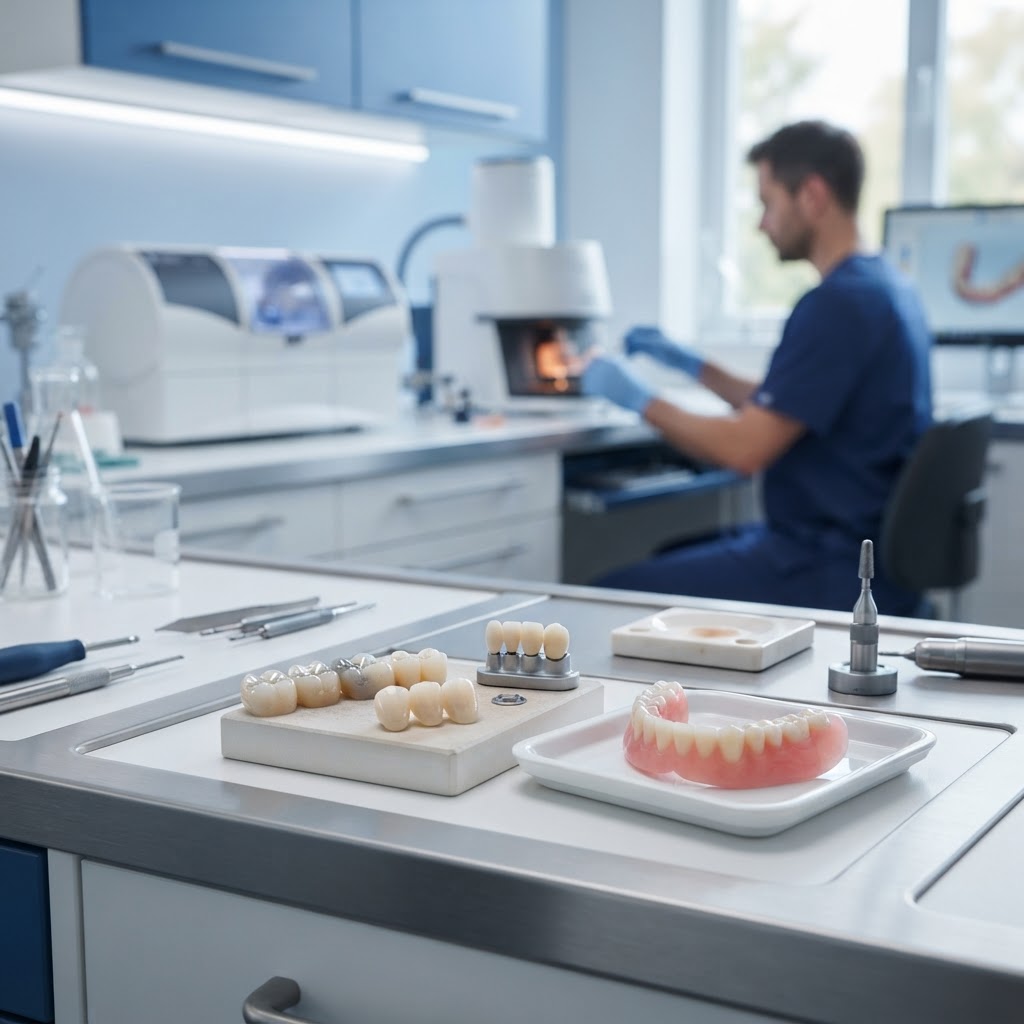
In the digital lab, PEEK and PEKK are replacing traditional metal frameworks for Removable Partial Dentures (RPDs) and fixed-hybrid implant frameworks. The advantages are numerous:
- Weight and Comfort: Polymer frameworks are significantly lighter than chrome-cobalt or titanium, enhancing patient comfort.
- Bone Health: The low modulus of elasticity helps prevent stress shielding, maintaining the health of the underlying alveolar bone.
- Zero Metal Taste: For patients with metal sensitivities or those who dislike the metallic taste of traditional RPDs, bio-polymers are a game-changer.
- Digital Accuracy: Being CAD/CAM processed, these frameworks offer a passive fit that is difficult to achieve with traditional casting methods.
Clinical Insights: Choosing the Right Material for the Case
Selecting the appropriate material requires a holistic view of the patient’s clinical presentation. For a patient with heavy bruxism, a high-strength 3Y or 4Y monolithic zirconia is likely the safest bet. For an implant-supported full-arch bridge, a PEKK framework veneered with nano-ceramic crowns offers a lightweight, shock-absorbing solution that protects the implants.
Communication between the clinic and the lab is vital. Providing details about the stump shade (for translucency mapping) and the patient’s functional habits allows the technician to select the specific yttria-content zirconia or hybrid resin that will perform best under those specific conditions.
The Road Ahead
The innovation in dental materials is not slowing down. We are currently seeing the emergence of 3D-printable ceramics and "active" materials that release fluoride or minerals to support oral health. As these technologies mature, the digital lab will continue to evolve from a fabrication center into a material science consultancy.
Conclusion
Understanding the nuances of next-generation zirconia, nano-ceramic resins, and bio-compatible polymers is no longer optional for the modern dental professional; it is a prerequisite for excellence. By leveraging these materials, you can provide restorations that are not only beautiful but also functionally superior and biologically harmonious.
Ready to elevate your restorative outcomes? Partner with Cosmetic Smile Studio today to access the latest in material technology and digital precision. Let’s build the future of dentistry together.