The Evolution of Restorative Materials in the Digital Age
The landscape of dental materials is undergoing a rapid transformation. As digital workflows become the standard in premium laboratories, the demand for materials that balance mechanical integrity with lifelike aesthetics has never been higher. For dental technicians and clinicians, staying ahead of these innovations is not just a competitive advantage—it is a necessity for delivering predictable, long-term clinical outcomes.
Next-Generation Zirconia: Beyond Strength
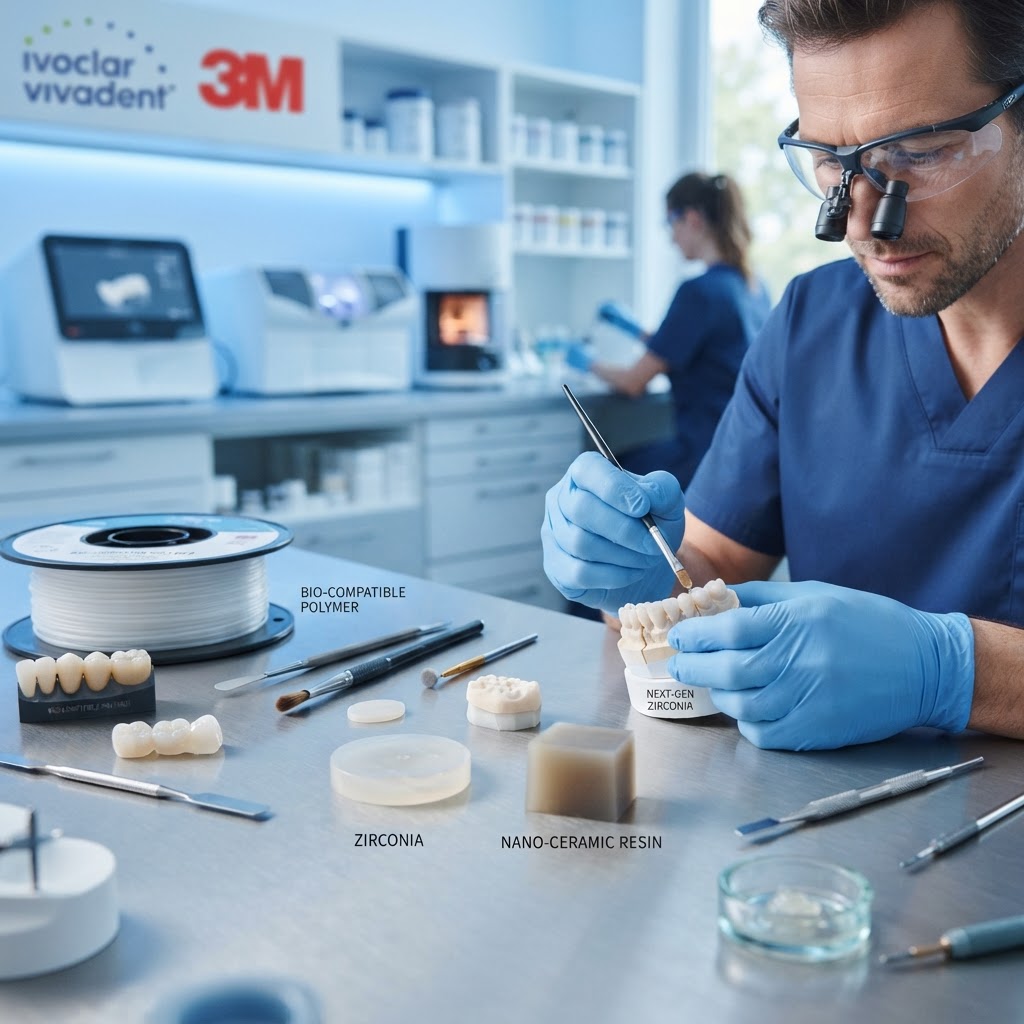
Zirconia remains the gold standard for all-ceramic restorations due to its exceptional fracture toughness and biocompatibility. However, the industry has moved far beyond the opaque, high-strength blocks of the past. Modern zirconia is now categorized by its yttria content, which dictates the balance between strength and translucency.
- 3Y-TZP: Offers maximum flexural strength, ideal for long-span bridges and posterior frameworks.
- 4Y/5Y-TZP: These multi-layered, high-translucency variants are revolutionizing anterior aesthetics, allowing for monolithic restorations that rival lithium disilicate in appearance while maintaining superior structural reliability.
For the laboratory, the key to success with these materials lies in understanding sintering protocols and surface treatments. Proper air abrasion and the use of specialized primers are essential to ensure reliable resin bonding, as surface modification significantly improves the adhesive behavior of these polycrystalline ceramics.
Nano-Ceramic Resins: The Hybrid Advantage
Nano-ceramic hybrid materials have emerged as a compelling alternative to traditional silicate ceramics and zirconia. By combining the aesthetics of ceramics with the stress-absorbing properties of high-performance polymers, these materials offer a unique "tooth-like" behavior.
Why Nano-Ceramics Matter
These materials are highly filled, providing a flexural strength that differs significantly from conventional laboratory composites. Their primary advantage is their modulus of elasticity, which is closer to natural dentin than traditional ceramics. This makes them an excellent choice for:
- Implant-supported crowns where shock absorption is beneficial.
- Patients with bruxism or heavy occlusal loads.
- Restorations where antagonist wear must be minimized.
Bio-Compatible Polymers: The Future of Additive Manufacturing
The rise of 3D printing has brought bio-compatible polymers, such as PEEK (Polyether ether ketone), to the forefront of prosthetic dentistry. These materials are increasingly used for permanent restorations, provided they meet the stringent Class IIa biocompatibility requirements for long-term intraoral use.
Unlike traditional metals, PEEK offers a lightweight, metal-free solution that is chemically inert and highly resistant to corrosion. As additive manufacturing technology matures, we are seeing improved dimensional accuracy and fit, making these polymers a viable option for complex full-arch frameworks and custom abutments.
Actionable Insights for the Modern Lab
To maximize the potential of these next-generation materials, laboratories should focus on the following:
- Workflow Integration: Ensure your CAD/CAM software is calibrated for the specific translucency gradients of your chosen zirconia blocks to optimize milling paths.
- Material Selection: Match the material to the clinical indication. Do not default to high-strength zirconia when a nano-ceramic hybrid might provide better stress distribution for the specific patient.
- Quality Control: As 3D printing technology evolves, prioritize materials that have documented clinical studies regarding their long-term stability and fit.
Conclusion
The convergence of material science and digital technology is providing dental professionals with an unprecedented toolkit. By mastering the nuances of next-generation zirconia, nano-ceramic resins, and bio-compatible polymers, you can elevate the quality of your restorations and improve patient satisfaction. Ready to upgrade your lab's material portfolio? Contact our technical support team today to discuss how these innovations can be integrated into your current digital workflow.