The New Era of Dental CAD/CAM: Intelligence Meets Artistry
The year 2026 marks a definitive turning point in the history of dental technology. What were once aspirations regarding artificial intelligence and seamless laboratory-to-clinic communication have now become the standard operating procedure. For dental technicians at the forefront of the industry, the latest updates in CAD/CAM ecosystems—led by the formidable advancements in the Exocad 2026 release—are not merely incremental improvements. They represent a fundamental shift in how we approach restorative design, moving from manual manipulation to high-level digital curation. At Cosmetic Smile Studio, we recognize that staying ahead requires more than just high-end milling; it requires mastering the software that drives the entire restorative workflow.
Exocad 2026: A Paradigm Shift in Contextual Awareness
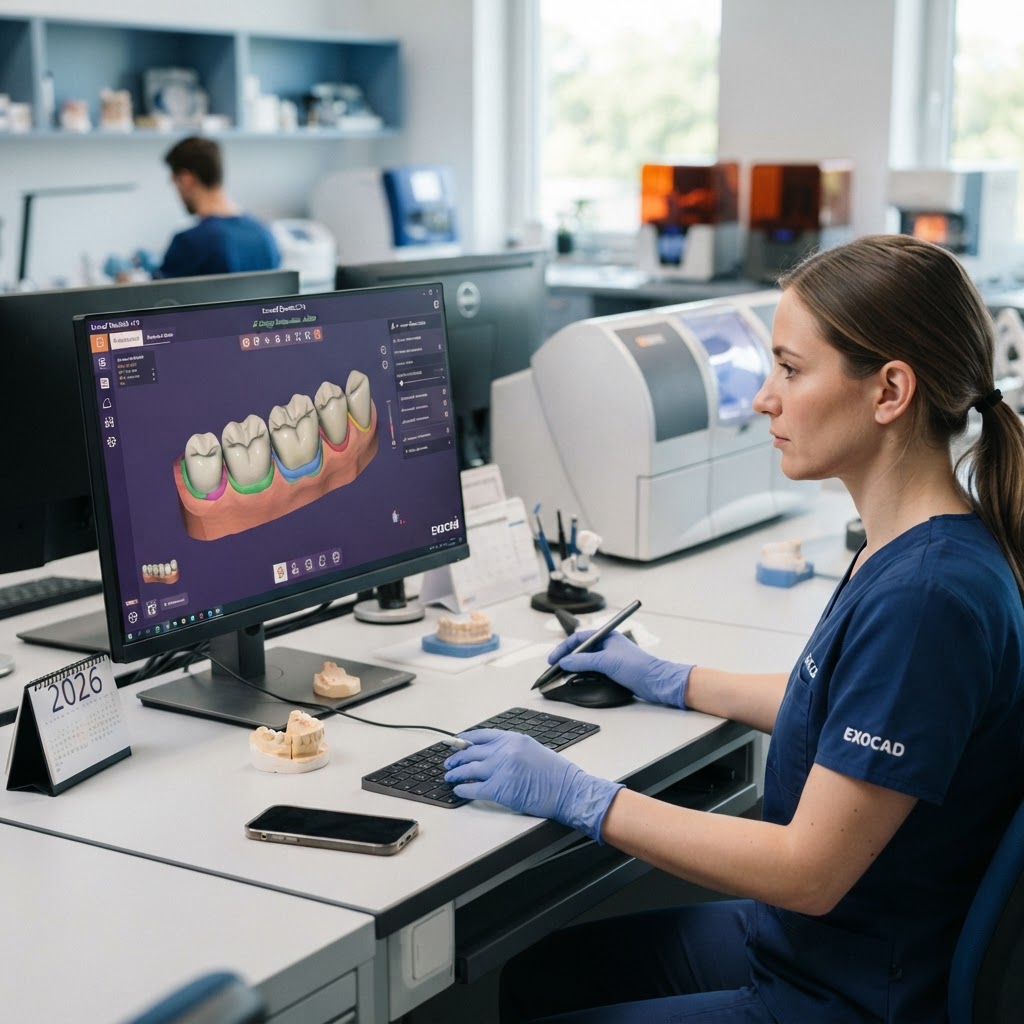
In the most recent iteration of Exocad software, the focus has shifted toward 'contextual awareness.' The software no longer treats a scan as a static geometric object; instead, it interprets the oral environment with the nuance of an experienced clinician. Several key features introduced this year have redefined the productivity benchmarks for dental labs:
- Generative Anatomy Libraries: Moving beyond static tooth libraries, the 2026 update employs generative AI to create tooth shapes that specifically complement the patient’s existing dentition, gender, and age profile. This ensures that the initial proposal requires minimal manual adjustments from the technician.
- Automated Margin Recognition 2.0: Using advanced texture mapping and deep-learning neural networks, the software can now distinguish between gingival tissue and tooth structure even in challenging, sub-gingival scenarios. This reduces the time spent on manual margin refinement by nearly 70%.
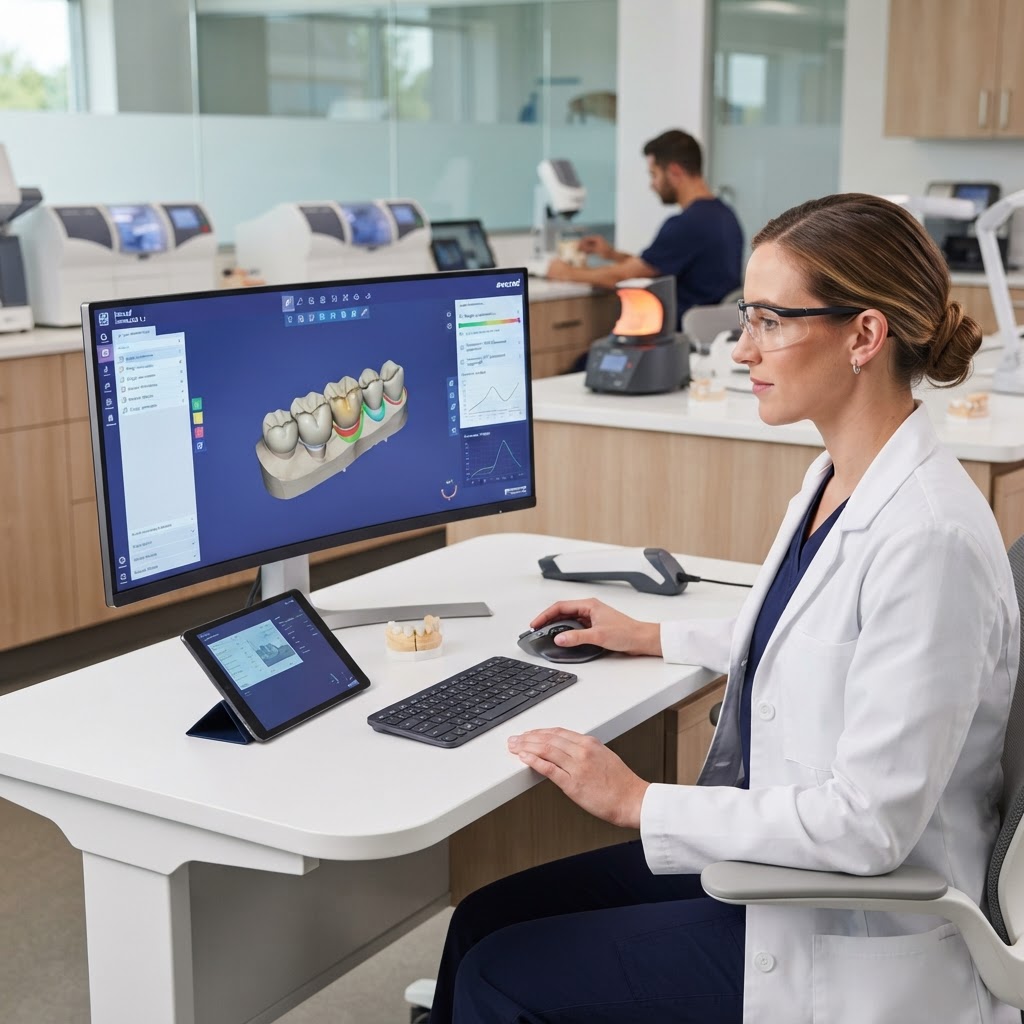
- Integrated Stress Simulation: High-performance computing now allows for real-time Finite Element Analysis (FEA) during the design phase. Technicians can see a 'heat map' of potential stress concentrations, allowing them to thicken connectors or adjust anatomy before the case ever reaches the milling machine.
Automation: The Technician as a Digital Architect
Design automation is no longer a threat to the artisan; it is the tool that frees them from mundane tasks. In 2026, automation has reached a level of maturity where single-unit crowns and simple bridges can be designed in a 'lights-out' fashion. The modern dental technician’s role has evolved into that of a digital architect—reviewing AI-generated proposals, handling complex multi-unit cases, and ensuring that the final output meets the high aesthetic standards of premium restorations.
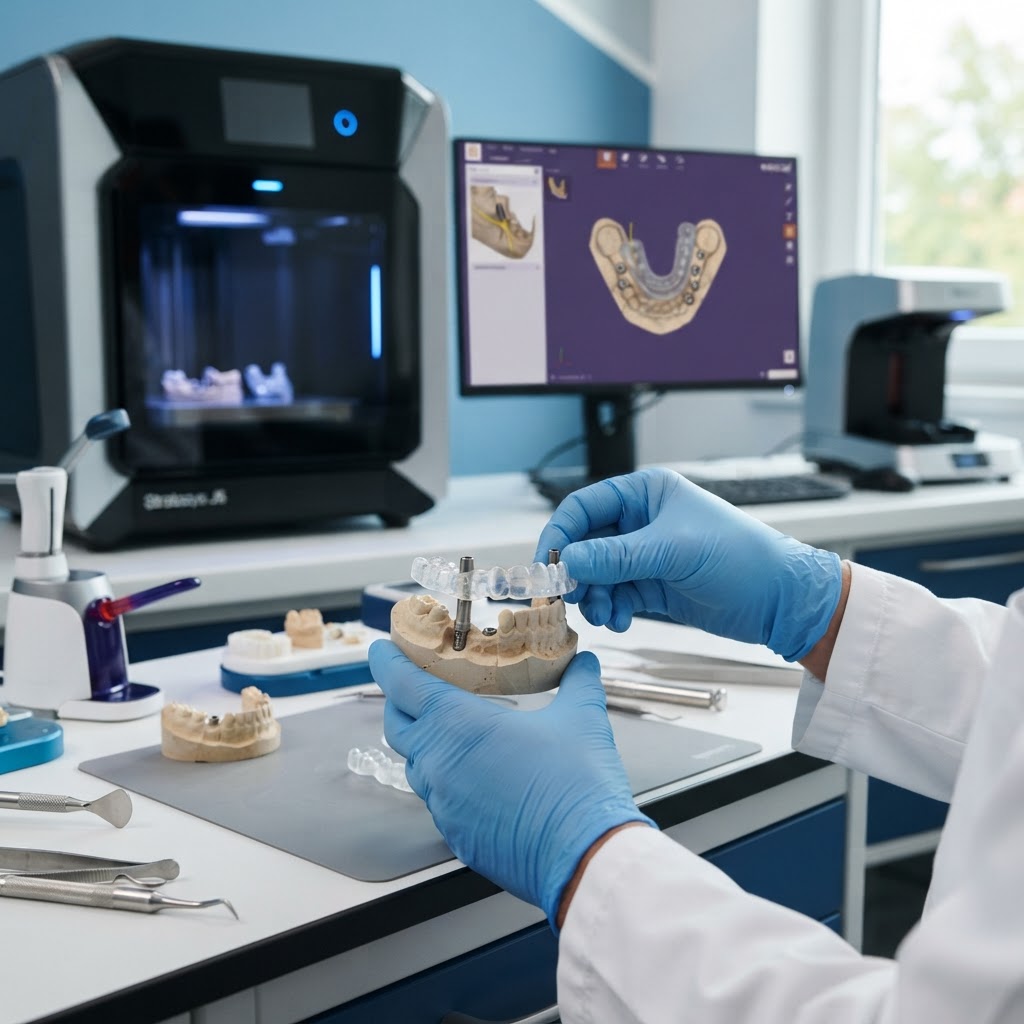
Advanced automation algorithms now handle path-of-insertion calculations for complex bridge cases and dynamic occlusion adjustments based on virtual articulator data that syncs directly from facial scanners. Furthermore, predictive nesting for both milling and 3D printing now optimizes material usage without human intervention, significantly lowering the cost per unit for high-volume laboratories.
Bio-Emulation and AI-Driven Color Matching
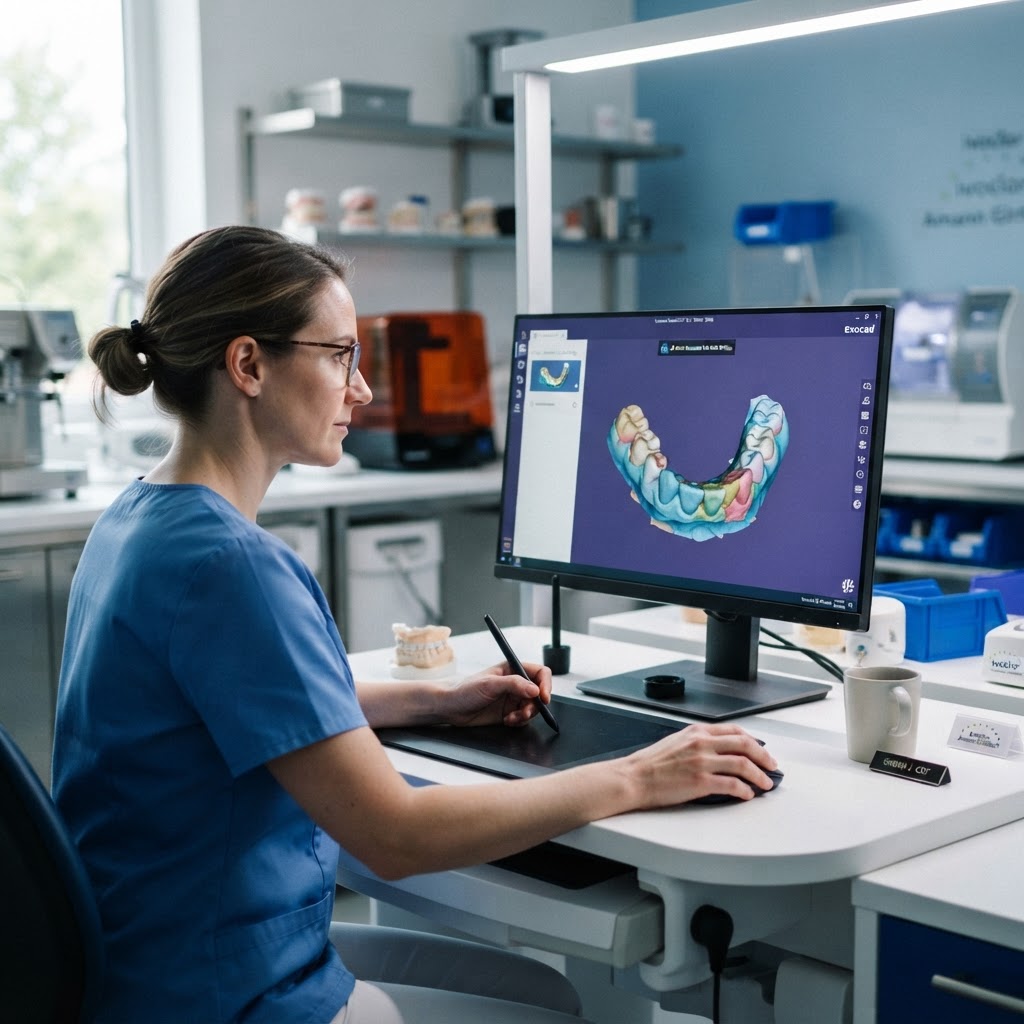
The 2026 software updates have also integrated sophisticated color-matching algorithms. By analyzing intraoral scan data with multi-spectral imaging, the CAD software can now recommend specific material translucencies and multilayered zirconia gradients. This 'bio-emulation' feature ensures that the final restoration doesn't just fit physically, but blends perfectly with the surrounding natural dentition, a critical requirement for cosmetic dentistry.
Seamless Cloud Ecosystems and Lab-Clinic Synergy
One of the most significant updates in 2026 is the total integration of cloud-native design platforms. Software is no longer tethered to a single workstation. This transition allows for a distributed workforce model where senior designers can oversee and approve cases from anywhere in the world in real-time. Furthermore, the 2026 updates facilitate an 'always-on' connection with intraoral scanners. As the clinician finishes a scan, the lab’s AI can begin the initial diagnostic model and margin detection immediately, often before the patient has even left the chair.
Hardware Requirements for the 2026 Digital Lab
To leverage these massive software enhancements, labs must ensure their hardware is up to the task. The shift toward AI-supervision and real-time simulation requires significant processing power. We recommend:
- NVIDIA RTX 50-series or equivalent GPUs for real-time rendering and AI acceleration.
- A minimum of 64GB DDR5 RAM to handle the massive datasets from high-resolution 8K scans.
- High-speed fiber connectivity for seamless cloud integration and large file transfers.
Actionable Insights for Modern Dental Laboratories
Transitioning to these 2026 workflows requires a strategic approach. Start by auditing your current software version and ensuring your subscription includes the latest AI modules. Invest in staff training focused on 'AI-Supervision'—understanding how to guide the automation is now more valuable than knowing which virtual tool to use for manual sculpting. Additionally, prioritize data security. As more design work moves to the cloud, ensuring HIPAA-compliant encryption and secure backups is paramount to maintaining professional integrity.
Conclusion: Embracing the Future of Restoration
The 2026 CAD/CAM updates and Exocad’s latest features offer a glimpse into a future where technology and craftsmanship are indistinguishable. By embracing design automation and intelligent software, dental laboratories can achieve levels of precision, speed, and aesthetic excellence that were previously unimaginable. At Cosmetic Smile Studio, we are committed to integrating these innovations to provide the highest quality results for our partners. Are you ready to upgrade your restorative workflow? Contact our technical team today to learn how we can integrate these 2026 design innovations into your laboratory's path forward.