The Evolution of Guided Implantology
The transition from freehand implant placement to static guided surgery represents one of the most significant shifts in restorative-driven dentistry. As digital technologies become increasingly accessible, the emphasis has moved from merely adopting these tools to refining their precision. For the modern dental laboratory and clinic, the accuracy of a 3D-printed surgical guide is the lynchpin of a successful, predictable clinical outcome. Ensuring this accuracy requires a deep understanding of the entire digital ecosystem, from the initial data acquisition to the final post-polymerization phase.
The Foundation: Data Fusion and Alignment Accuracy
Precision begins long before the 3D printer is activated. The digital workflow starts with the fusion of two critical data sets: Cone Beam Computed Tomography (CBCT) for hard tissue visualization and Intraoral Scans (IOS) for soft tissue and dentition detail. The accuracy of the resulting surgical guide is heavily dependent on the fidelity of this registration.
- Resolution and Artifact Management: High-resolution CBCT scans with minimal scatter (often caused by metal restorations) are essential. Utilizing beam hardening reduction algorithms during scanning can significantly improve the clarity of the bone-to-tooth interface.
- Surface Mesh Quality: Intraoral scanners vary in their accuracy over long-span arches. For full-arch surgical guides, ensuring a calibrated scanner and a verified scanning path is vital to prevent rotational distortions in the final STL file.
- Point-to-Point Registration: The alignment of the DICOM and STL files must be verified across multiple reference points. Even a 0.5mm discrepancy at the registration phase can translate into a significant deviation at the implant apex.
Optimizing CAD Design for Printability
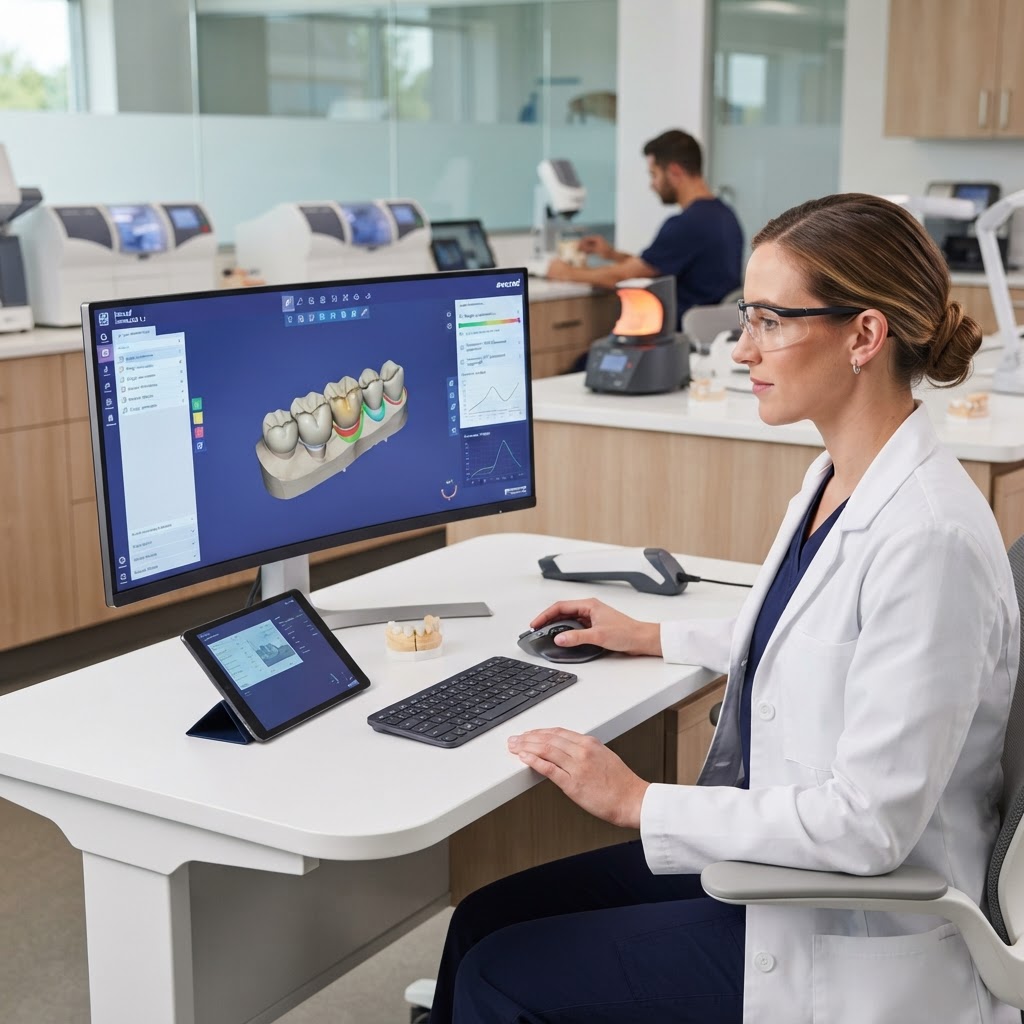
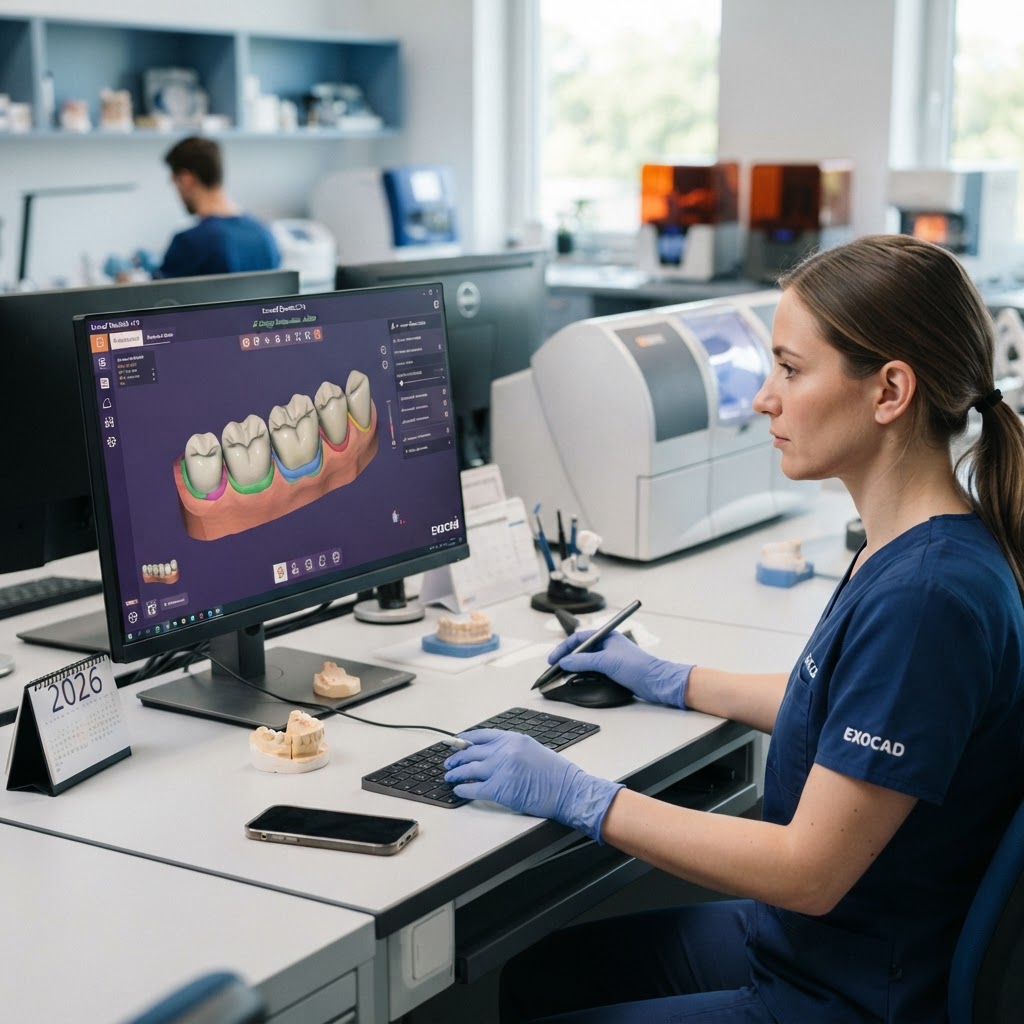
Once the data is merged, the guide design phase in software like exocad or 3Shape must account for the mechanical realities of the 3D printing process. Design parameters should not only focus on the surgical site but also on the stability and fit of the guide itself.
Tolerance and Offset Settings
One of the most common pitfalls in surgical guide fabrication is the incorrect setting of the cement gap or guide tube offset. Every 3D printer and resin combination has a unique shrinkage profile. Labs must perform 'fit tests' to determine the ideal internal offset that allows the guide to seat fully without rocking, while maintaining enough friction to prevent intraoperative movement.
Structural Integrity
Surgical guides are subject to mechanical stress during drilling. Design features such as reinforcement ribs and adequate wall thickness (typically a minimum of 2.5mm to 3.0mm) are necessary to prevent flexing. A guide that flexes under the pressure of the handpiece will inevitably lead to angular deviations in the osteotomy.
Selecting the Right 3D Printing Technology
Not all 3D printers are created equal when it comes to the dimensional stability required for surgical guides. The three primary technologies—Stereolithography (SLA), Digital Light Processing (DLP), and Masked SLA (MSLA/LCD)—each offer different advantages.
- DLP Printing: Often preferred for surgical guides due to its speed and consistent XY resolution. Because an entire layer is projected at once, the light intensity is uniform, which can lead to highly predictable results across the entire build plate.
- SLA Printing: Utilizes a laser to trace each layer. While potentially offering smoother surface finishes, it may be slower and can occasionally suffer from 'draw speed' inconsistencies if not properly calibrated.
- LCD/MSLA: The most recent entry to the high-performance market, offering excellent resolution at a lower price point. However, the uniformity of the LED light source is critical; cheaper units may have light fall-off at the edges of the build plate, affecting the accuracy of guides printed away from the center.
The Science of Resin and Post-Processing
The choice of biocompatible resin is paramount. Class I or Class IIa resins are specifically formulated to withstand the heat of the autoclave or the friction of surgical sleeves. However, the accuracy of these materials is highly sensitive to post-processing protocols.
The Impact of Shrinkage
All photopolymers undergo some degree of volumetric shrinkage during the curing process. Advanced dental resins are engineered to minimize this, but the laboratory must compensate for it through calibrated scale factors in the slicing software.
Washing and Drying
Residual liquid resin trapped in the guide sleeve holes or on the intaglio surface can lead to inaccuracies. Using automated washing stations with fresh Isopropyl Alcohol (IPA) or specialized cleaning agents ensures all unreacted monomer is removed. It is crucial that the guide is 100% dry before UV curing, as moisture can interfere with the final polymerization and lead to cloudy or brittle guides.
Validated Post-Curing
The final mechanical properties and biocompatibility of a surgical guide are only achieved through proper UV curing. Using a validated curing unit that matches the resin manufacturer’s specifications for light intensity, wavelength, and temperature is non-negotiable. Over-curing can lead to brittleness and shrinkage, while under-curing leaves the material unstable and potentially toxic.
Workflow Integration: Lab and Clinic Communication
Successful guided surgery is a collaborative effort. A seamless digital workflow requires standardized communication protocols between the dental laboratory and the surgical team.
- The Digital Prescription: Clinics should provide clear instructions on the desired implant system, sleeve type (fully guided vs. pilot), and the preferred support mechanism (tooth-borne, bone-borne, or mucosa-borne).
- Virtual Planning Approval: Before printing, the clinician must review the virtual plan. This 'plan-twice, cut-once' philosophy ensures that the restorative goal is met while respecting the anatomical constraints identified in the CBCT.
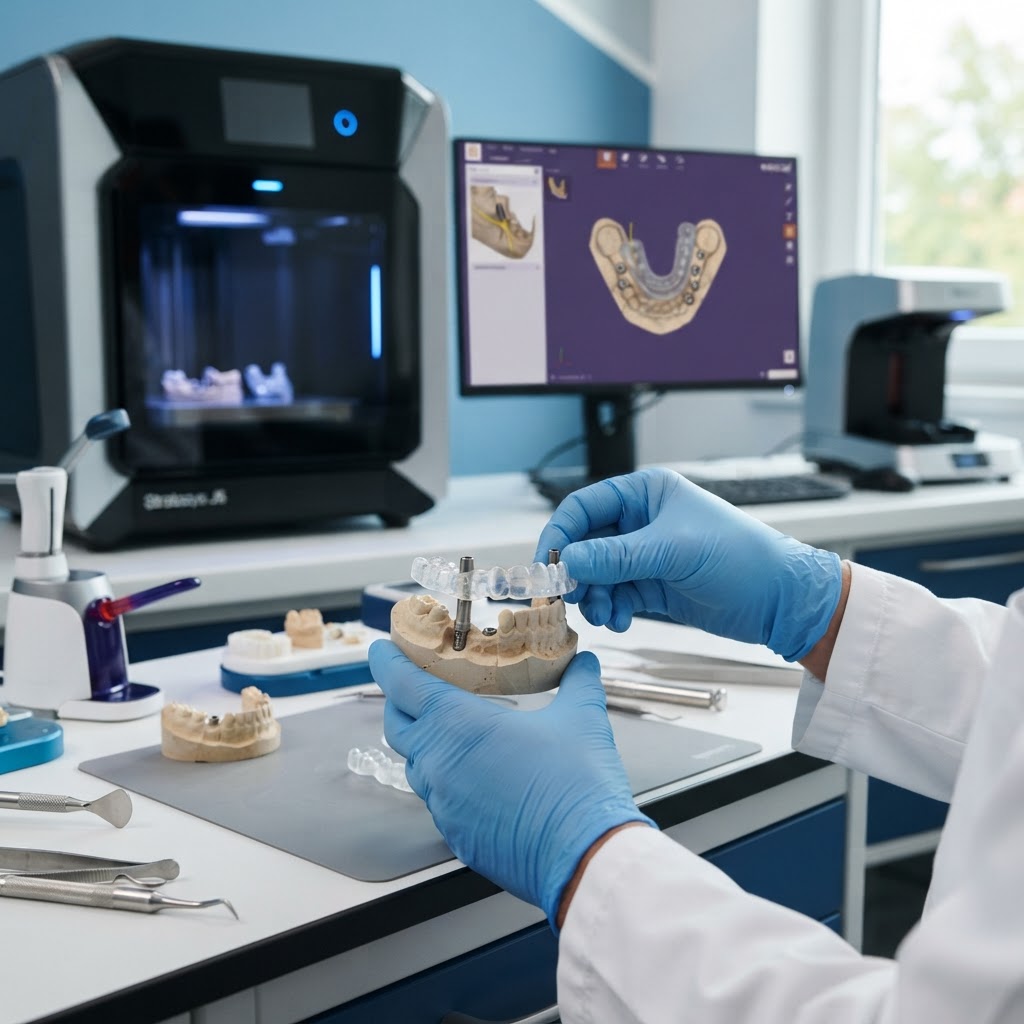
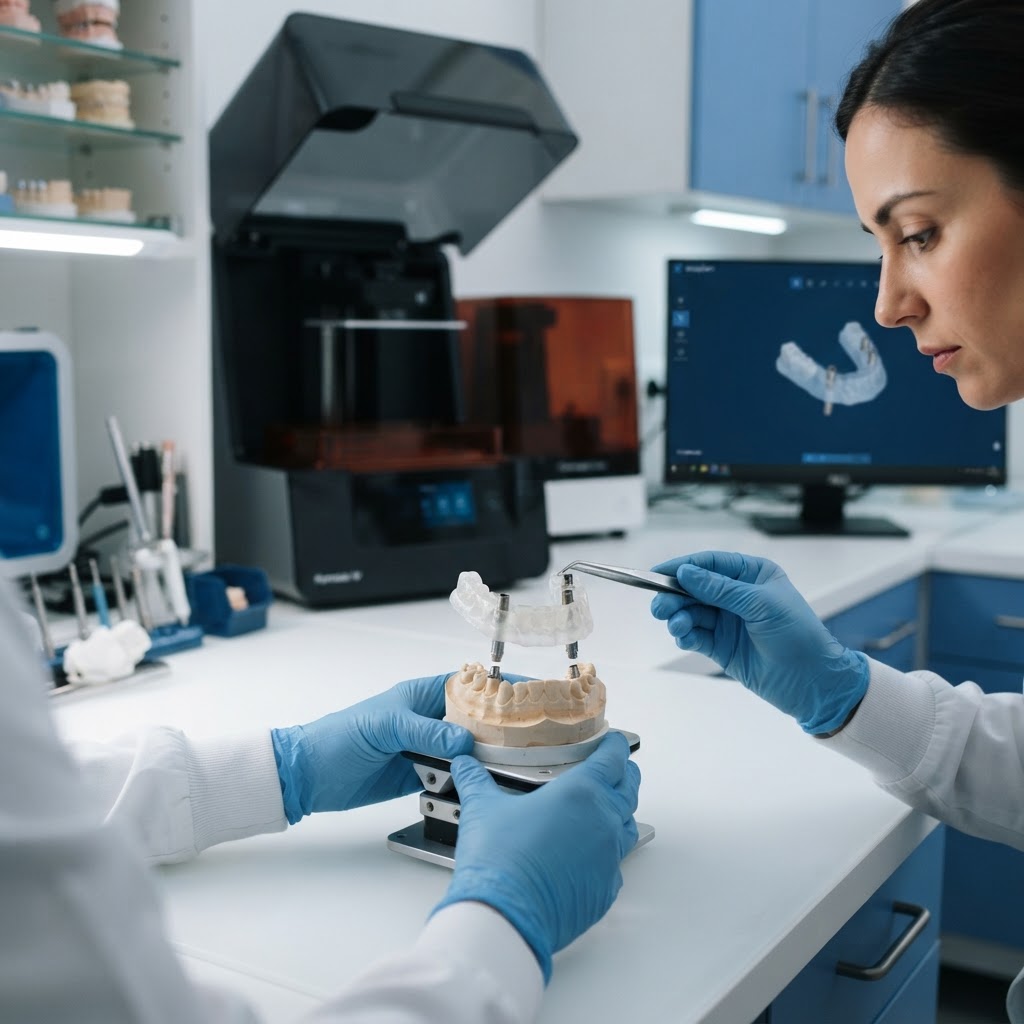
- Fit Verification: Before the patient is anesthetized, the guide should be tried on a 3D-printed model of the patient’s arch. This 'analog check' in a digital workflow serves as a final fail-safe to ensure the guide seats correctly and the sleeves are secure.
Conclusion
Achieving micron-level accuracy in surgical guide printing is not the result of a single piece of equipment, but rather the optimization of a complex digital chain. By mastering data fusion, selecting high-performance hardware, and adhering to rigorous post-processing standards, dental professionals can significantly elevate the predictability of their implant procedures. As we look toward the future, the integration of these digital workflows will continue to define the standard of care in cosmetic and restorative dentistry.
Ready to elevate your implant precision? Contact Cosmetic Smile Studio today to learn more about our digital workflow solutions and how our high-accuracy surgical guides can transform your clinical outcomes.