The New Frontier of Restorative Biomimetics
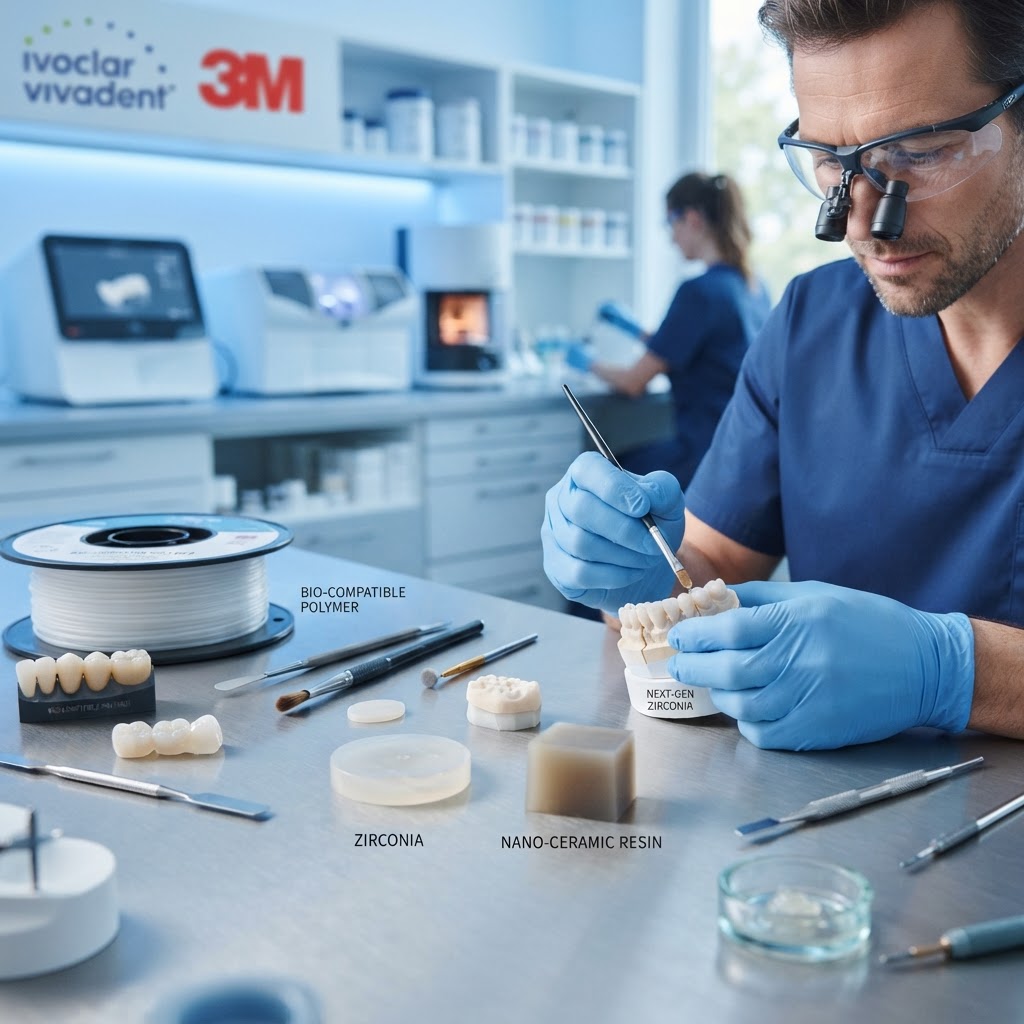
The landscape of restorative dentistry is undergoing a profound transformation. As we move further into 2026, the industry is shifting away from a one-size-fits-all approach to materials, moving toward a nuanced, biology-driven selection process. For the modern dental laboratory and clinical practice, understanding the intersection of material science and digital precision is no longer optional—it is the prerequisite for success. Today, we explore the trifecta of innovation: next-generation gradient zirconia, resilient nano-ceramic resins, and the rising dominance of bio-compatible polymers like PEEK and PEKK.
The Evolution of Next-Generation Zirconia
Zirconia has come a long way since the days of the 'white brick' monolithic restorations. The latest iterations of zirconia represent a masterclass in structural engineering, balancing the contradictory requirements of high flexural strength and lifelike translucency. We are now seeing the widespread adoption of multi-layered, gradient zirconia that transitions both color and strength throughout the disc.
High-Translucency and Strength Gradients
Unlike early generation zirconia, which relied on a single yttria content (typically 3Y), 2026 formulations utilize a multi-yttria approach. By layering 4Y and 5Y zirconia, manufacturers have created materials that offer 1,200 MPa of strength at the cervical margin for durability and 700-800 MPa at the incisal edge for maximum translucency. This eliminates the 'graying' effect often seen in traditional restorations and allows technicians to achieve natural aesthetics with minimal staining.
- Reduced Tool Wear: Modern formulations are optimized for 'soft' milling, extending the life of carbide and diamond burs.
- Pre-Shaded Precision: Integrated color gradients reduce the margin for error in the dipping process, ensuring consistent VITA shade matching.
- Minimal Wall Thickness: Increased strength allows for more conservative preparations, preserving more natural tooth structure.
Nano-Ceramic Resins: The Hybrid Advantage
Nano-ceramic resins are carving out a significant niche in the CAD/CAM ecosystem, particularly for chairside restorations and implant-supported prosthetics. These materials combine the polishability and aesthetics of ceramic with the fracture toughness and shock absorption of composite resin.
Shock Absorption in Implantology
One of the most critical applications for nano-ceramics is in the realm of implant restorations. Because these materials possess a lower modulus of elasticity compared to monolithic zirconia or lithium disilicate, they act as a buffer. This 'stress-breaking' quality is essential for preventing peri-implantitis and mechanical failure in patients with heavy occlusal forces or bruxism. By mimicking the natural resilience of the periodontal ligament, nano-ceramics provide a more 'natural' feel for the patient.
- Speed of Production: Unlike ceramics, nano-resins do not require a secondary firing process, significantly reducing turnaround times.
- Ease of Intraoral Repair: If a restoration chips, it can be easily repaired with conventional light-cure composites, a major advantage over traditional ceramics.
- Polishing over Glazing: High filler loads allow for a high-luster finish through mechanical polishing alone.
The Rise of Bio-compatible Polymers: PEEK and PEKK
High-performance polymers (HPPs) are no longer experimental; they are becoming the gold standard for removable and fixed-removable frameworks. Polyetheretherketone (PEEK) and Polyetherketoneketone (PEKK) offer a biocompatible alternative to CoCr and titanium alloys, addressing both aesthetic and biological concerns.
Mimicking the Natural Modulus of Bone
The primary advantage of PEKK and PEEK is their mechanical property profile. These polymers have a modulus of elasticity that closely mirrors human bone and dentin. This reduces the 'stress shielding' effect and provides a more comfortable experience for the patient. Furthermore, their lightweight nature makes them ideal for large-span frameworks in full-arch rehabilitations.
- Non-Allergic and Metal-Free: Perfect for the increasing population of patients with metal sensitivities.
- Thermal Insulation: Unlike metals, polymers do not conduct heat or cold, reducing post-operative sensitivity.
- Bonding Versatility: Advanced primers now allow for predictable bonding between PEEK frameworks and aesthetic veneers or composites.
Practical Insights for the Digital Lab
Integrating these materials requires more than just a new puck in the milling machine. It requires a refined understanding of digital design parameters and post-processing protocols. For zirconia, the sintering cycle is the most critical variable; even a 10-degree deviation can affect translucency and fit. For nano-ceramics, ensuring the milling tools are sharp is paramount to prevent micro-fractures at the margins. For polymers, the surface treatment—typically sandblasting followed by a specific primer—is the secret to long-term adhesive success.
The Strategic Value of Material Expertise
As we look toward the future, the role of the dental technician is evolving into that of a 'Material Architect.' Clinicians are increasingly relying on laboratories to guide them in material selection based on the patient's specific needs, whether it be a high-strength bridge or a flexible, aesthetic partial. By mastering these next-generation materials, labs can position themselves as indispensable partners in the clinical workflow.
Conclusion: Embracing the Future of Materials
The transition to next-generation zirconia, nano-ceramics, and bio-polymers represents a significant leap forward in our ability to provide restorations that are not only beautiful but biologically integrated. These materials allow us to respect the mechanics of the human mouth while fulfilling the highest aesthetic demands. At Cosmetic Smile Studio, we believe that staying at the forefront of material science is the key to delivering superior patient outcomes. Are you ready to upgrade your material palette for 2026? Contact us today to learn how our digital workflow can integrate these innovations into your practice.