The Digital Evolution of Implant Placement
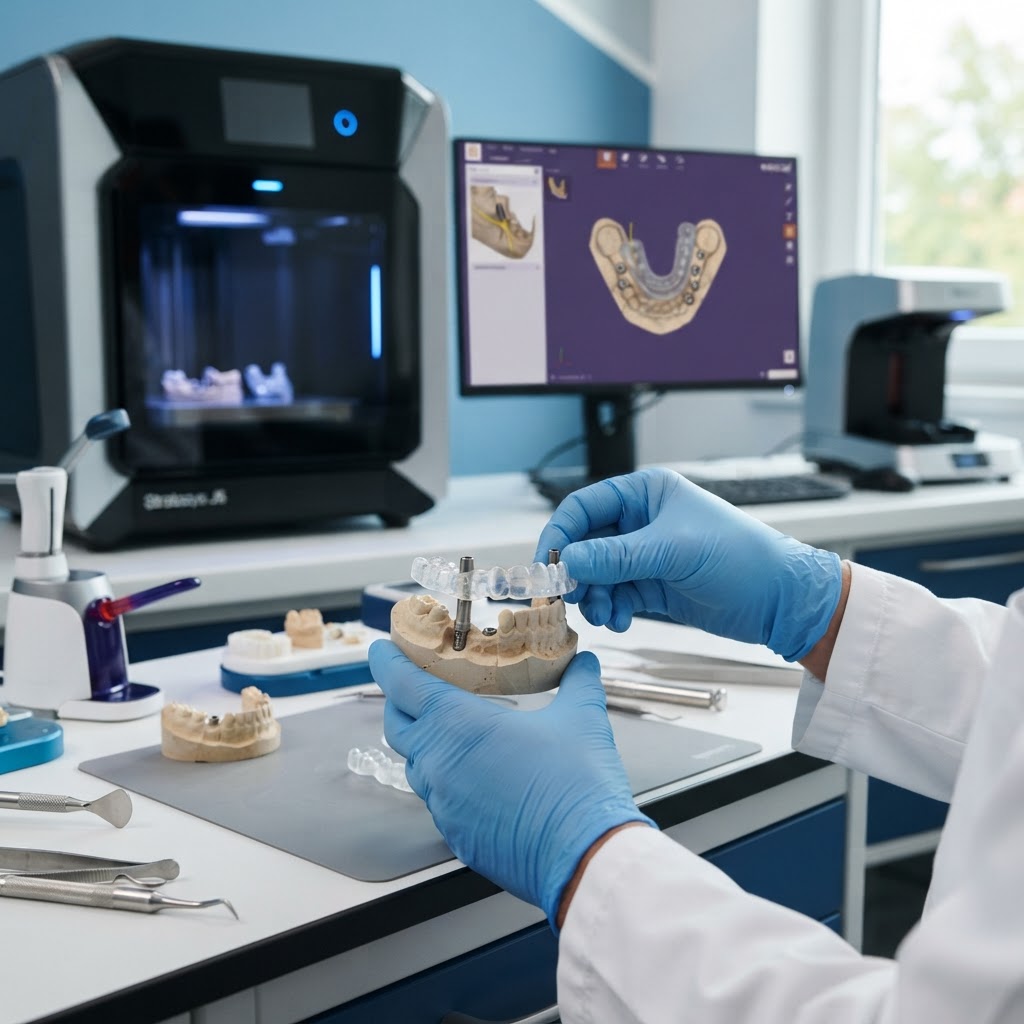
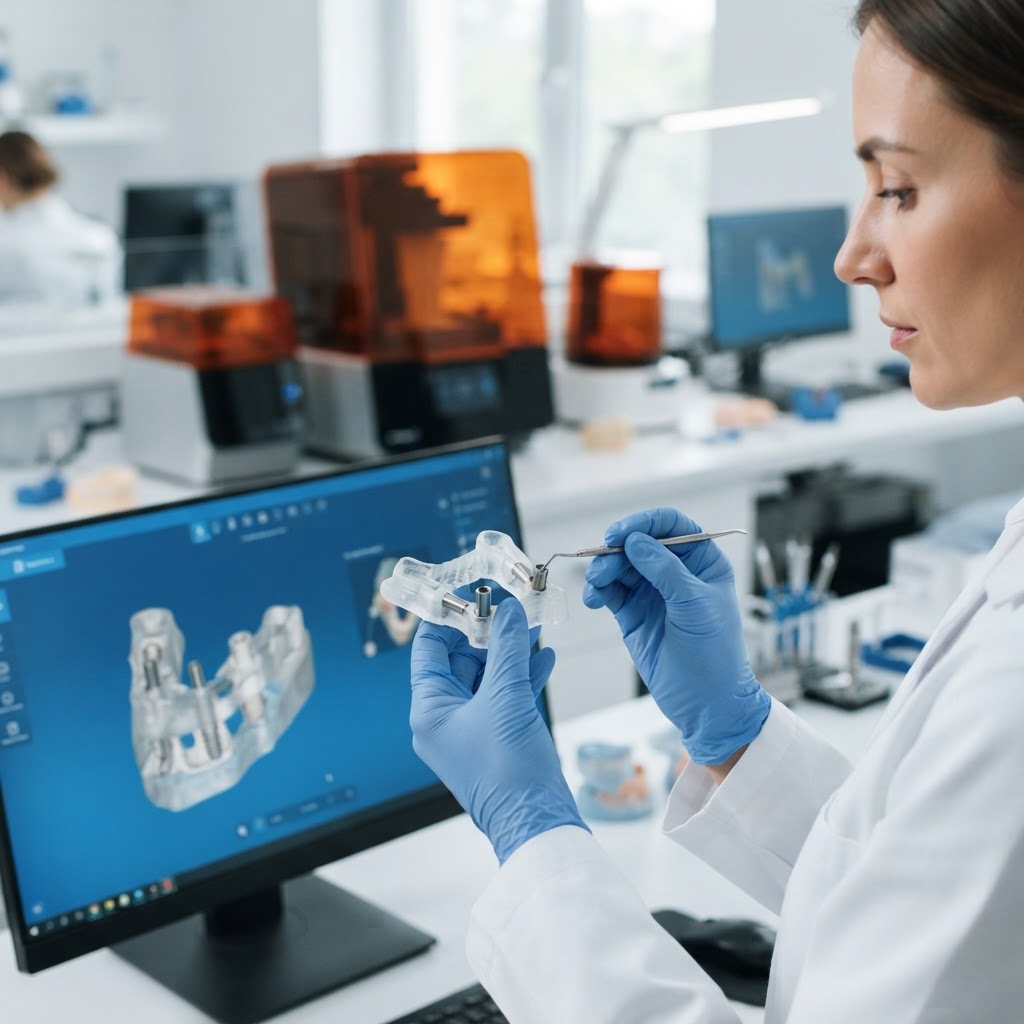
In the contemporary landscape of restorative dentistry, the transition from freehand implant placement to guided surgery represents one of the most significant leaps in clinical safety and prosthetic predictability. As a premier digital dental laboratory, we recognize that the success of a surgical guide is not merely determined by the digital design, but by the physical fidelity of the printed appliance. For the modern clinician, the surgical guide is the bridge between a virtual treatment plan and the biological reality of the patient's anatomy. However, achieving micron-level accuracy requires a deep understanding of the variables present in the 3D printing process and the complexities of digital workflow integration.
Understanding the Variables of Printing Accuracy
Accuracy in 3D printing is often discussed, yet frequently misunderstood. It is essential to distinguish between accuracy—the ability of the print to match the intended dimensions of the CAD file—and precision, which refers to the repeatability of those results. In surgical guide production, several technical factors influence the final fit:
- XY Resolution and Pixel Size: For DLP (Digital Light Processing) and LCD (mSLA) printers, the pixel size determines the minimum feature size. High-end laboratory printers now offer pixel sizes as small as 35 to 50 microns, providing the crispness required for tight-fitting metal sleeves.
- Z-Axis Layer Thickness: While 50-micron layers are standard, thinner layers (25 microns) can reduce the 'stair-stepping' effect on angled surfaces, though this increases print time. For most surgical guides, a 50-micron layer provides an ideal balance of speed and surface smoothness.
- Light Source Uniformity: Variations in light intensity across the build plate can lead to dimensional discrepancies. Premium printers utilize collimated light or sophisticated optics to ensure that a guide printed at the edge of the plate is identical to one printed in the center.
The Role of Material Science and Dimensional Stability
The selection of resin is perhaps the most critical component in the production of a surgical guide. The material must not only be Class VI biocompatible but also possess high flexural strength and minimal shrinkage. During the photopolymerization process, resins naturally undergo a degree of volumetric shrinkage. Advanced dental resins are engineered with stabilizers to mitigate this, ensuring that the guide remains dimensionally stable from the moment it leaves the build plate through the sterilization process. Clinicians should prioritize resins that are validated for autoclave or chemical sterilization, as the heat and pressure of a steam autoclave can cause inferior materials to warp, rendering the guide useless at the chairside.
Seamless Digital Workflow Integration
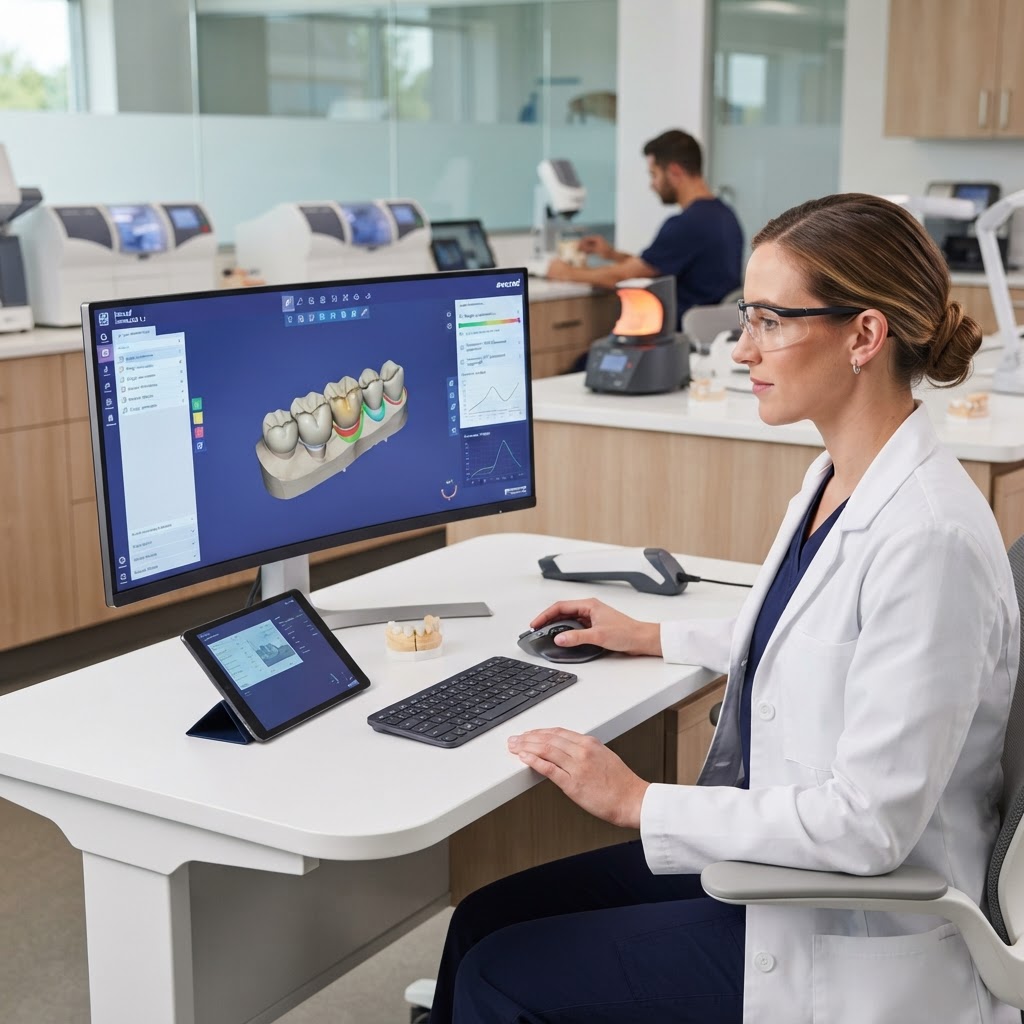
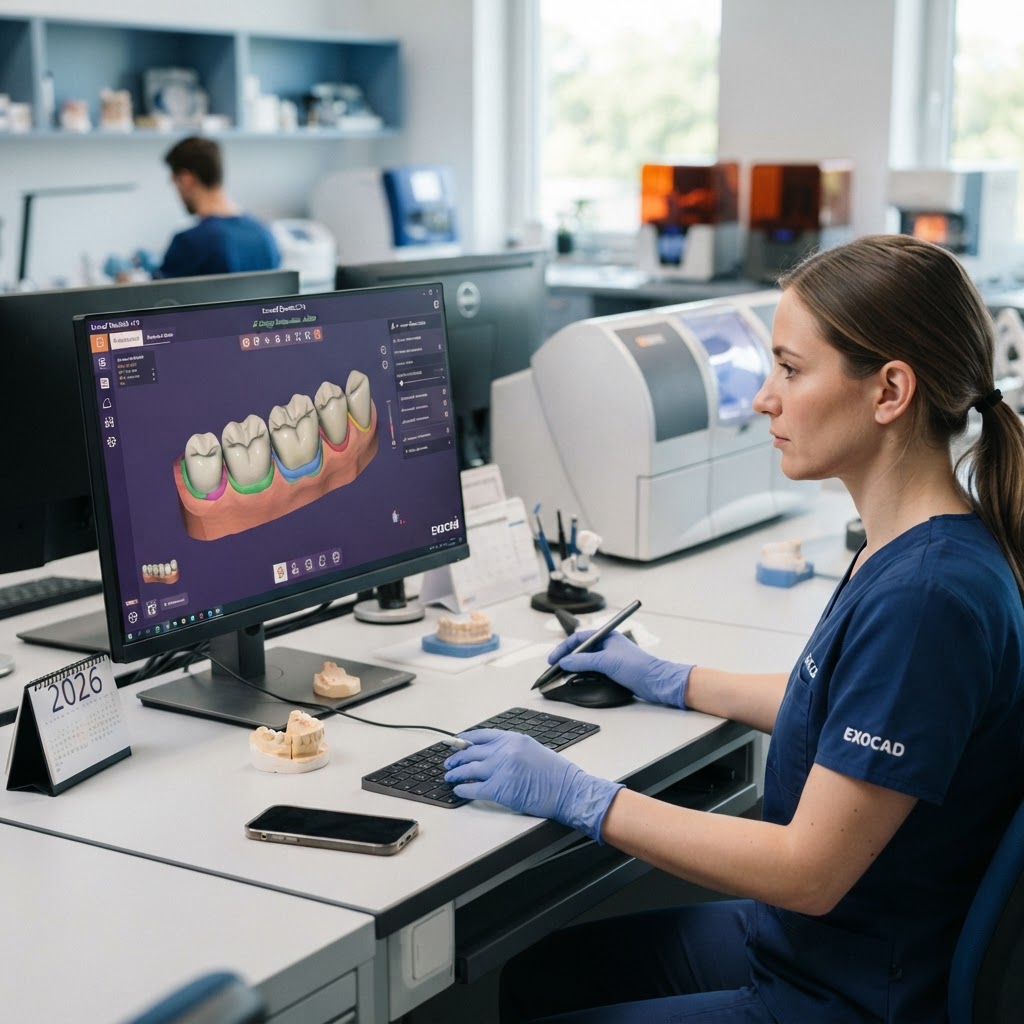
A high-accuracy print is only as good as the data that informs it. The integration of CBCT (Cone Beam Computed Tomography) and Intraoral Scanner (IOS) data is the foundation of the digital workflow. The alignment of these datasets—DICOM and STL/PLY files—must be performed with meticulous attention to detail. Any error in the 'merging' process in software like Exocad or 3Shape will be magnified once the guide is placed in the mouth. To optimize this integration, labs should look for clear dental landmarks and ensure that the intraoral scan captures sufficient soft tissue and tooth morphology to provide a stable 'seat' for the guide.
Optimizing CAD Design for Physical Reality
When designing the guide, the 'offset' or 'buffer' between the guide and the tooth surface is a critical parameter. If the offset is too tight, the guide will not seat fully; if it is too loose, the guide will rock, leading to inaccuracies in implant placement. Most advanced laboratories utilize a 'calibration print' to determine the ideal offset for their specific printer and resin combination. Additionally, the design of the 'sleeve hole' must account for the specific hardware of the guided surgery kit being used. Modern CAD software allows for the customization of these offsets down to the hundredth of a millimeter.
Post-Processing: The Hidden Precision Killer
Many technicians overlook the fact that the printing process does not end when the build plate rises. Post-processing—comprised of washing and curing—is where many accuracy errors are introduced. If a guide is left in isopropyl alcohol (IPA) for too long, the resin can absorb the solvent and swell, leading to dimensional distortion. Conversely, inadequate curing can leave the material soft and prone to deformation under the pressure of the surgical drill. Using automated, validated units for washing and curing (such as the Form Wash/Cure or similar systems) is non-negotiable for a laboratory committed to surgical excellence. These devices ensure that every guide receives the exact intensity of UV light and heat required to achieve its final mechanical properties.
Actionable Strategies for Dental Laboratories and Clinics
To elevate the standard of surgical guide production, we recommend the following protocols:
- Routine Calibration: Perform weekly calibration tests on all 3D printers to check for XY and Z dimensional accuracy using a digital micrometer.
- Nesting Optimization: Avoid printing guides flat against the build plate. Angling the guide (typically 30-45 degrees) and using adequate support structures minimizes suction forces and prevents 'blooming' or distortion of the intaglio surface.
- Environmental Control: Maintain a consistent temperature in the lab. Resins are sensitive to temperature fluctuations, which can alter their viscosity and polymerization rates.
- Verification Models: For complex or full-arch cases, always print a verification model of the patient's arch to test the fit of the guide before it is shipped to the clinic.
Conclusion: The Future of Guided Surgery
The synergy between high-resolution 3D printing and refined digital workflows has brought a new level of predictability to implant dentistry. By mastering the nuances of printer calibration, material selection, and post-processing, dental professionals can ensure that their surgical guides are not just templates, but instruments of extreme precision. At Cosmetic Smile Studio, we remain at the forefront of these technological advancements, providing our partners with the tools they need to achieve superior clinical outcomes. Are you ready to elevate your implant workflow? Contact our technical team today to discuss how our high-accuracy digital solutions can transform your practice.