The Paradigm Shift: From Freehand to Guided Precision
In the rapidly evolving landscape of restorative dentistry, the transition from freehand implant placement to fully guided surgery represents one of the most significant leaps in clinical predictability. For the modern dental laboratory and the high-end restorative clinic, the surgical guide is no longer just a luxury tool; it is a critical component of a restoratively driven treatment plan. However, the value of a surgical guide is entirely dependent on its accuracy. A guide that deviates even slightly from the planned trajectory can lead to prosthetic complications, compromised esthetics, or even structural failure. Understanding the nuances of surgical guide printing accuracy and how to integrate these tools into a seamless digital workflow is essential for any practice aiming for excellence.
The Foundation of Accuracy: Data Acquisition and Alignment
The journey toward a high-precision surgical guide begins long before the 3D printer starts its first layer. The 'Garbage In, Garbage Out' (GIGO) principle is nowhere more applicable than in digital implantology. The accuracy of the final guide is predicated on the fidelity of two primary data sources: the Cone Beam Computed Tomography (CBCT) scan and the Intraoral Scan (IOS).
CBCT Integrity and Patient Movement
High-resolution CBCT scans provide the necessary DICOM data to visualize bone volume and vital structures. However, patient movement during the scan can introduce artifacts and distortions that compromise the planning phase. Clinicians must ensure that the Field of View (FOV) is appropriate for the case and that the patient remains perfectly still. Modern software algorithms can mitigate some noise, but they cannot replace a clean, high-contrast original scan.
The Crucial Merge: DICOM and STL Alignment
The integration of the hard tissue data (DICOM) with the surface detail of the soft tissue and teeth (STL/PLY) is where many inaccuracies originate. Dental technicians must use stable landmarks—typically the occlusal surfaces of remaining teeth—to align these datasets. In edentulous cases, the use of radiopaque markers or dual-scan protocols becomes mandatory to ensure that the guide rests exactly where the software predicts it will. This alignment process is the bedrock of the digital workflow, and any discrepancy here will be magnified throughout the surgical process.
CAD Design: Engineering Stability into the Template
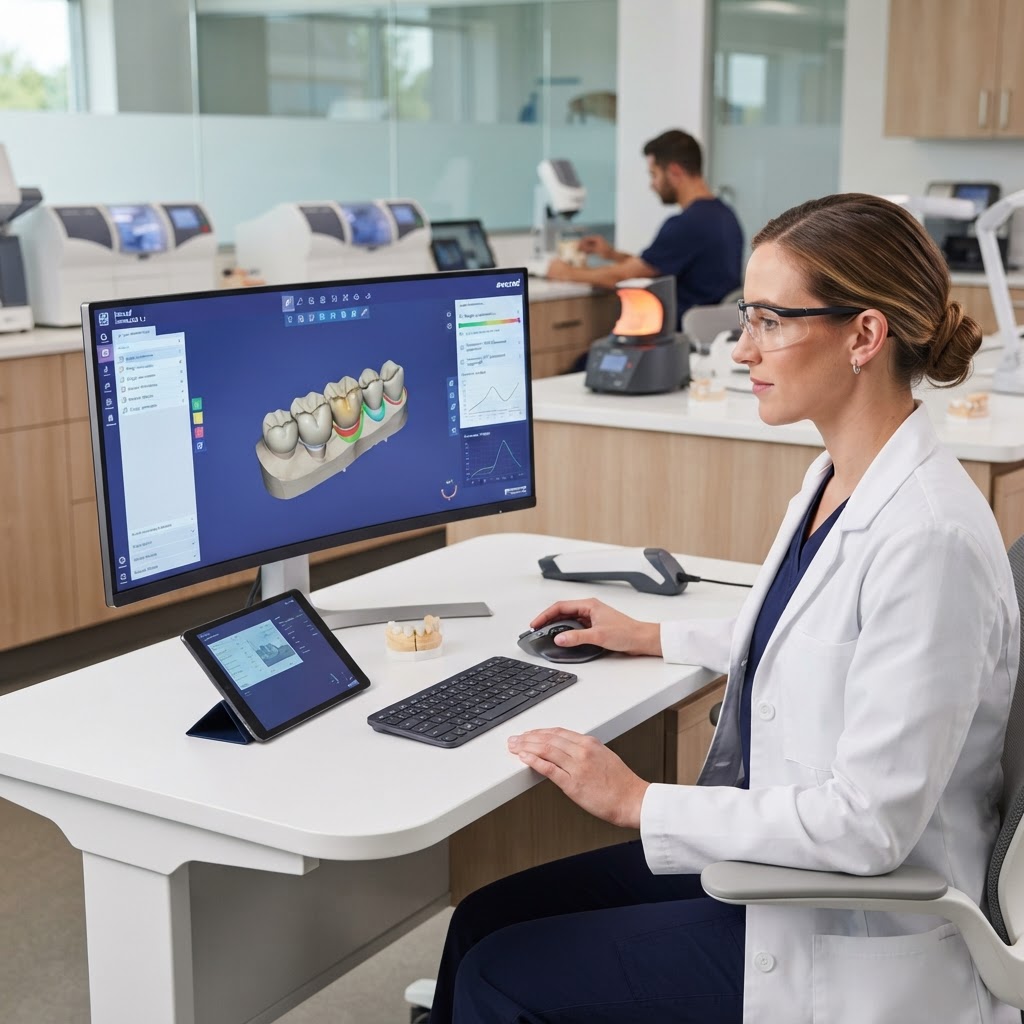
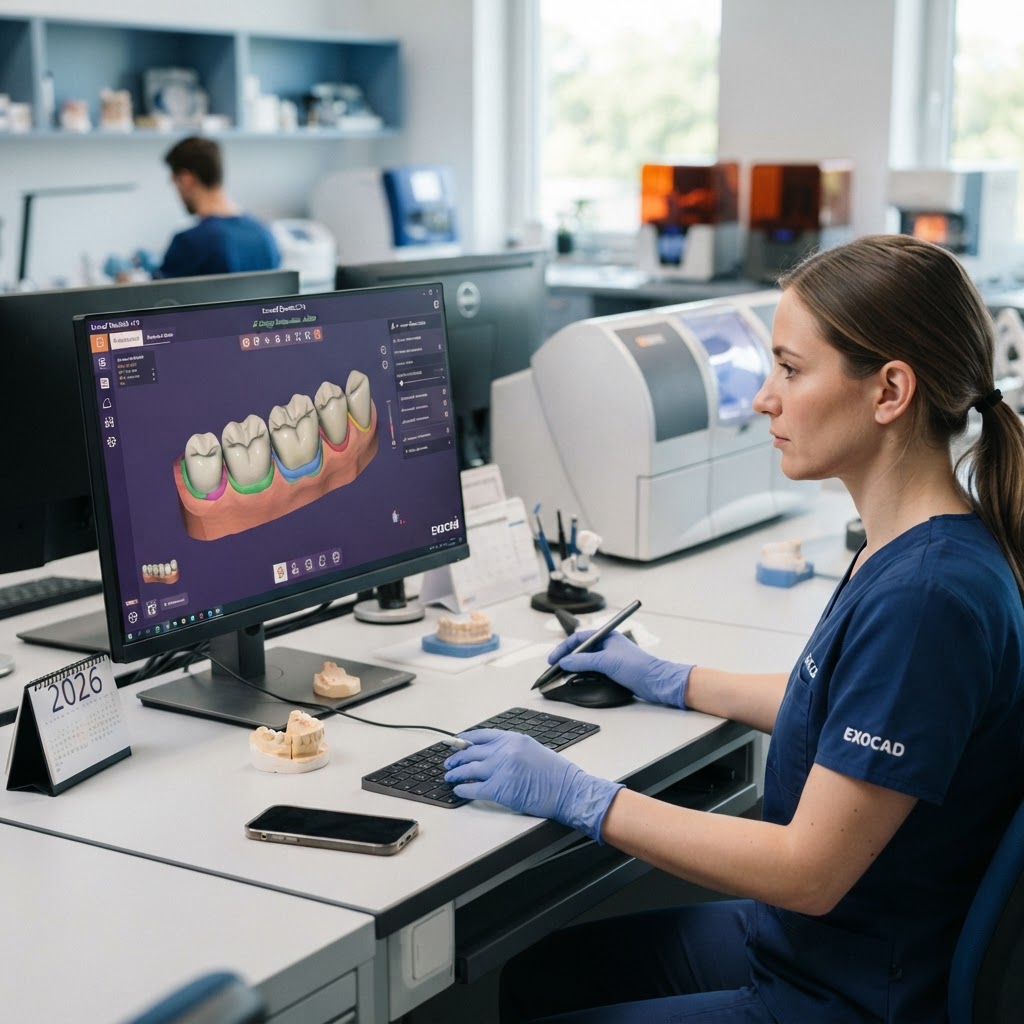
Once the data is aligned and the implant position is planned relative to the future restoration, the guide design begins. Advanced CAD software like Exocad or 3Shape allows for granular control over the guide's parameters. Key considerations for maximizing accuracy during the design phase include:
- Offset Settings: The 'cement gap' for the guide. This value determines how tightly the guide fits over the teeth. Too tight, and the guide won't seat; too loose, and it will rock, leading to angular deviation.
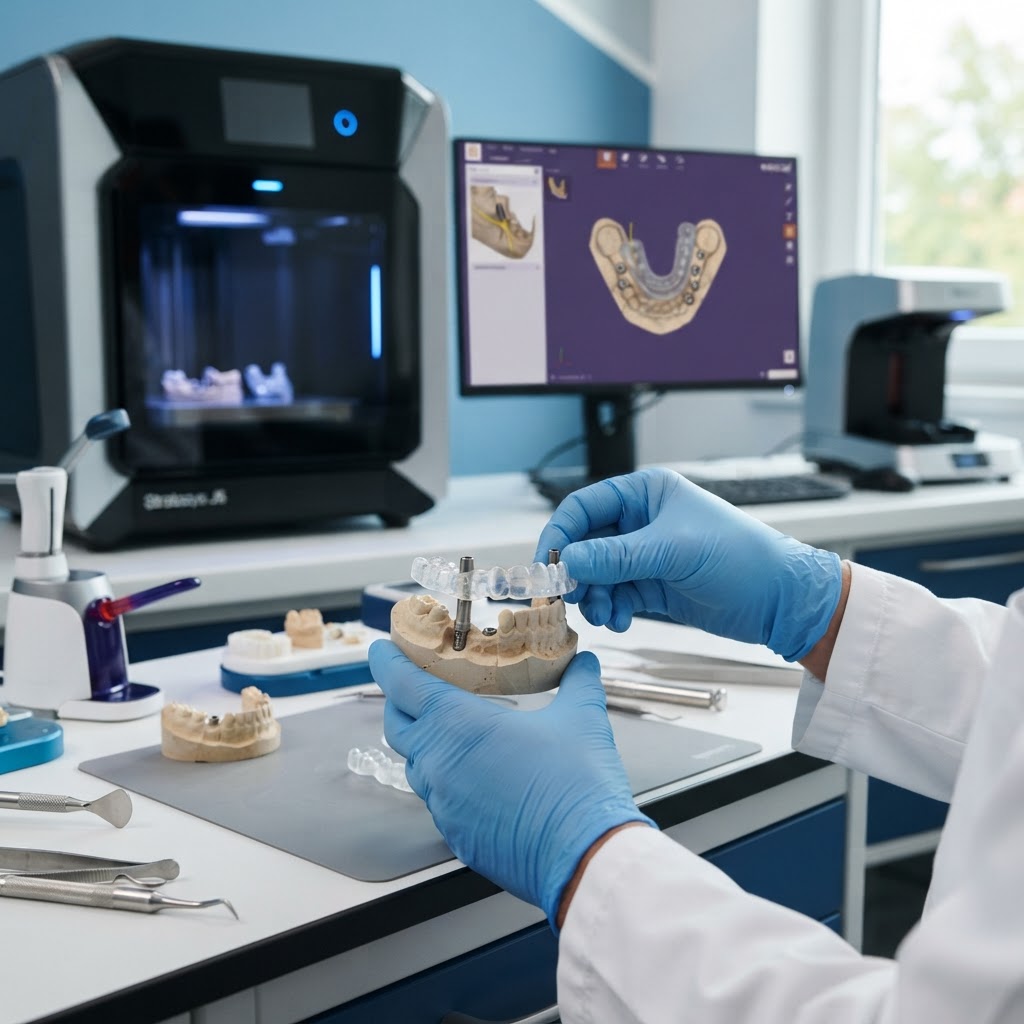
- Sleeve Selection: Using master sleeves from reputable manufacturers ensures that the drill tolerance is minimized. The software must be calibrated to the specific sleeve dimensions to prevent friction or excessive play.
- Support Structures: Designing the guide with adequate thickness (typically 2.0mm to 3.0mm) ensures it does not flex under the pressure of the surgical drill.
- Inspection Windows: Including windows in the design allows the clinician to visually confirm that the guide is fully seated on the teeth or mucosa during surgery.
The Science of 3D Printing: Selecting the Right Technology
The dental laboratory industry has shifted largely from subtractive milling to additive manufacturing for surgical guides. However, not all 3D printing technologies are created equal when it comes to dimensional stability and accuracy. The three main contenders are Stereolithography (SLA), Digital Light Processing (DLP), and Liquid Crystal Display (LCD).
DLP and LCD: The Speed and Precision Leaders
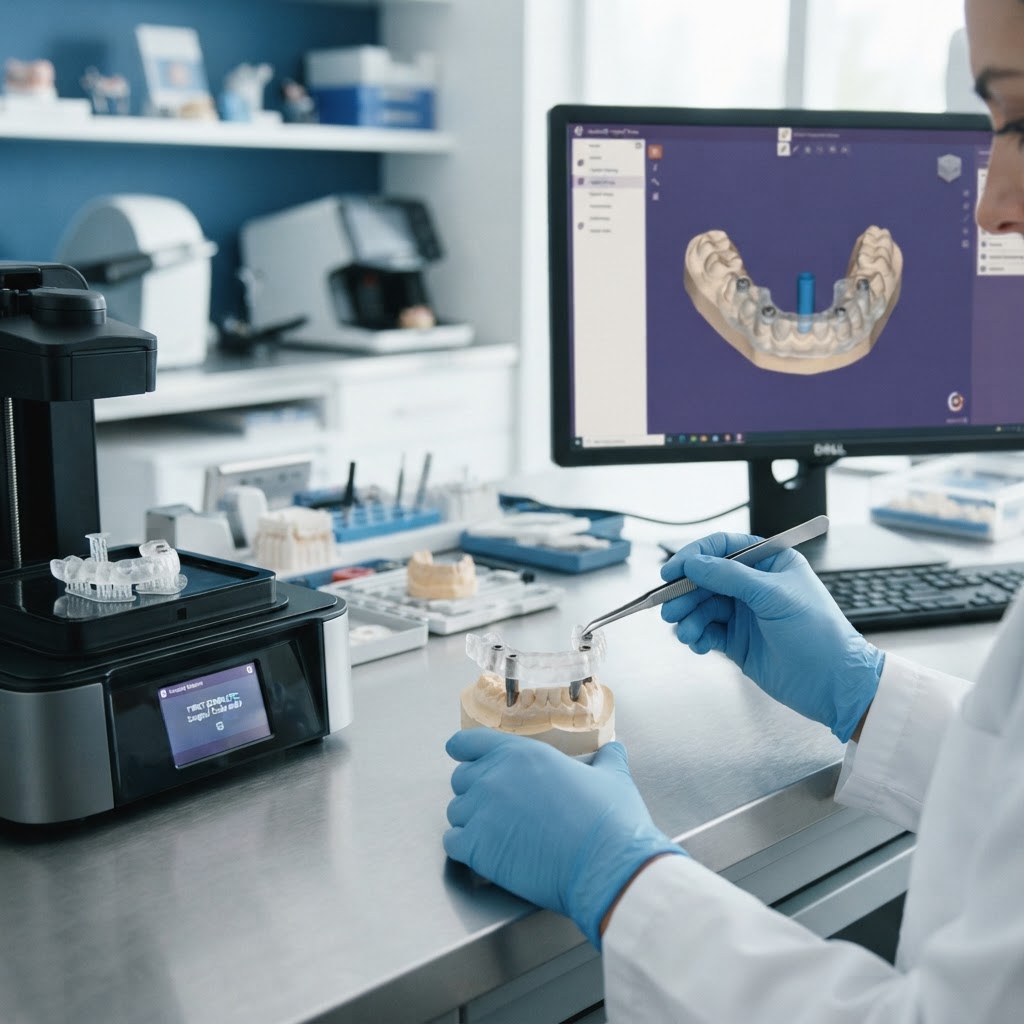
Currently, DLP and high-resolution LCD printers are favored in the dental lab environment for their speed and pixel-level accuracy. Because these technologies cure an entire layer of resin at once using a projector or an LED array, they tend to be faster than SLA, which uses a laser point. For surgical guides, the XY resolution of the printer determines the fit of the sleeve and the internal surface detail. High-end printers with 4K or 8K light engines provide the crisp edges necessary for a 'click-fit' experience.
Material Science: Biocompatible Resin Stability
The choice of resin is paramount. Surgical guides must be printed with Class I or Class IIa biocompatible materials. Beyond safety, the physical properties of the resin—specifically its flexural strength and shrinkage rate—dictate the guide's accuracy. Modern resins are engineered for low shrinkage, but thermal expansion during the printing process must still be managed through environmental temperature control within the printer housing.
Post-Processing: The Silent Accuracy Killer
A common mistake in many workflows is neglecting the importance of post-processing. A guide that is accurate the moment it finishes printing can still be ruined during washing and curing. If a guide is left in isopropyl alcohol (IPA) for too long, the resin can absorb the solvent, leading to swelling and distortion. Similarly, improper UV curing can cause uneven shrinkage or brittleness. Adhering strictly to the manufacturer's validated workflow for washing times and curing cycles is the only way to ensure that the physical guide matches the digital design within the required 100-200 micron tolerance.
Quality Control Protocols for Dental Laboratories
To provide a premium service, dental laboratories should implement rigorous Quality Control (QC) protocols before shipping a surgical guide. This includes:
- Sleeve Fit Verification: Ensuring the metal sleeve seats with the correct amount of friction.
- Physical Model Try-in: If a physical model was printed, the guide should be checked for stability and 'rocking.'
- Digital Validation: Some labs utilize 'best-fit' alignment software to scan the printed guide and compare it back to the original CAD design, providing a heatmap of any dimensional deviations.
Conclusion: The Future of Guided Implantology
The integration of highly accurate surgical guides into the digital workflow is a transformative shift for implant dentistry. By mastering the nuances of data acquisition, design parameters, and 3D printing physics, dental professionals can provide patients with safer, faster, and more predictable outcomes. As we move toward 2026, we expect to see even tighter integration between real-time navigation and static guides, further pushing the boundaries of what is possible in the cosmetic and functional rehabilitation of our patients. For dental laboratories, the message is clear: precision is the product, and the workflow is the path to achieving it. Are you ready to optimize your guide production for the next generation of implantology?